
Mzansi Now: Police Deployed Across the North West Province to Combat Illegal Mining
In the Bapong township of the North West province, excavators line the roads and stand idle in residential yards. The machines sit between deep open ditches and piles of unearthed soil where illegal miners, colloquially known as zama zamas, have been digging for chrome to sell on the black market.
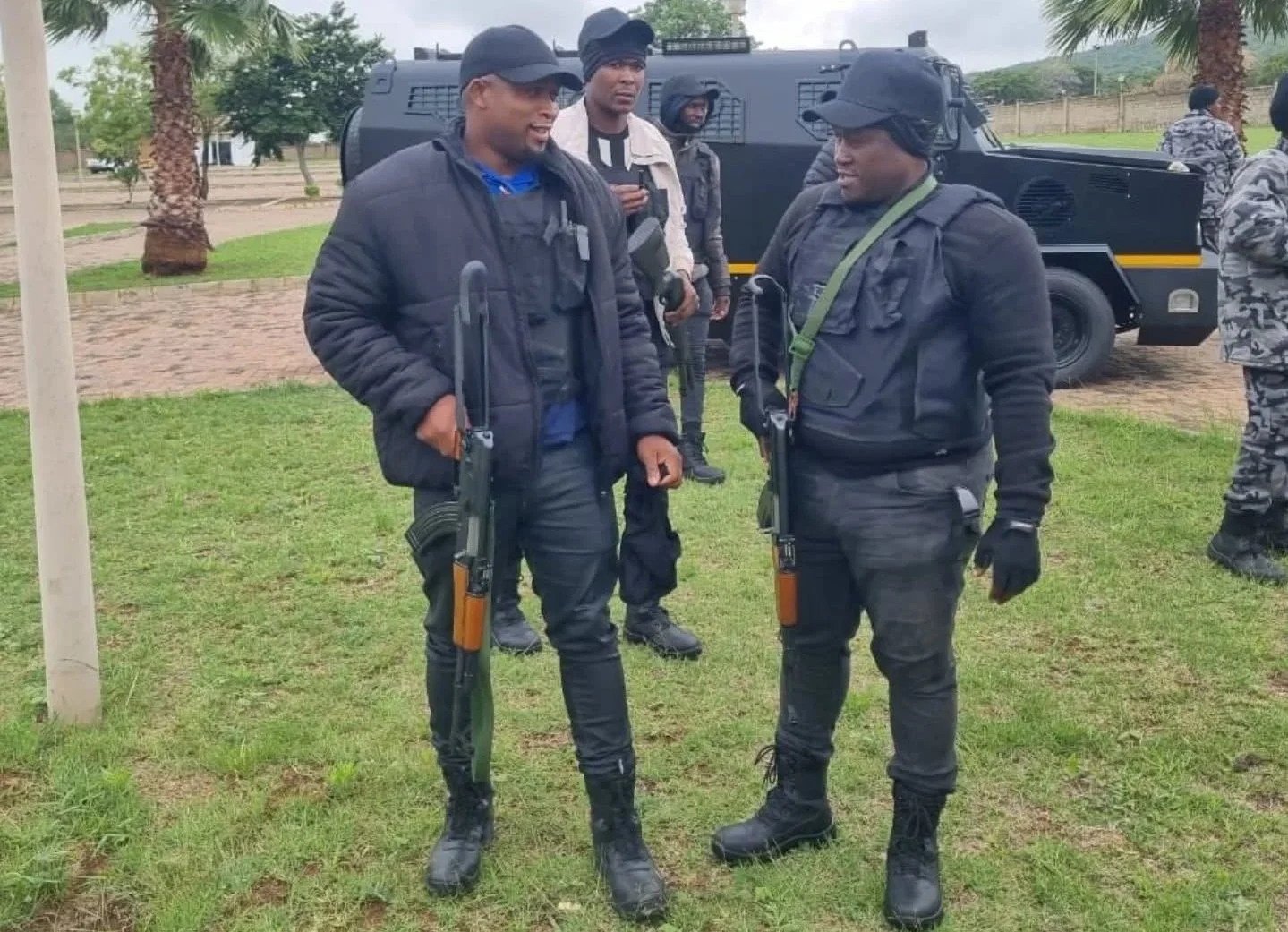
On December 10, social media posts circulated depicting armed men guarding the mining operation. Bapong community members allege that the mining has caused the collapse of homes and roads, sometimes intentionally, in an effort to make way for further mining activities.
Lieutenant General Tebello Mosikili, the Deputy National Commissioner for Policing, stated that the posts were “misleading and false”. She claimed that the guards had been appointed to stop, rather than facilitate, illegal mining activities by Bapo Ba Mogale, a tribal authority in the area. Though Mosikili contested the notion that the guards were illegal miners themselves, she corroborated allegations that illegal miners were intentionally displacing civilians in order to mine on residential land.
At a meeting with the tribal council, Mosikili relayed that the South African Police Service (SAPS) will establish an operational centre in the township to stifle illegal mining. The centre will include local and national police officials, government departments, and the tribal council.
Impacts
Illegal mining in the North West is not a new phenomenon. The issue became widespread in 2013 after the closure of a gold mine in Stilfontein, when zama zamas began raiding the abandoned shaft for remaining gold. Miners travel as far as 2.5 miles (four kilometers) underground where they reside for days at a time, relying on those above ground to send them food and water. Many zama zamas have been reported to be a part of organized crime operations by migrants from neighboring countries like Mozambique, Lesotho, and Zimbabwe. The material theft, infrastructural damage, and tax evasion results in the loss of an estimated 70 billion rand in revenue for gold alone.
This Stilfontein mine made headlines in November 2024 after an estimated 400 miners were trapped underground without food or water. Law enforcement blocked off several exits and surrounded the remaining outlets, waiting to arrest anyone who emerged. The event, which resulted in the 70 deaths, was a part of Operation Vala Umgodi, a nationwide mission by SAPS in collaboration with the South African National Defence Force (SANDF) and other law enforcement agencies to curb illegal mining.
In addition to the high cost and significant safety risk, illegal mining across the province has resulted in the collapsing of homes, roads, and public buildings. The excavators have also damaged power lines, cutting off electricity to homes where electrical supply is already dubious.
Socioeconomic Incentives
The informal mining operations are a result of steep unemployment and economic standstill across the North West. The official unemployment rate sits at 38.1%, the second highest in the nation, and the expanded unemployment rate is 52.5%, the highest of the nine provinces. A report issued in March corroborated the correlation between lack of income and illegal mining, showing that illegal mining sites tend to be close to areas that experience higher levels of economic hardship. A local told City Press about using the illegal mining industry as a last resort. “We had nothing coming in,” she said. “No jobs. No money. We decided we had nothing to lose.”
Many community members have resorted to selling their land to zama zamas to avoid forced displacement. But others are unwilling or unable to leave, having already established families, invested in their homes, and lacking the resources to relocate.
Government Responses
Since the tragedy at Stilfontein, Operation Vala Umgodi is still active across the province alongside other government efforts like Operation Shanela. The first portion of this initiative was launched in May 2023, with Operation Shanela II having begun in June 2025. The mission targets violent crime and illegal mining, using tactics like stop-and-searches, vehicle checkpoints, roadblocks, and drone surveillance. The program has claimed some success, announcing the arrest of almost 1000 suspects in late November for a variety of crimes, but few related to the illegal mining industry.
Before meeting the tribal council in Bapong, police conducted a fact-finding mission that resulted in the arrest of three miners and the seizure of ten excavators. Further efforts at mitigation are active with the deployment of a larger police presence in Bapong, but many residents say it isn’t enough. The issue of illegal mining is a systemic one, and arresting the individuals who engage in such practices only appears to mitigate the problem temporarily, rather than bringing a halt to the industry on a grand scale.