
Mzansi Now: Cape Town To Construct Wall Along N2 Highway To Mitigate Violent Crime
Martin Harvey
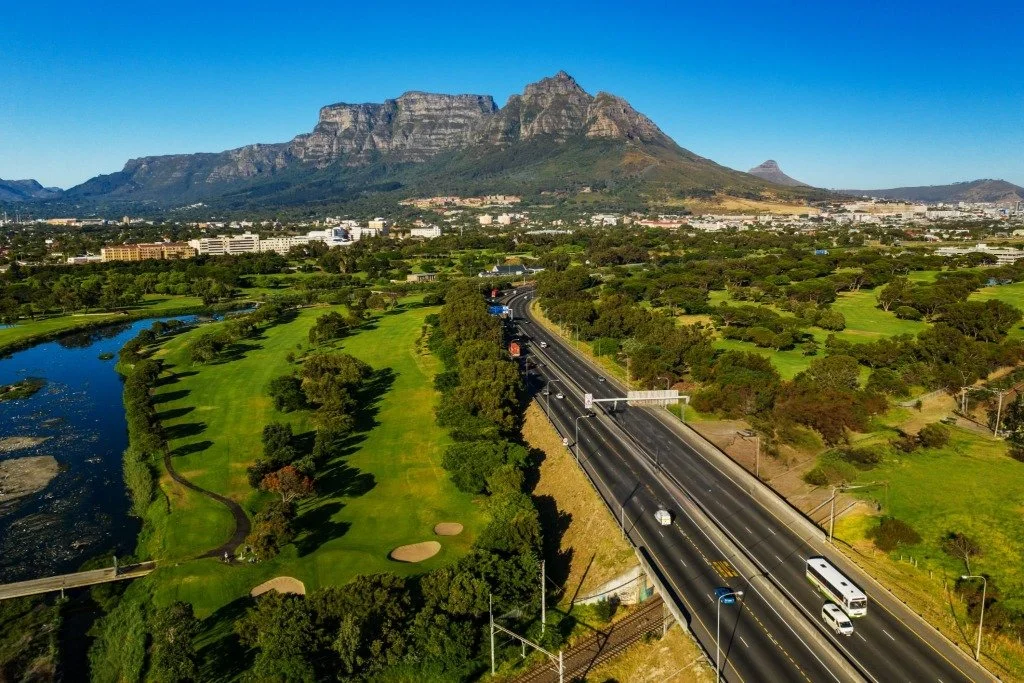
Cape Town Mayor Geordin Hill-Lewis has proposed a security wall to run along the N2 highway in an effort to curb violent attacks on motorists. The attacks are typically executed by throwing stones or bricks at cars, but activity has ranged from stealing personal items from the windows of stopped vehicles to shooting drivers in order to loot cars. Stretching from Somerset West to the Cape Town International Airport, the most notorious strip of road has earned the nickname “Hell Run” amongst locals and regular commuters.
Mayor Hill-Lewis has framed the proposal as a practical response to years of public outcry, particularly from commuters and tourists that rely on the N2 to access the rest of the city. The highway is vital to the Western Cape’s economy, carrying tens of thousands of people each day, making safety concerns economic ones as well.
On December 8, the Western Cape Mobility Department announced the deployment of over 600 provincial officers and more than 300 vehicles in an effort to protect travellers during the winter holiday season. The roll out is a part of the Western Cape’s Integrated Freeway Safety Plan, a program that has been in place for decades to combat violent crime on thruways across the province. Now, the city looks to construct a 180 million rand wall to separate the highway from surrounding high-risk zones, limiting access points and reducing opportunities for attackers to target passing vehicles.
Violent Crime
Between July 2024 and June 2025, Cape Town Metro Police documented 2,215 responses to incidents on the N2, though a majority of these were related to car breakdowns and flat tires. Only eight of these responses were recorded as robberies, implying that media outlets are portraying the violence along the highway as a more severe issue than it may actually be.
While the prevalence of violence may be overblown, crime along the N2 is occurring nonetheless. The town of Nyanga sits alongside the highway, and is known as an area where carjacking is some of the most prolific in the nation. This year, the town recorded 67 cases from July to September, with neighboring town Khayelitsha following closely with 65 carjackings in the same period. These neighbourhoods face complex socio-economic challenges, including high unemployment, overcrowding, and limited access to services, all of which contribute to elevated crime levels.
Public Opinion
Public response to the project has been mixed. Save Our Sacred Lands, an organization led by the Goringhaicona Khoi Khoin Traditional Indigenous Council (GKKITC), said “such walls are designed to push indigenous bodies out of sight, conceal crimes against humanity, and manufacture an illusion of ‘lovely’, ‘uninterrupted’ driving leisure for motorists.” Tauriq Jenkins, convener of the organization, said the planned wall was a “gross misallocation of public funds”. He told the Daily Maverick the money allocated to the project would be better spent improving conditions of the communities along the highway, still affected by apartheid-era segregation.
The South African Human Rights Commission also opposed the measure, citing the construction of concrete barriers in the 1990s along parts of the N2 to shield the highway from informal settlements and prevent movement across the road, particularly around the Nyanga community. A spokesperson for the organization invited further protections along the N2, but argued that the funds allocated toward the project would be better spent addressing systemic drivers of violent crime like poverty, unemployment, and housing.
The Freedom Front Plus (FF Plus) has been similarly vocal around the issue, but to express support, stating that it demonstrates decisive action by the city in response to years of civilian demands to improve safety in the area. But the party also aired criticisms of the project in a statement on December 15, emphasizing that a wall is not a sustainable solution. They say criminals will find ways to circumvent the barricade and a stronger, more visible police presence along the highway is necessary to mitigate crime long term. A party representative argued that the cost of construction should be covered by the South African National Roads Agency (SANRAL), which receives a majority of the national budget to protect roadways.
In turn, SANRAL has stated the jurisdictional authority of the wall’s construction is unclear, and has distanced themselves from the project.The planning of the wall is not yet concrete, with no official agenda, timeline, public strategy, or data to show how a wall will nominally alleviate crime along the road. The next Mayoral Committee will convene on January 20, with residents hopeful that the meeting will provide further information about the wall’s planning and construction.