
Inside Africa: West Africa’s Young Coastal Guardians Turn Erosion into Local Power
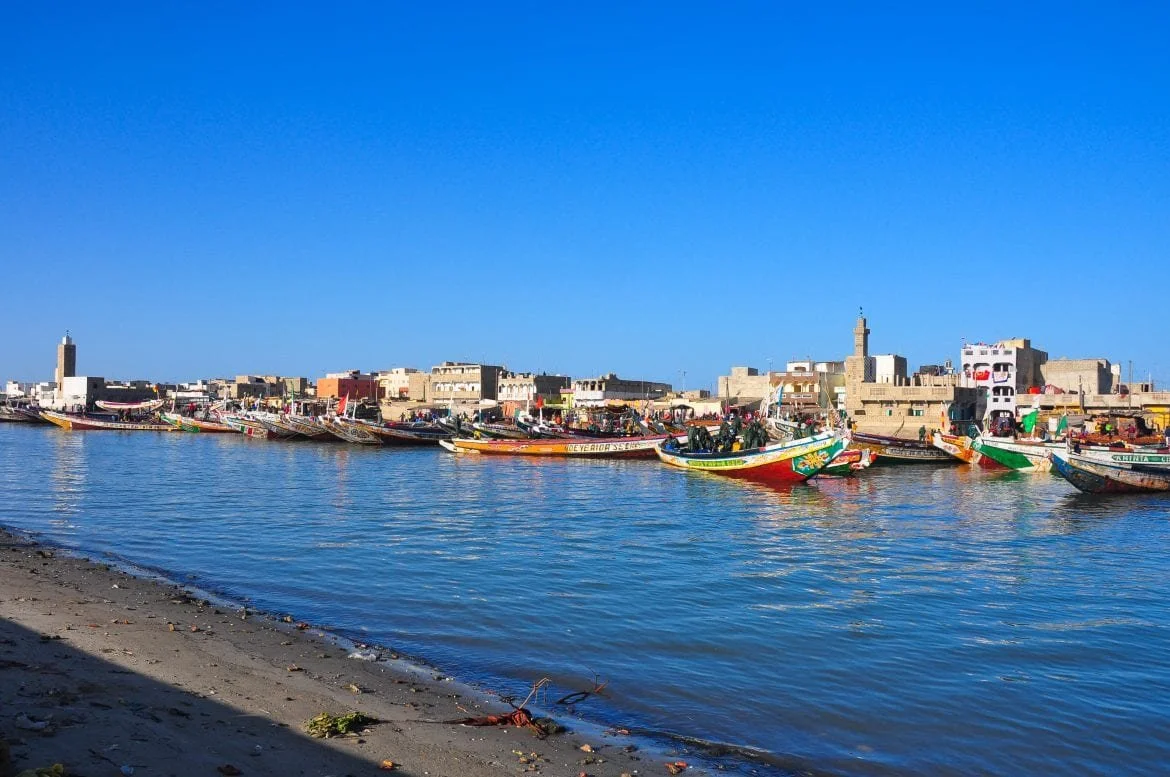
Along the Atlantic coastline of Senegal and Mauritania, sea-level rise and coastal erosion are often described as inexorable disasters: homes collapsing into the sea, fishing villages uprooted, and historic neighborhoods facing relocation. Yet beneath this crisis narrative, documented initiatives show youth-led cooperatives, women’s groups, and local associations experimenting with low-cost adaptation, restoring dunes, replanting mangroves, and piloting solar-cooled fish storage, that both protect the shoreline and shift some power back to coastal communities.
In cities like Saint-Louis and Nouakchott, these grassroots efforts now coexist with large-scale, donor-backed resilience projects, raising a critical question for West Africa: will young people and coastal residents be treated as co-designers of adaptation policy, or remain cast mainly as beneficiaries of measures designed elsewhere?
Saint-Louis, at the mouth of the Senegal River, is often cited as one of West Africa’s most climate-exposed cities. Decades of erosion and storm surges have severely damaged parts of the Langue de Barbarie barrier spit and forced hundreds of households from areas such as Guet Ndar into resettlement sites further inland. To respond, Senegal’s government, supported by the World Bank, launched the Saint-Louis Emergency Recovery and Resilience Project (SERRP), which finances new housing, basic services, and coastal protection for high-risk zones.
Complementing this top‑down approach, regional bodies and local authorities have documented the use of nature-based solutions. In 2025, the Departmental Council of Saint-Louis, working with national agencies and partners, initiated a mangrove restoration programme covering roughly 150 hectares in vulnerable estuarine areas. A case study by Regions4 notes that the project deliberately mobilises youth groups and women’s cooperatives to plant and maintain mangroves, framing them as both natural barriers against storm surge and sources of livelihoods through fisheries, fuelwood, and ecotourism.
For fish-processing women in Saint-Louis, the change is tangible rather than abstract. Before the mangrove work and related value-chain investments, many relied on smoking or sun-drying fish in increasingly unpredictable weather, losing product to sudden downpours and heat that spoiled batches overnight. With restored mangroves improving local catches and new cold-storage and handling practices spreading through cooperatives, women traders are able to hold stock longer, negotiate higher prices at regional markets, and smooth out income over the year instead of scrambling after each risky landing.
These efforts build on longer-running, community-based mangrove programmes elsewhere in Senegal. Reporting from Casamance and the Saloum Delta describes tens of thousands of hectares of mangroves restored by local associations, with participation from students, women’s savings groups, and village committees. An initiative in Niafrang, in southern Senegal, documented by Advocates for Alternatives, highlights how local committees decide sites and methods for planting, explicitly linking ecological restoration to food security and income stabilisation.
In villages like Niafrang, community leaders describe how replanting mangroves has changed everyday routines: rice fields that had been abandoned to salinisation are gradually being brought back into use, and families report spending less time walking long distances for fuelwood as regenerated stands grow closer to home. For younger residents, organised planting days and follow-up monitoring have become entry points into local environmental committees, giving them a say in land-use decisions that were once the preserve of elders and external experts.
The Saint-Louis initiative feeds into a national platform for mangrove management led by the Directorate of Marine Protected Areas and is cited as a potential model for cross-border cooperation around the Senegal River estuary, including with The Gambia and Guinea-Bissau. This indicates that practices emerging from community-based projects are beginning to inform national and even regional adaptation frameworks, rather than remaining isolated pilot efforts.
Across the river, Nouakchott presents a different coastal configuration but a similar set of risks. Large parts of Mauritania’s capital lie only a few metres above sea level, shielded from the Atlantic by a narrow dune belt that has been weakened by sand extraction, vehicle traffic, and informal settlements. The West Africa Coastal Areas (WACA) programme warns that more than 20 breaches have been identified along this dune cordon, including several where storm waves could directly impact dense urban districts and major transport corridors.
Recent assessments compiled by Adaptation Without Borders describe Nouakchott’s response in terms of formal strategies: a coastal protection plan focused on reinforcing dunes, zoning regulations for the shoreline, and efforts to integrate climate risk into urban development plans. WACA communications emphasize the urgency of these measures, arguing that without strengthened dunes and appropriate drainage, a single extreme storm event could inundate a significant share of the city.
Publicly available documentation, however, suggests that community participation in Nouakchott’s adaptation remains relatively limited and fragmented compared with places like Saint-Louis. Analyses stress that while local organisations are active in awareness campaigns and small-scale dune stabilisation, they are not yet systematically integrated into decision-making fora. This gap underscores a broader challenge for coastal adaptation in the region: how to ensure that local knowledge and priorities meaningfully shape, rather than merely complement, large-scale infrastructure and planning.
In Nouakchott’s peri-urban districts, residents already see the costs of decisions made without them: houses built on or behind weakened dunes face recurrent sand encroachment and flood risk, and families invest repeatedly in small defensive works that are later undermined by larger-scale projects. The lack of structured channels for neighborhood and youth organizations to influence where and how major protections are built leaves many feeling that they are adapting on their own, even as formal plans multiply.
For coastal populations in Senegal and Mauritania, adaptation is inseparable from economic survival. Small-scale fisheries provide a critical source of food and income, but post-harvest losses remain high due to heat, limited ice, and inadequate storage and transport. Climate change exacerbates this vulnerability by raising sea temperatures, intensifying heatwaves, and disrupting traditional preservation methods.
For a small-scale fisher landing catch near the Senegal River mouth, access to a cooperative cold room or ice plant can be the difference between selling quickly at a discount to avoid spoilage, and holding out for better prices inland. Traders who once lost a portion of every haul to heat can now organise transport to interior towns, turning what used to be a race against time into something closer to a planned business.
Development programmes and case studies from the Senegal River Valley and the wider West African coast point to emerging solutions that combine resilience with economic upgrading. Where such facilities are managed by local cooperatives, particularly women’s groups in processing and trading, they can reduce waste, increase bargaining power, and open access to more distant markets.
World Bank communications on climate and community resilience in the Senegal River Valley highlight investments in fisheries infrastructure and value chains, alongside agriculture and livestock, as part of a broader programme to build climate resilience and promote sustainable development. While these documents focus primarily on finance volumes and institutional reforms, they acknowledge that community-level facilities and local organisational capacity are essential for adaptation benefits to reach households. For youth groups, operating cold-chain services or providing maintenance and logistics creates entry points into climate-linked entrepreneurship rather than migration or low-paid labour.
The contrast between documented efforts in Saint-Louis and the more technocratic framing of Nouakchott’s adaptation underlines a central question for West African coastal governance: who gets to define what adaptation looks like? In Senegal, there is clear evidence that community-based initiatives, especially mangrove restoration and women’s and youth cooperatives, have informed national approaches and are being considered as replicable models beyond the country’s borders. In Mauritania, by contrast, available analyses emphasise formal plans and international programmes, with less traceable integration of community voices into core decisions.
This does not mean one country has “solved” adaptation while the other has failed. The physical, institutional, and economic contexts differ sharply. But comparative work on climate governance in the region stresses that adaptation outcomes are more robust when local actors have a say in setting priorities and trade-offs, whether that concerns where to reinforce dunes, which neighbourhoods to relocate, or how to link ecosystem restoration with livelihoods.
The Senegal River Valley and Mauritanian coast are among West Africa’s most strategically important coastal zones, hosting dense urban settlements, port and transport infrastructure, and critical fisheries. Climate projections point to continued sea-level rise and more frequent extreme events, meaning that the costs of maladaptation, or of excluding communities from planning, could be high. Ensuring that youth-led and community-based initiatives are recognized not only as useful local projects but as inputs into formal policy is therefore not just a question of equity; it is a question of long-term effectiveness.
For policymakers and regional bodies, the lesson from the Senegal–Mauritania coastline is clear: adaptation finance and infrastructure must be paired with mechanisms that bring coastal communities and young people into design and oversight, from local adaptation committees to co-managed ecosystem projects. The difference between treating residents as beneficiaries and recognising them as co-designers will determine not only how many homes and livelihoods are protected, but also who gains voice and leverage in West Africa’s emerging climate order.
