
Mzansi Now: South Africa Declares State of National Disaster Due to Severe Flooding
AP
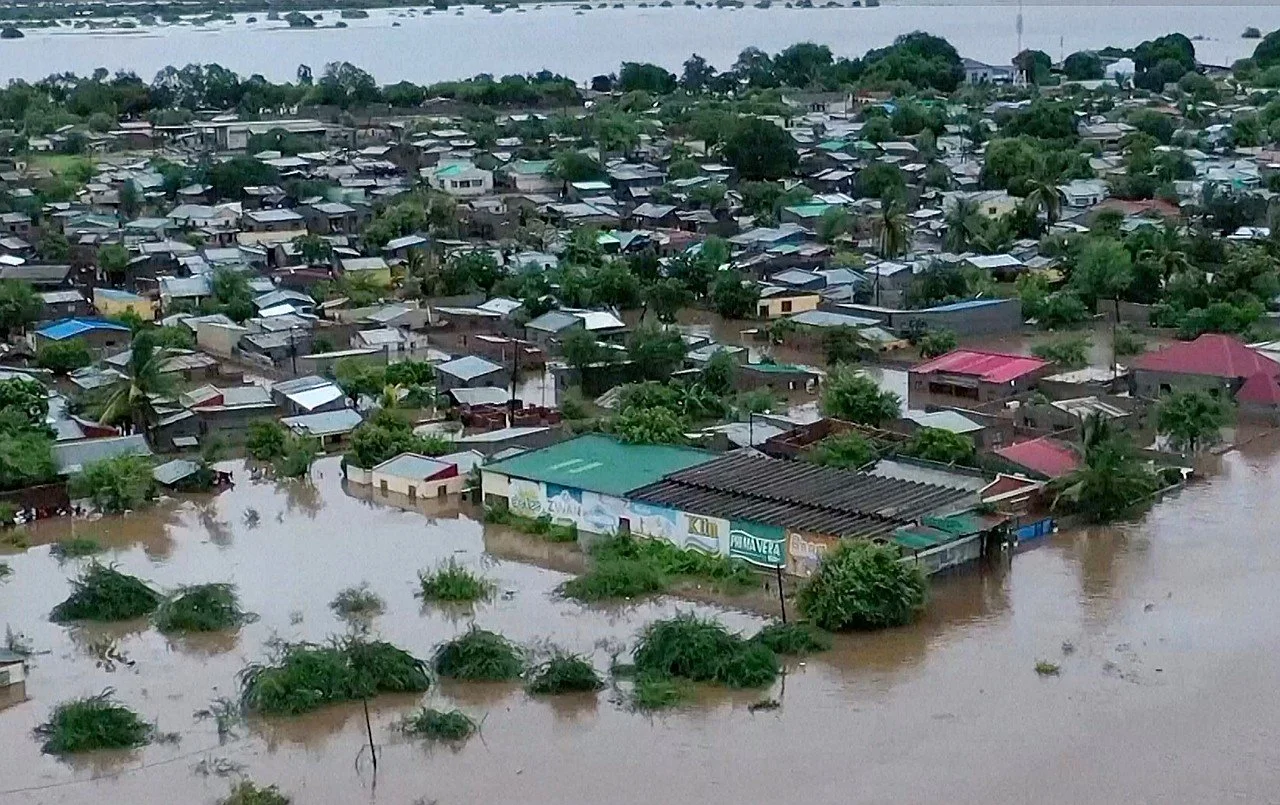
On Sunday, January 18, South Africa’s National Disaster Management Centre declared a state of national emergency due to torrential rainfall and floods across Limpopo and Mpamalanga. In the most hard-hit areas, 400mm of rainfall inundated communities within a week. The floods have impeded rural villages’ access to schools, medical facilities, and clean water. Across the affected areas over 1,400 schools had temporarily closed, with damage also affecting approximately 26 hospitals and clinics, 439 roads, and 3,750 homes. As of January 21, 45 individuals had been killed in Limpopo and Mpamalanga combined.
The flooding is a result of a La Niña, a weather pattern that brings a colder, wetter climate to South Africa’s summer months every three to five years. These floods come after an unusually rainy December, saturating the ground and overwhelming river systems, priming the environment for a flood. Prior to some of the more severe damage, on January 15, the South African Weather Service issued a Red Level 10 Warning, a categorization reserved for conditions that pose a severe risk to life, livelihoods, and infrastructure.
The national disaster classification has been welcomed by provincial leaders across the affected areas, as such a label allows for the national government to intervene and send resources that the provincial governments do not have access to.
“We need all the assistance we can get to rebuild Limpopo after these devastating floods, and the help we need from national departments and agencies would be made possible through this classification.” — Limpopo Premier Dr. Phophi Ramathuba.
Government Action
On January 16, Human Settlements Minister Thembi Simelane dispatched the Emergency Housing Unit to regions of Mpumalanga and Limpopo where the flooding was most severe. There are currently 6 municipalities undergoing verification, which will determine the appropriate level of intervention to be implemented in each household.
On the same day, President Cyril Ramaphosa, alongside Minister in the Presidency Khumbudzo Ntshavheni and Limpopo Premier Dr Phophi Ramathuba, visited the Vhembe and Mopani Districts of Limpopo. In a statement following the visit, Ramaphosa called the rain a result of global warming, stating that “climate change is truly with us and those who don’t believe that it is with us, better believe it now, because wiping out of 36 houses when there’s rain has never really been something that we’ve experienced.”
On January 20, Ramaphosa visited the Nkomazi municipality in Mpumalanga, an area that has also been ravaged by floods. In this province alone, over 1,500 homes have been damaged, with some villages remaining inaccessible due to rain. During his time there, Ramaphosa again cited climate change as the cause of the floods, but emphasized the importance of establishing disaster response strategies in order to respond to future disasters with speed and efficiency. His visit was to assess the damage done to the region so that his subsequent actions could be “tailor-made” to what the province needs most.
International Cooperation
Parts of Zimbabwe, Zambia, Botswana, Madagascar, Malawi, and Mozambique are also facing monumental destruction because of the floods. Mozambique has been hit the hardest, with 300,000 people displaced and 100 dead in southern and central regions. In response, the South African National Defense Force (SANDF) has deployed a search and rescue team to Maputo under the name Operation Chariot. The mission has successfully rescued 479 individuals since its launch on January 18, but search efforts are still ongoing, particularly in an effort to find the South African Member of the Mayoral Committee for Roads and Transport (MMC), Andile Mngwevu. Mngwevu was part of an official delegation visiting Mozambique when the floods hit, reportedly washing away the car he was traveling in.
The United Arab Emirates, Nigeria, Vatican City, and the United Kingdom have also issued statements expressing their support and condolences for communities in southern Africa affected by the flooding.
Humanitarian Aid
International humanitarian organizations have also responded to the crisis across southern Africa. The International Organization for Migration (IOM), an organization related to the United Nations, has deployed emergency response teams to Mozambique to support accommodation centers and improve health, water and sanitation services. The broader UN has also issued a statement standing in solidarity with the communities affected across Limpopo and Mpumalanga provinces, but has not yet sent assistance to the region.
The South African chapter of the Red Cross has been on the ground in Limpopo and Mpumalanga throughout the disaster. In an interview with Newzroom Afrika, the South African Red Cross CEO Molefi Takalo said that intervention across the region will be necessary long after the floods have ended as civilians grapple with infrastructural damage and psychological trauma. Takalo advocated for toll-free counseling services to be provided by both the Red Cross and other humanitarian organizations to assist individuals who watched as “their livelihoods were washed away”.
The Gift of Givers, an African disaster response organization, has reached 800 households in Mpumalanga, delivering food packs, mattresses, sleeping packs, hygiene packs, and detergent. In Limpopo, teams are awaiting reach to eastern areas of the province, where flooding has completely cut off access. The Gift of Givers expects they will be able to reach such areas and deliver much needed aid by January 26 or 27.
Kruger National Park
In addition to the affected households, the floods have hit Kruger National Park, which lies in the northeastern part of the country between Limpopo and Mpumalanga. The rain has submerged tourist camps and destroyed bridges between the northern and southern areas of the park, cutting off access between the two. Though many areas of the park have called for evacuation, over 500 staff members remain trapped within the reserve, waiting for the rain to cease and waters to recede.
In conjunction with the current floods, the park is still recovering from flood damage in 2023. The damage between these floods and that of three years ago has crippled infrastructure and disrupted operations to an extent that exceeds the park’s existing contingency and maintenance budgets. In response, on January 22, the government established the South African National Parks (SANParks) Kruger Recovery Fund to “expedite recovery and restoration efforts at the park following the damage that was caused by recent floods”. Throughout the past two weeks, an estimated 500 million rand worth of damage has been done to the park.
As of January 26, certain roads and areas of the park remain closed at Kruger. But reconstruction and recovery efforts are currently underway, with several closed-off areas scheduled reopening dates.
Long Term Consequences
Reconstruction costs are estimated to be two billion rand in Mpumalanga and 1.7 billion rand in Limpopo, money that the provincial governments do not have to spare. In addition to the reconstruction of homes, schools, hospitals, and infrastructure, farmlands have been deeply affected. The washing away of top soil may take years to recover, and when it comes to fruit that has already been harvested, small farms across the affected provinces do not have storage facilities to stow these fruits before it is too late to sell them. Many of these farmers depend on weekly markets to sell their crops, and such markets have closed down since the floods began. Tshianeo Mathidi of the African Farmers' Association of South Africa has told SABC News that it is “unclear” what alternatives farmers have to preserve their crops, livestock, and land amidst the destructive floods.
On January 28, after visiting flood-affected areas in Mpumalanga, Human Settlements Minister Thembi Simelane called for the urgent development of a national framework to mitigate climate-induced disasters across the nation. She emphasized that current relief efforts are often slowed due to the lack of suitable land for disaster victims, and stressed that climate-resistent infrastructure must become a priority in city planning. Simelane was accompanied by Mpumalanga MEC for Co-operative Governance and Traditional Affairs, Speed Mashilo, who echoed Simelane’s statements. “When the President was here last week, he also pointed out the issue of lack of planning when it comes to human settlements,” Mashilo said. “We cannot continue to behave like we don’t know or anticipate the types of disasters.” The two agreed to consider using the province’s human settlement grants to contribute to the rebuilding of roads, sewer systems, and storm water drainage infrastructure to mitigate future flood damage.