
Naija Focus: Love and Loss in Kano
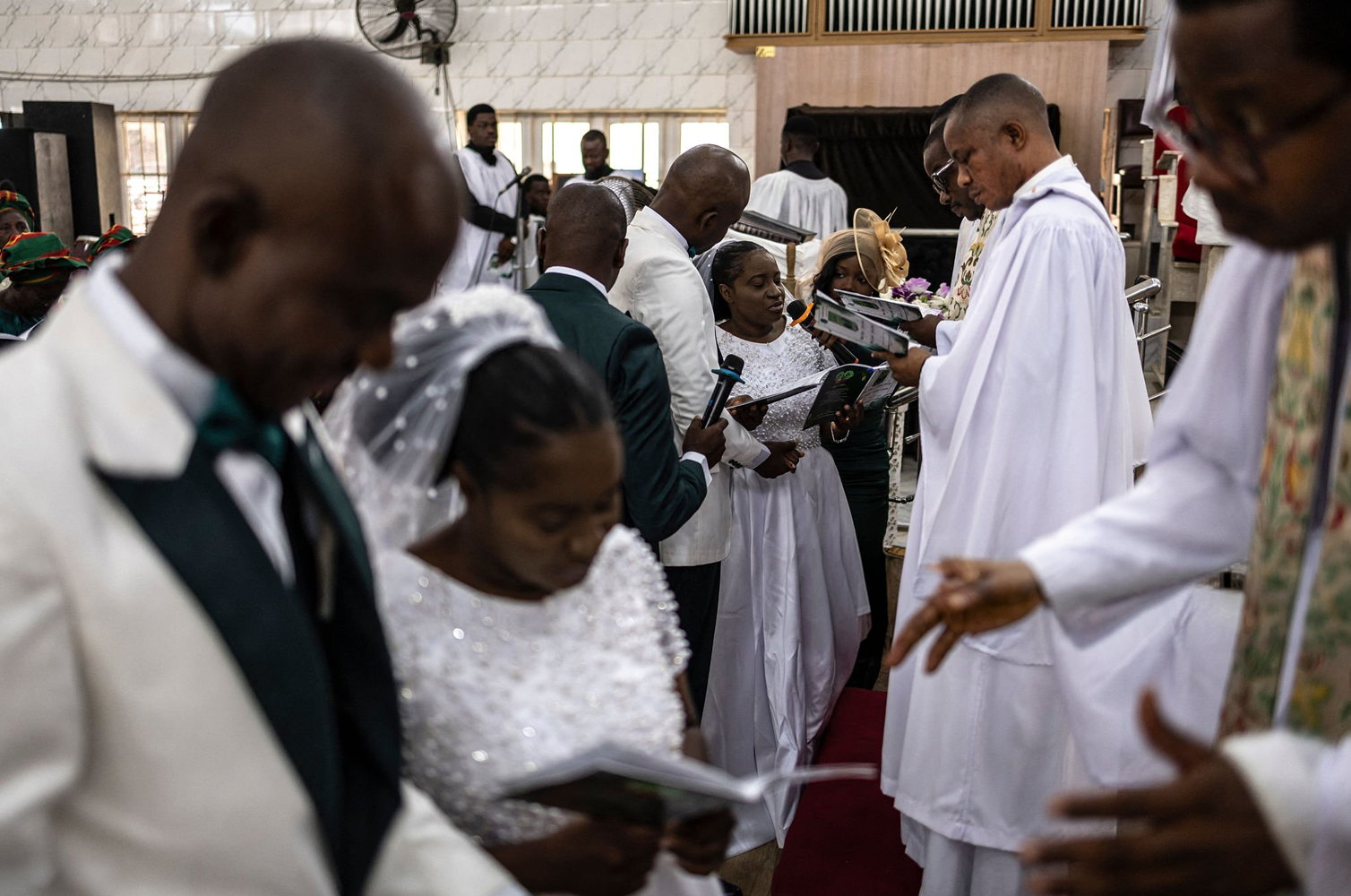
OLYMPIA DE MAISMONT
Kano Mass Wedding
On Saturday, August 8th, 2026, there was a mass wedding held in Kano, Nigeria, with over 1,500 couples married, with a total of 5,000 couples applying. This was a social welfare effort to allow those who could not afford a dowry to get married.
This event was state-sponsored, organized by Governor Abba Kabir Yusuf. Each couple received 100,000 naira ($145 USD) as a dowry, as well as household items. The couples were given an additional 100,000 naira as capital to aid in starting a small business. The government spent 1.5 billion naira ($1 million USD) in total to sponsor the ceremony.
According to the state government and AP, marriage ceremonies took place across Kano’s 44 localities simultaneously. The main ceremony took place in the palace of Emir, with prayer led by Kano’s Chief Imam, Professor Sani Zahraddeen.
The Hisbah, the Islamic police force of the city, oversaw the proceedings. Their job is also to vet the couples wanting to marry. The couples are screened, tested for sexually transmitted diseases, tested for pregnancy, as well as compatibility of genotype before they can be cleared to marry.
The program was particularly for those experiencing economic hardship who would otherwise find marriage to be a difficult financial endeavor, as well as widows and divorcees.
Kano’s Governor Abba Kabir Yusuf is an APC (All Progressives Congress) member and engineer. He’s the 19th Governor of Kano State, taking office in 2023. As a state with the tagline “The Center of Commerce,” Governor Abba Kabir Yusuf pledged to expand affordable healthcare access, improve skills, and respect working families. This is the second mass wedding organized by Governor Yusuf.
Some critics of the mass wedding questioned whether this is an effort to gain more campaign support for the current administration, given that the Kano 2027 Governorship Election is quickly approaching, to be held on February 6th, 2027. According to DW, campaign signs were a visible part of the ceremony.
History and Prominence of Hausa Weddings
However, mass weddings are historical in Kano, with previous state administrations also hosting mass weddings to bolster social welfare for those who could not otherwise afford to be betrothed. The practice started in 2012 by former Governor Rabiu Musa Kwankwaso with 100 couples at Emir’s palace.
Some attendees married their second wives during the ceremony. Kano, an Islamic majority state in northern Nigeria, began to utilize Sharia criminal and civil law in 2000, the second state in Nigeria to follow Sharia law, after Zamfara. This allows men to marry multiple wives. Sharia law is utilized coupled with secular law.
Kano is the most populous northern state in Nigeria, with an estimated population of 17.5 million. The majority of the population is Sunni Muslim. The largest tribe in Kano is Hausa. As such, there are plenty of customs for a traditional Hausa wedding, which are guided by the principles of Islam.
In the Kayan Zance stage, after the bride’s family accepts the proposal, the family receives gifts. The bride’s family is charged with furnishing the house, while the groom acquires the house. This stage also includes the sadaki, or dowry, paid to the bride as a requirement of Islam.
Kunshi and Lalle is a stage carried out in the bride’s father’s house, with the bride and her female friends and relatives helping to beautify the bride, as well as apply henna.
The Fatihah stage is the religious ceremony, where the vows are said. The Daudin Aure stage is where vows are exchanged. Representatives from each family engage in the exchange of the vows, rather than the bride and groom, under the witness of religious officials.
Kamun Amariya, or Kamu (meaning “to catch”) and Sayan Baki are the stages in which the groom negotiates with the bridesmaids over the cash it will take before the groom can talk to the bride in a playful game that hands off the bride.
Kai Amariya is the last stage, filled with prayer and advice for the newlyweds, followed by a reception.
Adolescent Marriage in Northern Nigeria
However, it is common for young adolescents to be married in northern Nigeria. According to the Office of the United Nations High Commissioner for Human Rights Population Council:
“Northern girls have low levels of education, marry very early, and, consequently, experience sexual initiation at earlier ages. Fifty-four percent of North West girls aged 15-24 were married by age 15, and 81 percent were married by age 18. Early marriage is particularly prevalent in rural areas; two thirds of rural North West girls married by age 15… Families arrange the majority of early marriages, with some girls resisting the arrangement and others acquiescing, often considering it the will of Allah. Girls’ spouses are much older than them, with an average age difference of 12 years between husband and wife.”
The report also mentioned married girls lacked awareness of reproductive health, had diminished access to media, and had greater barriers to seeking healthcare. This is contradictory to Governor Yusuf’s platform aims. “Married adolescents come from poorer families and have lower levels of education compared to girls who marry after adolescence (AGI, 1998; Bledsoe and Cohen, 1993).” With poverty levels in Kano at 62%, and marriage providing a way for upward mobility, this can pressure vulnerable populations into the institution of marriage earlier, creating a myriad of health and well-being insecurities.
Weddings should be a cause for celebration – not a necessity due to economic hardship. Governor Yusuf must help ameliorate issues of poverty and socioeconomic stratification that contribute to early marriages that work to the detriment of women.
