
Mzansi Now: Wildfires and Water Shortages Spread Across the Western Cape and Eastern Cape
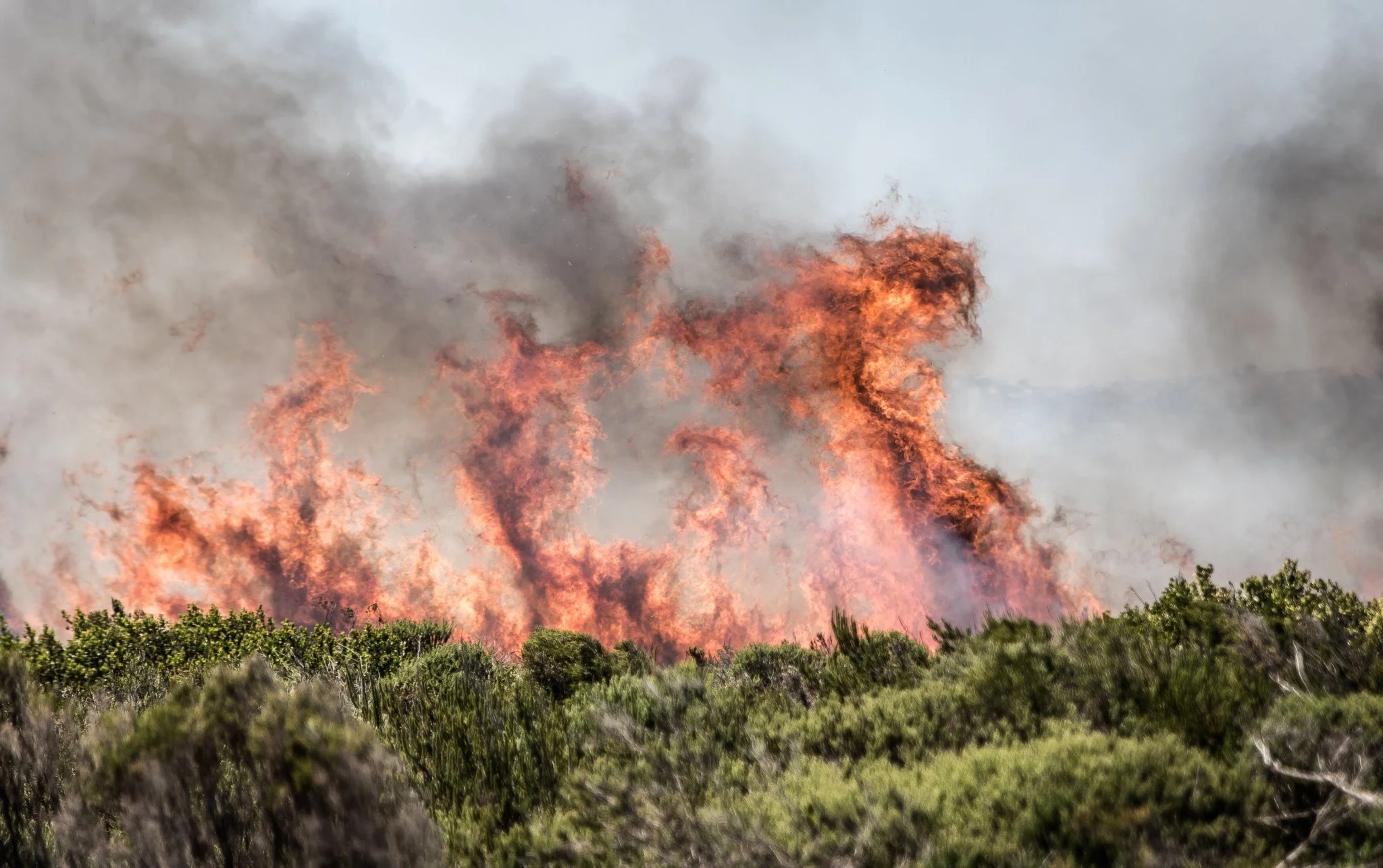
Beginning in early January, the southernmost provinces of South Africa have been ravaged by wildfires. Western Cape Premier Alan Winde called the destruction "the most severe in a decade”, with twice as many fires in the same period last year destroying over 132,000 hectares in the Western Cape alone. Amidst strong and unpredictable winds, the fires have continued to burn throughout the region despite mass efforts to contain them, resulting in evacuations, road closures, and power outages throughout the affected areas.
Compounding the fires’ impacts, minimal rainfall has caused water shortages across the province. The municipalities of Knysna, Kannaland, and Beaufort West have been hit the hardest, with water restrictions similar to those felt leading up to Cape Town’s narrowly averted “Day Zero”, when severe drought in 2017 almost caused all taps in the city to run dry.
The concurrent crises have led the Western Cape cabinet to apply for two disaster declarations: One for the fire, one for the water. The former declaration from the National Disaster Management Centre has allowed the provincial government to access emergency funding and to focus resources. R19 million ($1,162,321 USD) had already been spent by the Western Cape government on firefighting operations between December 1, 2025, and January 11, 2026. Premier Alan Winde deemed a more flexible budget as necessary, given that projections indicate that this year's fire season could extend until May 2026.
Fighting Fires
Len du Plessis, the manager of environmental planning at Garden Route National Park, spoke with SABC News in early January. He said that some fires are welcome, as annual fires clear out older brush and make room for new growth promoting biodiversity in the region. He added that the animals in the park have adapted to such conditions, and have their own methods evading fires when they come. The park staff works to guide the fires into forests of mostly indigenous plants, which do not burn as fast or intensely as non-native forestry, and contain the fires to regions where they can be managed.
On the other hand, farmlands and residential areas have been deeply affected by the fires. In the Kouga and KouKamma municipalities, wildfires have torn through farmland and destroyed grazing areas, fencing, farmhouses, and agricultural structures. Farmers are struggling to keep their livestock alive with nowhere to house them, with many suffering the loss of their animals. In these parts of the Eastern Cape, agriculture is a key economic component, and recovery of land, animals, crops, and resources can take years.
Werner Heyns, the general manager at Pabala Private Nature Reserve, posted on Facebook about drought conditions prior to the start of the fires. The post generated massive response from farmers in the northern provinces of Free State, Gauteng, and Mpumalanga, together donating one million rand’s worth of animal feed to 150 farmers in need in the Eastern Cape. When the fires hit, many of these farmers were able to rely on these donations of animal feed to keep their livestock alive as their grazing pastures burned, and donations continued to roll in as the conditions worsened.
As of February 3, the Western Cape was still seeing small fire outbreaks, but none of extreme scale or damage. The Western and Eastern Cape are both expected to see rainy weather this weekend, boding well for the few flareups that remain.
Managing Director at Working on Fire Trevor Abrahams has called for the development of protocols akin to those of Canada, where fires prompt the evacuation of hundreds of thousands of people. He noted that as South Africa’s population grows and more individuals move to the outskirts of cities like Cape Town, housing developments are built closer and closer to wildland. This means that as climate change drives the intensity and longevity of fire seasons, more and more people are at risk of living in areas where fires are prone to spread.
Water Shortages
The Akkerkloof Dam, which is the Knysna municipality’s primary water storage facility, is at a critically low level of approximately 15%, with only a few days of usable water at present consumption levels. The water shortage is largely due to poor infrastructure and aging pipes, but has been exacerbated by the same hot, dry conditions that prompted the fires. Residents have been depending on water tankers and humanitarian aid from organizations like the Gift of Givers to access clean water in order to cook, wash, and stay hydrated.
Current government interventions include the establishment of the joint operations center, water restrictions, and applications for emergency funding from the national government. These applications were granted with the Department of Water and Sanitation; the department stated on January 19 that they would provide R20 million in emergency relief funding “from reprioritised water services infrastructure grants to Knysna Municipality, together with the provision of technical capacity, aimed at developing groundwater resources to alleviate the current strain placed on available surface water resources in the Knysna Water Supply System”. But Knysna officials claim they require an estimated R127 million to avert Day Zero, which could be just days away.
Knysna is a municipality on the southern coast of the Western Cape. With the province already spending tens of millions of rand to fight the wildfire outbreaks, Knysna’s water shortage crisis brings an additional blow to how much the province must spend in order to keep its people safe. The initial budget of R16 million for disasters like these has been tossed away, with officials using every resource available to alleviate the crises.
The Impact Of Climate Change
Fire season for the southern regions of South Africa typically lasts from December to April, while heavy rainfall occurs in the north. This dichotomy has been especially evident this January as Limpopo and Mpumalanga face catastrophic floods while the fires rage in the Western and and Eastern Capes. While these weather patterns are to be expected, the southern provinces were not adequately prepared in terms of both cost and manpower for such prolific and long term damage.
According to the World Meteorological Organisation, 2025 was the third-hottest year on record. Cumulatively, the past 11 years have been the 11 warmest years recorded. This same record stated that La Niñas, which bring cool, rainy weather to the Pacific, do not mitigate this long-term trend. The floods currently affecting Limpopo and Mpumalanga are part of a La Niña phenomenon, and have caused some of the worst environmental and infrastructural damage in decades.
According to a paper assessing the human, economic, and ecological impacts of wildfires in Cape Town from 2022 to 2025, “climate change has increased temperatures and prolonged droughts in the region, creating ideal wildfire conditions”. The paper drew from the findings of Dr. Natalia Flores-Quiroz from the Fire Research Unit in the Faculty of Engineering at Stellenbosch University, who found that “climate change produces higher temperatures, droughts, low humidity and strong winds. All these factors dry the vegetation and make it easy to ignite. This will increase the rate at which fire spreads. These factors also make the fire seasons last longer.” Dr. Flores-Quiroz’s warnings have certainly manifested in the Western and Eastern Capes, where exactly the same conditions are emerging.