
Mzansi Now: SACP Running Independently of ANC
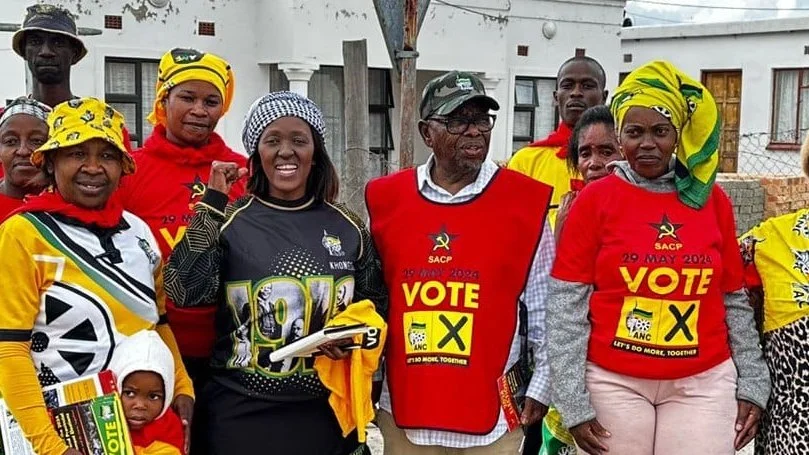
On Friday, April 10, the African National Congress (ANC) held a special National Executive Committee (NEC) to address the South African Communist Party’s (SACP) decision to contest the upcoming elections independently. After 31 years of alliance, the SACP now wishes to run separately from the ANC on the 2026 electoral ballot. According to the ANC national spokesperson Mahlengi Bengu, the meeting focused on the “political, organisational and alliance implications of this development, guided by the historic mission of the liberation movement and the need to safeguard unity, coherence and the strategic objectives of the alliance.”
The SACP, the ANC, and the Congress of South African Trade Unions (COSATU), make up the Tripartite Alliance, a singular banner under which the three parties represent their constituents in government. The alliance’s roots begin in the 1920s, when the three groups organized in tandem to abolish the apartheid regime. Since 1994, when South Africa saw its first democratic elections, the SACP and COSATU have run their candidates under the ANC’s party name, only legally able to attain seats in government by running as dual members of the ANC and their respective party.
But as the 2026 municipal elections draw nearer, the SACP has decided to run as its own party, independently of the ANC.
Why Independence?
The rift began in December 2017, the only other time in history that the SACP contested elections independently. The party won 6.3% of the vote in Metsimahalo’s local council by-elections, earning 3 seats and signalling to SACP members that running their party on the ballot could be successful in larger municipal and national elections. In 2022, at the 15th National Congress, the SACP wrote a resolution to contest future elections independently of the ANC, and demanded a reconfigured alliance focused on collaborative leadership and sovereign consultation rather than the existing top-down approach. Two years later, at the Fifth Special National Congress in December 2024, the SACP reiterated these resolutions to separate itself from the ANC at the ballot box, specifically in the 2026 local elections.
The SACP’s decision to separate itself from the ANC stems from differences in socioeconomic strategies of governance. The SACP believes the ANC has drifted too far towards neo-liberal policies, such as the privatization of state-owned enterprises and the easing of regulations on businesses, straying from the alliance’s original commitment to economic equality and wealth distribution. Furthermore, the Government of National Unity (GNU) has forced the ANC to collaborate with more right-leaning political parties like the Democratic Alliance (DA), a party that has received abundant criticism from the SACP, including demands for the DA to exit the GNU altogether.
While the coalition of these two parties worked cohesively when they had a common goal of eradicating apartheid, they are now at odds over what is best for South Africans. SACP General Secretary Solly Mapaila has said, “There’s no turning back for us to contest the 2026 local government elections.” However, the Tripartite Alliance still stands, and Mapaila also noted that the ANC “remains an ally as long as we share strategic objectives both in theory and practice”.
ANC’s Response
The NEC held on April 10 was the ANC’s last effort to consolidate the party, saying if members supported the SACP, they would be effectively supporting an opposition party, and thus violating the ANC’s constitution and forfeiting party membership. ANC secretary-general Fikile Mbalula reiterated that “the constitution allows dual membership, but it also states that anyone who contests elections against the ANC cannot remain a member”. Mbalula has expressed disappointment in the SACP’s decision to stand independently, but says the ANC will respect that decision after months of unsuccessful attempts to persuade the party to remain unified.
The ANC, which has been dwindling in popularity in the past few elections, has good reason to try to prevent the SACP from separating itself. In addition to losing its outright majority in the 2024 national elections, the party has also seen reduced support in key metropolitan municipalities since the 2016 and 2021 local government elections. These trends suggest that the political dominance once enjoyed by the ANC can no longer be taken for granted, making any further division within its traditional support base more consequential in the upcoming 2026 municipal elections.
The SACP’s Uncertain Future
The SACP’s decision to break away from the ANC is not without its risks. The SACP lacks the extensive grassroots campaign infrastructure and financial resources that the ANC has built over decades. Running independently will require the party to mobilize voters, build local candidate networks, and establish a distinct electoral identity outside of the ANC.
In September 2025, the SACP scored just 1% of the vote in the Fetakgomo Tubatse municipal by-election, the same proportion it won in Ward 13 of the Polokwane municipality the month before. Though these margins show that the SACP does have some support across the nine provinces, it also demonstrates that the party has a long way to go if they want to make significant gains in the 2026 elections.