
Inside Africa: The Economy That Stopped Reporting, What Eritrea’s Closed Financial System Costs Its Citizens
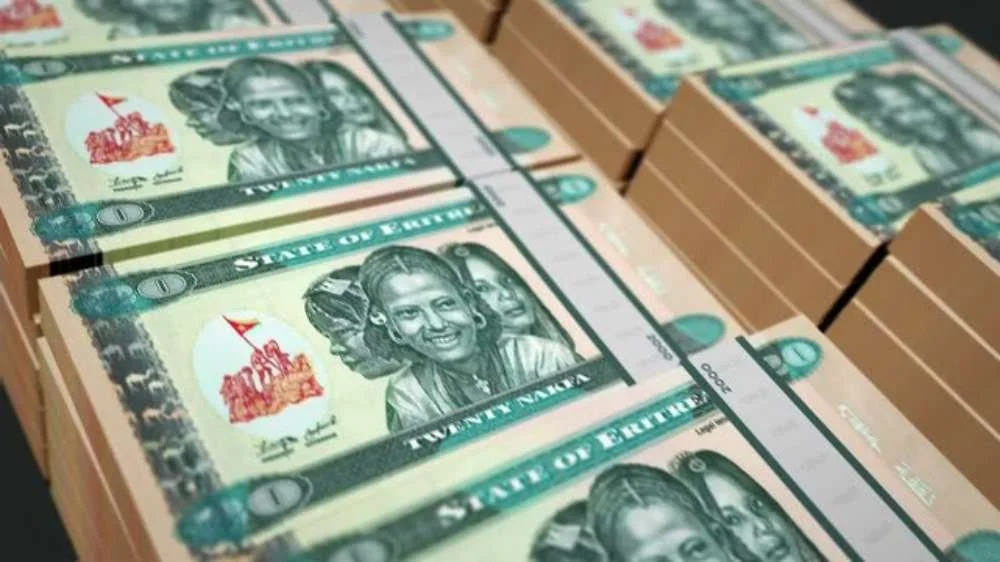
In July 2025, an IMF document listed Eritrea among a small group of countries whose Article IV consultations, the Fund's standard annual economic health check, are significantly overdue. Eritrea's last completed consultation was in July 2019. The other countries on the same list, for various reasons, include Venezuela, Syria, and Yemen. Eritrea appears under the classification “miscellaneous”, a technical term reflecting the practical reality that the government does not engage with standard international mechanisms for economic transparency.
That opacity is not an administrative quirk. It reflects the architecture of an economy designed around state control, minimal external accountability, and a philosophy of self-reliance that has left much of the population in poverty, even as the country earns growing export revenues from a narrow but lucrative mining sector. Understanding how that contradiction works requires looking at three interlocking structures: A currency that operates on two different realities simultaneously, a banking system with almost no modern infrastructure, and a national service programme that has reshaped the labour market for a generation.
The Nakfa and Its Two Prices
Eritrea's currency, the nakfa, is officially pegged to the US dollar at a fixed rate of 15 nakfa to the dollar, confirmed by Trading Economics as of May 2026, a rate that has not changed in years. Eritrea’s monetary controls are enforced by the government and the ruling PFDJ party, which dominates the country’s economic architecture and restricts currency movement outside official channels, according to the Bertelsmann Transformation Index’s 2026 country report on Eritrea. Exchanging currency informally is illegal and actively enforced, with consequences ranging from fines to confiscation. For ordinary Eritreans, the gap between the official and parallel rates has direct consequences: remittances from relatives abroad are converted at official rates when they pass through formal channels, substantially reducing their real value upon arrival.
The Bertelsmann Transformation Index’s 2026 country report on Eritrea notes that most remittances flow through informal hawala networks– a traditional, trust-based money transfer system that operates outside formal banking channels, using brokers to move value across borders without physical currency crossing them– precisely because official channels impose unfavorable rates and significant bureaucratic friction. The same report documents that there are no ATMs anywhere in the country, online banking does not exist, and the most advanced money transfer available through state banks is a check.
A Banking System Built for Control, Not Commerce
Three state-controlled banks operate in Eritrea: The Bank of Eritrea, the Commercial Bank, and the Commercial and Housing Bank. The ruling party, the People’s Front for Democracy and Justice (PFDJ), also controls Himbol Financial Services, which handles remittance processing and diaspora tax collection. Private banks are prohibited. There is no free capital market.
Eritrea operates a strict command economy in which most medium and large businesses are either state-owned or controlled by the ruling PFDJ. The African Development Bank’s Interim Country Strategy Paper 2025–2027 identifies the country’s “small private sector” and highlights the need to modernise public financial management and enhance transparency as foundational challenges. The 1994 Investment Proclamation nominally opened certain sectors to private investors, but in practice, the ruling party determines which investment is permitted and on what terms; foreign companies seeking entry into the mining sector must do so through joint ventures with the state-owned ENAMCO.
The consequences compound over time. The World Bank’s Macro Poverty Outlook for Eritrea confirms state-owned enterprise dominance and the near-absence of private sector regulatory frameworks in technical terms. Opportunities for private enterprise have become “almost nonexistent,” according to the Bertelsmann Transformation Index’s 2026 country report, with remittances channelled toward consumption rather than investment because no accessible financial mechanism for the latter exists.
National Service and the Price of Labour
Eritrea's national service program is widely documented in human rights literature; its economic dimension is equally significant and less examined. Originally framed as an 18-month obligation, national service has, in practice, extended indefinitely for large portions of the population.
As of 2024, more than 683,000 Eritreans were registered as refugees or asylum seekers worldwide, with the largest concentrations in Ethiopia and Sudan, according to UNHCR data cited by the Migration Policy Institute. That figure represents roughly 11% of a resident population of approximately 6.4 million– and the Migration Policy Institute estimates that as much as one-third of the entire Eritrean-born population now lives abroad, with approximately 71,600 Eritreans applying for asylum elsewhere in 2023 alone.
The labor market implications are structural. With a large portion of working-age citizens either conscripted into state service at very low wages or having emigrated, the private economy operates with a chronically constrained workforce. The BTI notes that business opportunities have been undermined not only by regulatory restrictions but by the practical absence of a workforce available to any private employer.
What the Mining Sector Reveals
The one area of the economy that has attracted significant international engagement is mining. Minerals and metals accounted for 95.9% of Eritrea's exports in 2024, with zinc ores, copper ores, and precious metal ores representing nearly the entirety of that. Copper exports to China reached approximately $258 million, and zinc exports reached $180 million in 2024; zinc exports to South Korea added another $98 million.
Mining revenue has generated a current account surplus above 14% of GDP, according to the African Development Bank. It has not resolved the country's fiscal situation. Public debt was estimated at 219% of GDP as of 2023, among the highest ratios in the world, with nearly 80% owed to domestic banks. Eritrea is classified as being in debt distress and has reached only the pre-decision point on the Heavily Indebted Poor Countries initiative, meaning it has not yet qualified for debt relief. In 2022, debt servicing consumed 33.4% of the national budget, constraining spending on health, education, and infrastructure. The World Bank's lending programme is inactive due to repayment arrears.
The UN Country Team’s 2022 Annual Results Report for Eritrea independently confirms the country's debt distress classification and the constraints it places on public spending for health, education, and infrastructure.
The Self-Reliance Paradox
Eritrea's government has consistently articulated self-reliance as the basis for its economic and political choices, a philosophy forged during its independence struggle and hardened during the border war with Ethiopia from 1998. The national service program, the rejection of IMF oversight, the suppression of private enterprise, and the restrictions on currency movement all flow from a worldview in which external dependence is treated as a strategic vulnerability.
The paradox is that the same architecture produces dependence of a different kind. With the domestic economy unable to generate sufficient livelihoods, the population increasingly relies on the diaspora for survival. The government taxes the diaspora at 2% of income, a Recovery and Rehabilitation Tax collected through Eritrean embassies worldwide, and relies on informal remittances to sustain households that state wages cannot support. The ISS African Futures project estimated that 38.9% of the population lived below the extreme poverty threshold as of 2019, equivalent to approximately 1.36 million people.
What is clear is that the country’s formal statistics, already thin, are growing thinner. With no IMF consultation completed in six years, no World Bank lending active, and no private banking sector generating independent data, assessing how this economy is actually performing for ordinary Eritreans becomes harder every year.
