
Inside Africa: Cato Ridge Development Project, a Treasure Trove or a hollow promise
"The Cato Ridge Logistics Park, which includes the Insimbi Ridge and Dry Port developments, holds the potential to significantly boost our economy and tackle unemployment," said Cyril Xaba, eThekwini Municipality Mayor, following the launch of the project on 10 November 2025. So, what exactly is the Cato Ridge Logistics Hub and how would it boost the South African economy? Before that question could be answered, a dive into the long-standing South African logistics crisis is in order.
Diving into South Africa's Logistics Crisis
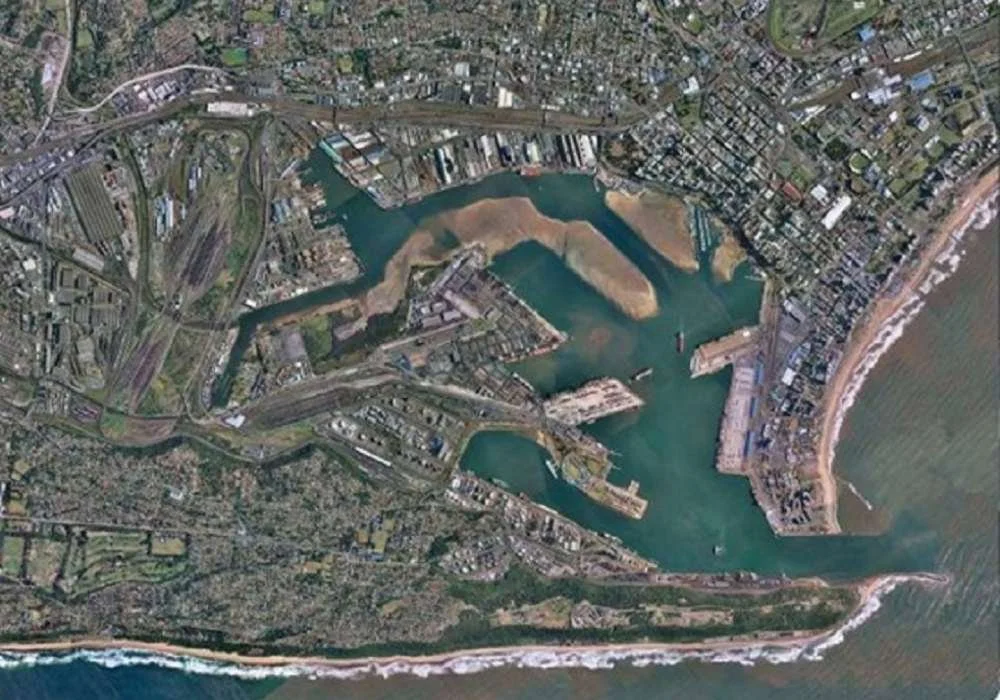
At the peak crisis period of 23rd and 30th November 2023, more than 60,000 containers were stranded outside Port Durban at once, with the port congestion estimated to cost the South African economy over R124 million per day, taking a toll on the already fragile economy. The source of this crisis was the limited capacity of the ports across South Africa. In fact, the CPPI (Container Port Performance Index) of Sub-Saharan Africa was ranked by the World Bank as the lowest amongst all regions between 2020 to 2024 due to the poor infrastructure of ports across Sub-Saharan Africa, South Africa included. Port Durban handles 60% of the ship freight in South Africa, but it is only operating at 75% efficiency.
Ever since the Red Sea was plunged into crisis, driven by various conflicts in the Middle East, South Africa's logistics crisis has only worsened. The ongoing dispute along the Suez Canal means that ships are diverted to the Cape of Good Hope route, putting further pressure on the ports in Durban and Cape Town – this is where developments such as the Cato Ridge development could help in the long term.
What is the Cato Ridge Project About?
As part of the government's goal to ease the logistics bottleneck at the ports, Transnet – a state-owned enterprise and South Africa’s largest rail, port and pipeline company, has partnered with private entities to construct a dry inland port at Cato Ridge along the Durban-Gauteng freight corridor, with an estimated investment of R17 billion needed for the entire project. The Insimbi Ridge Hub will be located 52km, from the Port of Durban and shipments from the latter will be transported to the dry port through rail, which will then be distributed to their respective destinations via the N3 highway. Cato Ridge is identified as the prime location for this precinct because it directly borders the N3 highway.
Purpose and Benefits of the Hub
The hub’s purpose is to ease the supply of shipments at the Port of Durban, enabling more vessels to dock and load or offload their containers. This hub is an offspring of the national goal of improving freight efficiency as outlined in South Africa’s National Development Strategy 2030, and works in parallel with the R100 billion Port of Durban expansion.
The Cato Ridge Logistics Hub would comprise a truck stop and staging facility, a tank farm, a logistics and industrial park and an intermodal and automotive terminal,stretching more than 500 hectares over former industrial land. It is predicted that the establishment of this logistics hub at Cato Ridge will lead to 5,000 employment opportunities during the construction stage and over 10,000 permanent jobs in the long run. The logistics hub is not only contributing to the economy by tackling the crisis, but also through its multiplier effect of job creation. Furthermore, the local workforce could also benefit from training and skills development, especially in manufacturing which could allow them to transit from a primary sector job to a likely more lucrative secondary sector job.
Finally, the Cato Ridge Development Project could produce a clustering effect, wherein more industrial businesses are attracted to the area, leading to a rise in population within the area and spiking the demand for local goods and services. More housing will also be built as part of the project potentially lowering housing costs and the building of schools will increase the accessibility of education for young children in Cato Ridge.
A Long Term Impact or a Fleeting Economic Yield?
Shifting our attention to the Durban-Joburg freight corridor which has been making a loss since 2016/2017, the former CEO of Transnet Freight Rail Siza Mzimela, has commented that the freight system has been "very unreliable due to underinvestment."
Why is this relevant to the Cato Ridge hub? The poor efficiency of the Durban-Joburg corridor acts as a reminder that the goal of a plan does not always materialize. Thus, despite the projected opportunities of the development project, the actual efficiency gain in logistics and the long term benefits are yet to be observed.
Furthermore, the logistics of transporting shipments to the Cato Ridge dry port relies heavily on the — currently underperforming — Durban-Gauteng rail network. From the period of 2011-2023, Transnet's market share for rail container traffic from Durban to Gauteng has declined from 19% to 13%, driven by ageing infrastructure, over half of all substations on the corridor being offline, and signalling system theft forcing speed restrictions across the network. If the rail component continues to underperform, trucks default to the N3, defeating the purpose of the dry port entirely. From the Cato Ridge dry port, the N3 highway would be used for last-mile distribution according to the plan. However, heavy vehicles are already occupying 44% of the road daily. If the proposed Insimbi Ridge is successfully built without a parallel resolution to the rail problem, the South African government will once again be challenged to ease the traffic flow or face low efficiency freight transport due to congestion.
Besides, the project is completely funded by private investment and growing voices of dissent around the privatization of infrastructure suggest the Insimbi Ridge would not escape political pushbacks. Following the privatization of the Durban-Johannesburg freight corridor, Parliament's Public Enterprises Committee stated in their official media statement:
“Members of the committee [said] the government had not instructed Transnet to privatise any of its business and should rather concentrate of developmental projects. Committee members expressed their frustration that Transnet is not following government’s mandate for state-owned companies.”
ANC MP Judith Tshabalala directly told Transnet: "the ANC government never told you to privatise anything." Thus, whether the Cato Ridge Development Project will be successfully implemented remains unclear, given its reliance on private funding which MPs within the South African parliament remain firmly opposed to.
What This Development Means for South Africa
With the billions in investment needed as part of this project, it is hard to predict whether the outcome would be a net loss or benefit. The precedent of the Durban-Joburg corridor is a sobering example of how decades of poor maintenance and efficiency cannot be papered over even by a surge of investments. However, if this project succeeds in conjunction with the R100 billion Port of Durban expansion, South Africa could very well position itself to capitalise on the redirection of vessels towards the Cape of Good Hope, improving its CPPI when the world needs it the most. The pool of opportunities that this development stands to offer to the population of Cato Ridge and beyond is also of significant magnitude, but that pool is only as large as South Africa’s ability to execute.