
Mideast: Egypt Makes Strides Towards Its Ambitious Desert Reclamation Goal
Eslam Mohammed Abdelmaksoud
Egypt is advancing towards a major agricultural and infrastructural transformation, with its ambitious New Delta Project leading the way. The massive agricultural mega-project aims to turn large swaths of desert into productive farms and boost national food security by reclaiming 2.2 million feddans, expanding Egypt's cultivated land by more than 20%. For a nation that is one of the world’s largest importers of foodstuffs like wheat, and whose population is almost entirely clustered around the Nile in only about 5% of the country’s land, the project will allow for change not only in agriculture, but in food security, physiological density of the population, and overall land productivity.
The New Delta Project began as two separate undertakings in the late 2010s that both aimed to reclaim adjacent plots of desert land but differed in their goals and oversight structures: the Future of Egypt (Mostakbal Misr) and the South Dabaa Axis Project. The Future of Egypt, run under a military “super-agency,” focuses on building massive localized factory cities to process crops on-site — including mega-silos, cooling stations, sugar beet processing plants, and packaging centers — while relying on a mix of groundwater and recycled surface water and wells.
In contrast, the South Dabaa Axis Project, with its immediate proximity to the Mediterranean coast and major transport ports, is designed to cultivate strategic commodities like wheat, corn, and barley and quickly move crops that do not require processing. It also accommodates civilian community expansion while relying on treated wastewater. Together, the two sub-projects act as something of a balancing force against one another, with each complementing the other in resource distribution and supply chain logistics.
By 2021, state planners and President El-Sisi formally brought the two projects together under the umbrella of the New Delta Project. With this coordination, it was made possible to construct one massive water network to feed both areas.
Bringing the New Delta Project from blueprints to reality requires an exceptionally large and ambitious infrastructure and logistics plan building both original projects concurrently in three distinct phases, with phase one already well underway.
Phase one is focused on building the infrastructure that the projects rest on, namely the excavation of the 114-kilometer canal network that will be instrumental in supplying the water for these projects. It also requires extensive electrical power stations to be completed, earthworks and road networks to be expanded in an unprecedented manner, 10 massive underground 3-meter-wide pipelines to be installed, as well as the erection of the core pumping grid and the completion and integration of the Al-Hammam Agricultural Water Treatment Facility, among other needs.
Egypt has already made significant strides forward in its plans. It has completed and integrated the Al-Hammam plant, with the plant reaching full operational — and record-setting — capacity, processing 7.5 million cubic meters of water per day. Heavy excavation crews have already carved out over 697 kilometers of open canals, laid 9,100 kilometers of deep pipelines to transport water across the desert plateau, and paved 12,000 kilometers of roads to support the heavy factories and construction. In order to work against the natural slope of the desert and provide enough power to move water uphill, Egypt has also completed the installation of 18 electrical substations, delivering 2,051 megavolt-amperes of energy.
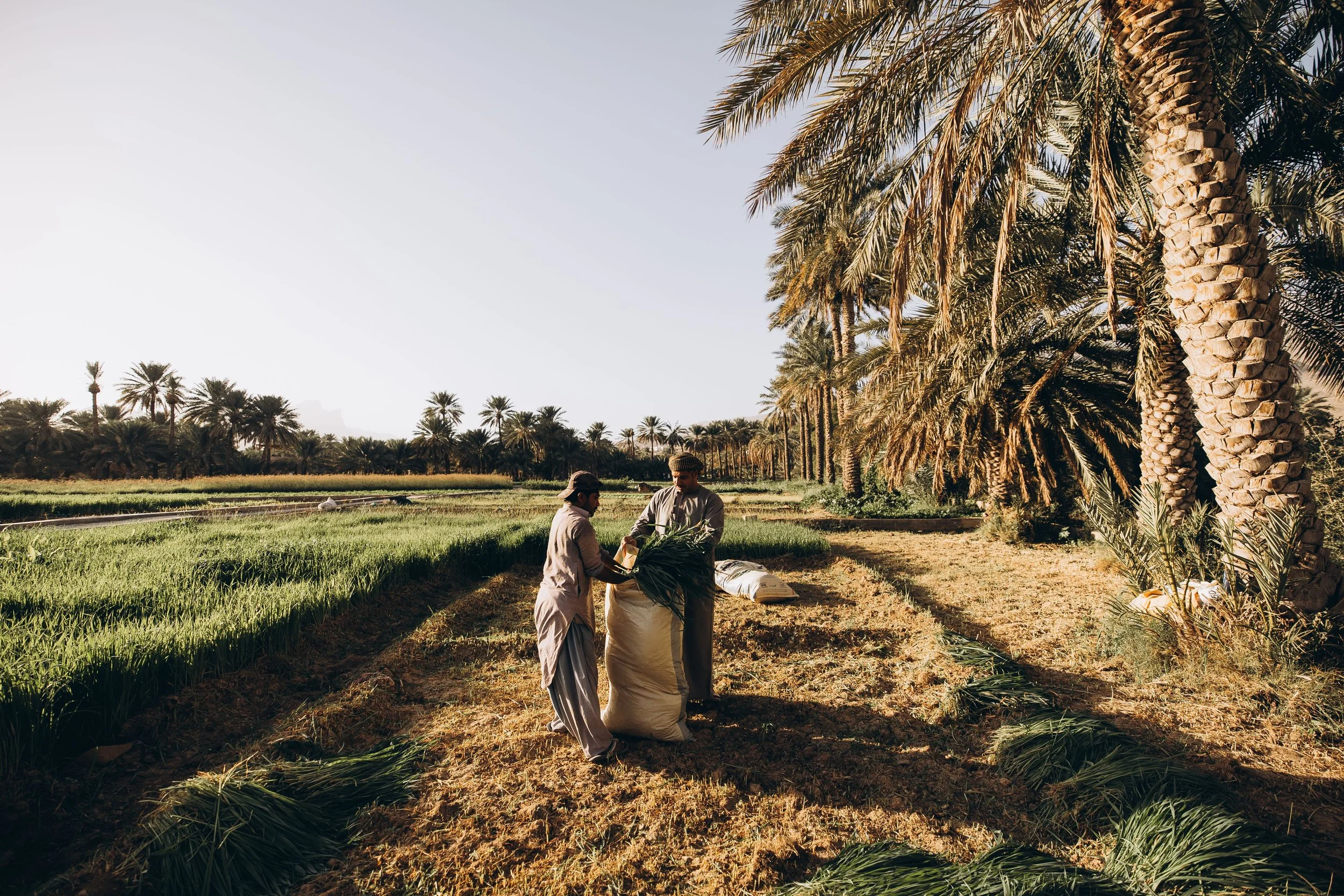
Already, the transformation from these undertakings has begun to show. Over 420,000 feddans of desert land have already been successfully reclaimed and cultivated, and early crop cycles have directly contributed to a 17% drop in Egypt's wheat imports, saving approximately $250 million in state funds. In addition, national food exports have risen from over 5 million tons to over 8 million tons— an increase of roughly 60% in a matter of years.
But the work is far from over. Egypt seeks to reclaim and cultivate 2.2 million feddans by 2030, and the transition from purely state-funded agricultural production into self-sustaining civil commerce is projected to last into the 2040s. With this multi-decade plan coinciding with the instability of the climate crisis and ongoing and escalating regional tensions, as well as the exceptionally high water demand it requires, concerns have been raised about the long-term viability of the New Delta Project.
The project relies on a hybrid water network providing roughly 17.5 million cubic meters of water daily into the desert, which faces the complications of Egypt’s natural water scarcity and Ethiopia's Grand Ethiopian Renaissance Dam upstream. Although the project deliberately seeks to avoid total reliance on the Nile by recycling agricultural runoff and treated wastewater, the Nile still acts as a necessary contributor and will ultimately provide an estimated 10 million cubic meters of fresh Nile water daily directly to the project axis. As such, any reduction in Nile volumes directly threatens either the ancient, highly fertile Old Delta farmlands or the newly created desert fields.
The project also utilizes massive amounts of groundwater from ancient aquifers that, once used, are gone and cannot be replenished with the low amount of natural rainfall in the region. The Moghra Aquifer, for instance, which the project draws on, has already lost over half its volume in the past fifty years due to intensive irrigation pumping. In addition to potentially leading to land subsidence, such high drainage could also trigger saltwater intrusion from the nearby Mediterranean Sea, corrupting the fresh groundwater and allowing for rapid evaporation that would leave behind highly concentrated mineral salts. Over time, the soil would become too toxic for plants to grow, effectively ruining the newly reclaimed farmland.
With that, the New Delta Project poses a significant opportunity for transformation— not only in agricultural production and food security, but also in the regional water situation as it is currently known. As the massive plans move forward, Egyptians and ecological scientists alike are sure to be keeping a close eye on both its progress and impacts.
