
Far East: Students in Taiwan Take Action Against Food Waste
CNA photos
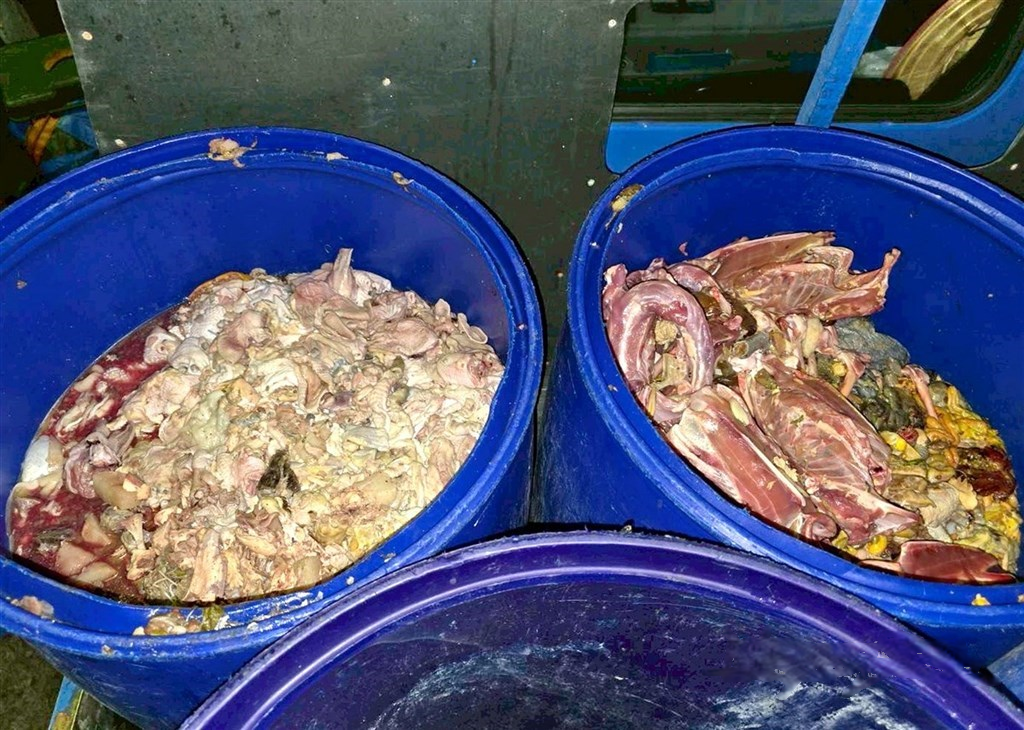
In 2025, Taiwan generated an average about 2,115 tonnes of kitchen waste per day, and reports show that school meal services are responsible for about a quarter to one-third of all food waste in the country. Furthermore, around one-third of food prepared in campus catering is thrown away daily. To counter the situation, Taiwan is now launching a nationwide food waste reduction initiative called the “Taiwan New Food Saving Movement.” Starting off in 2025, with a major focus on schools and campuses as large-scale programme sites, the initiative adopted a framework similar to the EU’s Food Use for Social Innovation by Optimising Waste Prevention Strategies (FUSIONS) methodology. Efforts to track waste across five stages — primary production, processing and manufacturing, distribution and retail, food services, and household consumption and disposal — aim to reduce waste from farms through school cafeterias to households.
Beyond the “Taiwan New Food Saving Movement”, Taiwan has launched various school-related environmental and sustainability programs that go beyond waste collection.
Campus Food Forests
Starting in late 2025, schools at all levels across Taiwan began building campus food forests. By mimicking the structures of a natural forest, teachers and students plant multi-layered edible plants, medicinal plants, and companion flowers in campuses. Emphasizing the importance of transforming textbook knowledge into real practical sustainable living skills, students are the main participants in designing, implementing, maintaining, and planning the food forests. Additionally, these programs and their accompanying green spaces reduce campus food waste and carbon emissions through green spaces.
According to the Ministry of Education, over 100 elementary, junior high, and high schools have already joined the food forest projects across cities in Taiwan. Campus food forests are commonly home to fruit trees, such as mango, guava, and longan, herbs, such as basils and mints, native leguminous plants to fix nitrogen and enhance soil fertility, butterfly gardens with nectar plants, and rainwater collection and composting facilities.
Many schools have launched their own innovative practices in the food forests. For example, Kaohsiung high school students are designing automated irrigation systems, which further enhance the multifunctionality of a campus ecosystem. Taiwan Green Education Association estimated that each school can reduce approximately 500 kilograms of carbon dioxide emissions annually.
Campus Food-Tracking System and Composting Programs
A Novenber 2025 report indicates that schools across Taiwan are cutting food waste by keeping track of students’ leftovers and collecting their feedback. In this way, the campus catering service gained a better understanding of students’ food preferences while simultaneously encouraging students to prevent waste — leftover quantities then decreased within months.
According to Tainan’s Department of Education, the food-tracking system’s first goal is to reduce food waste by 8% in three months.
Furthermore, many schools in Taiwan have established on-campus composting programs. In cafeterias, gardens, and food forests, compost bins are set up where students can actively participate by managing and monitoring compost piles and collecting food scraps.
In schools that have adopted food-tracking systems, students have noticeably shifted their consumption behaviors. According to education officials in Tainan, when seeing the daily food waste data in cafeterias or in class, students are motivated to reflect on their portion sizes and reduce their food waste. Moreover, the feedback systems that allow students to rate and provide feedback on meals have helped the kitchen staff to adjust the menus and, at the same time, reduce unnecessary leftovers.
These examples show that food-tracking initiatives in Taiwan work most effectively when paired with student participation and transparent communication, which differs from abstract messaging and top-down enforcement.
Rural Schools
In 2025, a Taiwanese food-agriculture education project (食農教育–臺灣油芒復耕計畫) partnered seven rural indigenous schools with local communities, enabling students to learn traditional crop planting and environmental education from experts. Local farmers would advise students on planting and donating seedlings, while also teaching them how to cultivate oil-mang (油芒).
More than a thousand people from six major indigenous tribes and seven rural schools participated in this project, such as the Paiwan Tribe (排灣族) and Bunun tribe (布農族). Students and local farmers plant oil-mang together. Oil-mang (油芒), which may be relatively unfamiliar to foreigners, was once a traditional crop of indigenous communities in Taiwan. The nutritional value of oil-mang far surpasses that of rice and millet, with notable levels of fat, protein, calcium, magnesium, and potassium. Furthermore, scientists discovered that oil-mang is particularly adaptable to climate change and can save at least 25% of water during cultivation.
Therefore, this project not only promoted environmental education in rural schools and connections between local communities, but also established an initiative that saves water and add a new primary food source in rural areas.
Limitation and Challenges
Despite these promising developments, the implementation of campus-based food waste initiatives still faces practical and structural challenges.
To begin with, not all schools have the same financial and spatial capacities to build food forests, and the food waste-tracking systems make it necessary to recruit more human capital resources. Schools in rural areas, in particular, tend to face greater challenges due to limited technical support and insufficient long-term funding to sustain these initiatives. The oil-mang project in rural areas reflects prominent development and collaboration in agriculture in local tribes and schools, however the absence of food-tracking, cafeteria-feedback systems, and food forest persisted. This shows that not all regions can access the same level of support in environmental education.
Furthermore, many schools chose to assign the hands-on environmental educational duties primarily to teachers and catering staff, which require substantial training of time that puts additional stress and burden on them.
Ultimately, sustainable design education in Taiwan is still fragmented. Although national policies are broadly supportive, the integration of sustainability into everyday school practices is uneven, limiting the overall impact of these programs.
Overall, Taiwan’s school-centered efforts to reduce food waste highlights both the potential and complexity of addressing environmental challenges through education, reflecting how schools can serve as key sites for transformation and change while also revealing the important need for sustained resources and systemic support.