
South Pacific: Wallis and Futuna’s Contested Leadership
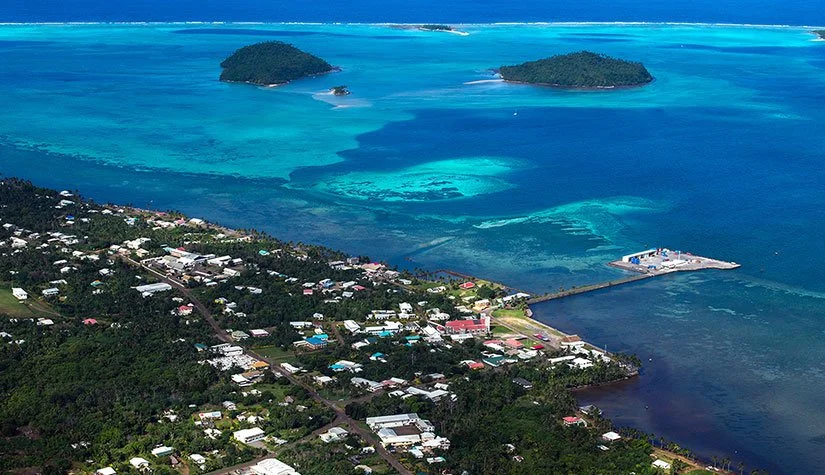
Wallis and Futuna is an archipelago in the South Pacific and an overseas prefecture of France that often flies under the radar when it comes to major diplomatic influence due to their small size and population (11,000). However, further investigation finds an interesting case of utilising a hybrid structure where republican French administration operates alongside three Polynesian customary monarchies. The balance between customary authority and an acting democratic French government has not always blended. Almost ten years ago, in 2016, tensions arose and dozens of protesters stormed the palace to prevent the enthronement of Tominiko Halagahu. Some traditional royal families claimed it was their job alone to choose. The chiefs, they say, should merely organise the crowning ceremony.
French security forces largely did not intervene, considering a very similar scene played out another ten years ago that escalated to a would-be reformer dying and airplane runways were made un-landable for intervention. This was in 2005, armed supporters of the traditional king, Tomasi Kulimoetoke, blocked roads and shut down the airport on Wallis Island. The protest was caused after a dissident group announced plans to install a new king that weekend.
Still, Wallis and Futuna remain a French territory, but questions arise over the success of their hybrid model of governance, especially considering there are many pre-existing divisions in the nation with utmost difference in opinion over authority. It also remains to be seen how Wallis and Futana can build connections between powerful allies despite internal division in the nation.
Hybrid Political System
Within Wallis and Futuna, there are three traditional kingdoms: Uvea, Alo, and Sigave. The former is located on Wallis Island and the latter two are located on Futuna Island. These three kingdoms all have their respective kings that are explicitly recognised in French law. They are selected within aristocratic chiefly families and validated by local custom. These kings are not figureheads and have no real authority, instead they are formal members of the Territorial Council, the consultative institution that reviews local matters before they go to the Territorial Assembly. Customary authorities are also able to exercise non-criminal justice according to local tradition, including land tenure and familial disputes, and preside over ceremonies that are central to traditional community life.
However, at a global and territorial level, the president of France is still head of state. He is represented by a Prefect, also known as a superior administrator, that is appointed by the French government.
Alongside the superior administrator, Wallis and Futuna has an elected Territorial Assembly of 20 members, who serve five-year terms. Together, Wallis and Futuna’s modern government institutions work closely to govern social and economic affairs such as health, education and infrastructure. However it is important to note that the superior administrator still has executive authority on matters such as law enforcement and even judicial administration.
The structure technically has three levels to it. First, governance from customary authority emplaced at a local level, regarding communal traditional practices. Second, the territorial assembly that manages overarching local affairs through elected leadership. Finally, the leading government of the french republic dictates executive governance on key matters, except customary ones.
It is important to emphasise that while the French Prefect cannot override customary matters, France retains sovereign authority over defence, security and justice, and approves key territorial decisions.
2005 Crisis: Custom Versus Reform
The 2005 customary crisis came when Tomasi Kulimoetoke II, reigning king of Uvea since 1959, was accused of corruption. His grandson was convicted of manslaughter and he, reportedly, sought to protect him. Reformists claimed the monarchy was placing tradition above the rule of the law and called for the king’s removal. However, royalist supporters responded radically by creating road blocks, shutting down the Hihifo airport, and arming loyalists. The French government was cautious to intervene, realizing this was a customary dispute and had international risk of escalation. More importantly, this crisis revealed two ideals, one side defending customary autonomy and the other advocating for reform with closer alignment to the French legal norms.
For France, Wallis and Futuna represent more than a small and isolated island group. It contributes to France’s Pacific Exclusive Economic Zone (EEZ) and reinforces France’s identity as a South Pacific power. Stability in the territory underpins that geopolitical presence. Nonetheless, stability relies on local harmony. When Tomasi Kulimoetoke II died in 2007, the succession question reopened those unresolved tensions. His almost five decade reign had masked structural fractures. Without it, divisions sharpened.
2016 Crisis: Two Kings, One Territory
In April of 2016, Wallis and Futuna witnessed two rival kings being instated a few days apart from each other. On one hand, a faction of chiefs enthroned Tominiko Halagahu as king of Uvea and the following day a rival council installed Patalion Kanimoa as their king as well. Very briefly the island had two monarchs refusing to step down. This led to violence as protesters stormed the royal palace and community division was stark on a local and global level. Political schism in a country with only 11,000 people meant the crisis was deeply personal and needed to be rectified immediately.
France was again forced into a delicate position. Under the territory’s hybrid framework, customary kings are recognised in law and receive state funding. They also sit within institutional structures, therefore, recognition carries administrative consequences. Ultimately, Paris recognised Patalione Kanimoa as the legitimate Monarch.
A deeper question resurfaced during and after this crisis: if a monarch’s authority depends on recognition from France, where does sovereignty truly reside?
The future: What does the future of the Government look like?
Wallis and Futuna’s hybrid model of governance is not inherently destined to fail. Larger South Pacific countries such as Samoa successfully navigate a similar model, however there is no denying Wallis and Futuna’s government is still very fragile. France’s involvement, though sometimes helpful, exposes that customary authority has limits if, at the end of the day, France still decides who deserves the throne.
On an international, political level, every country in the South Pacific is integral for larger powers such as China, the United States, and Australia to maintain a strong presence and have imbalances in power. There is no difference for France, the islands strengthen its presence. Therefore, a territory divided over succession and authority cannot easily project cohesion abroad and is actually detrimental to whether they benefact France. Its apparent change is necessary for the future of Wallis and Futuna’s government, especially in regards to developing, reinforcing, as well as understanding its hybrid model better.