
Jens Vogel
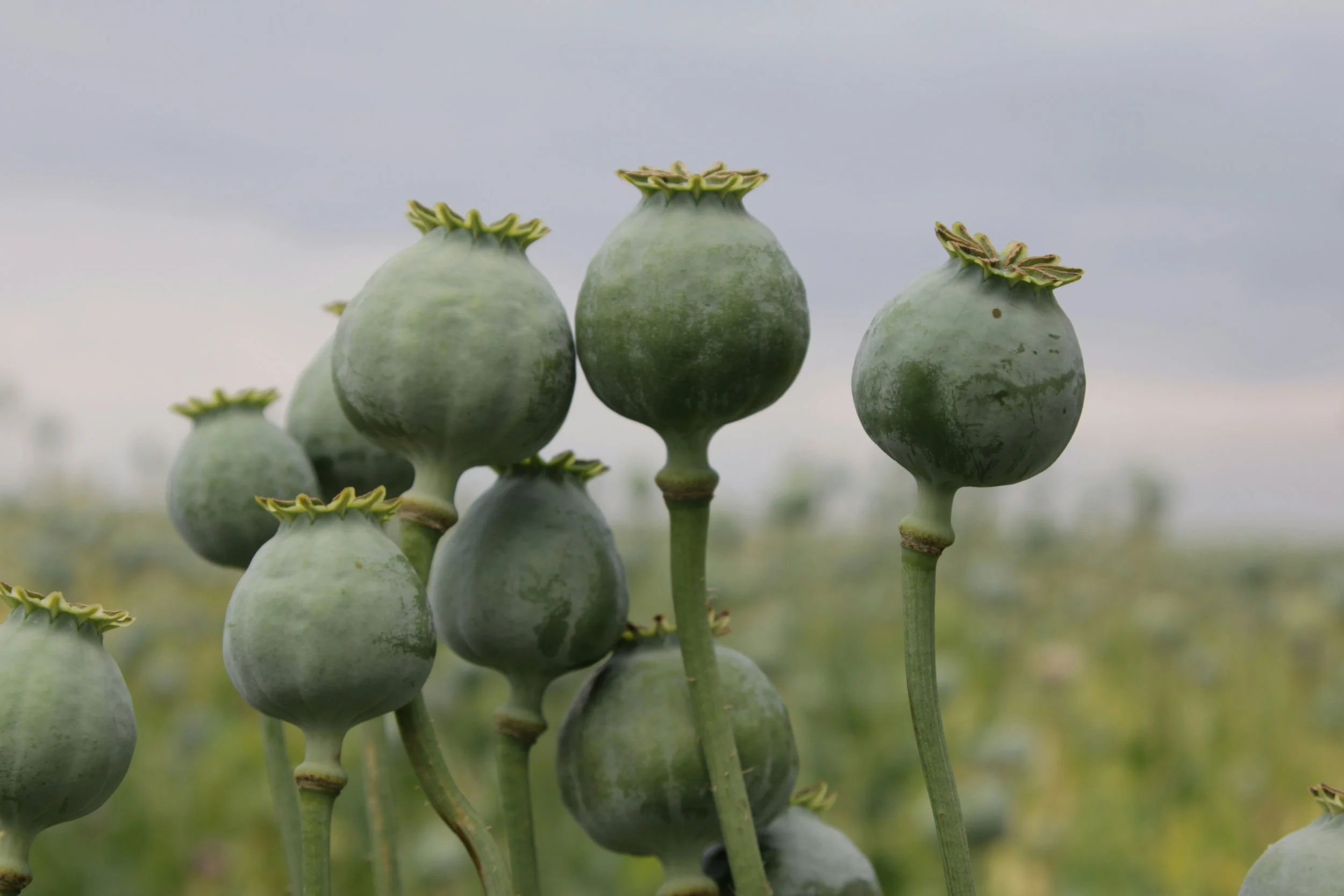
On February 4, 2026, Lao authorities uprooted 21 poppy plots covering 9.8 hectares in Phan village, Yod Ou district. This year, the government has cracked down on opium poppy cultivation on a larger scale, with official reports stating that more than 13 hectares of illicit crops has been destroyed just of early February. The most up-to-date data from the the United Nations Office on Drugs and Crime (UNODC) shows that Laos cultivated around 5,000 hectares of opium poppy in the year of 2023.
In 2025, police dealt with around 3,660 drug-related cases nationwide. Around 5,643 suspects were detained, among them 322 foreign nationals. Drug offense is ranked as the second most common crime in Laos, and drug addiction is an ongoing and serious issue in Laos. According to the United Nations Office on Drugs and Crime, Lao is the third-largest illicit opium poppy producer in the world and has one of the highest opium addiction rates. The question, the, is why is illegal opium poppy cultivation in Laos a persisting issue? These statistics reveal an expanding cultivation landscape, and to understand the reasons behind this recurring issue, it is necessary to examine the deeper geographic and political conditions that enable farmers to return to poppy cultivation year after year.
Laos’s Geographic Conditions
Laos, a landlocked country located in northeast-central mainland Southeast Asia, is known for its geographically diverse landscape featuring forested mountains, upland plateaus, and lowland plains. The population is united largely through agriculture, particularly rice cultivation, yet this landscape is also suitable for opium poppy cultivation.
In northern Laos, the high-altitude mountainous terrain is ideal for opium poppy cultivation, as poppy thrives at elevations between roughly 800 and 1,800 meters, and the relatively cooler temperature lowers the risks of fungal disease and waterlogging.
Additionally, the remoteness of forested uplands became a natural cover for opium cultivation. State surveillance and regular access by enforcement teams is more challenging and costly. Under this situation, farmers scatter smaller plots of opium across hillsides and avoid planting on flat, accessible lowlands. According to the Southeast Asia Opium Survey 2014, researchers found a link between opium cultivation pattern and altitude and rugged terrain. Most poppy fields were found to be located at mountainsides with no access roads. This highlights the difficulty that enforcement operations face in accessing cultivation sites, where they usually have to spend hours crossing streams and mountains to reach the remote terrains.
Historical Roots
The roots of the poppy cultivation in Southeast Asia date back to the nineteenth century, when colonial trade systems and regional demand for drugs embedded the issue deep into local economies. The historic Golden Triangle – the mountainous border area where Myanmar, Laos, and Thailand converge along the Mekong River – is globally known for opium and heroin production.
The name “Golden Triangle” is not a particularly old historic term in Southeast Asia’s opium production and cultivation. It first appeared on July 24, 1971 in an Asia-wide weekly magazine that is now cancelled. The article was titled “A Wonderland of Opium” and written by T.D. Allman, an American historian and author. Allman argued against the statement by Washington that “most opium grew in China”, claiming that a drug-ridden “golden triangle” stretches from northeastern Myanmar to northwestern Laos and northern Thailand.
Prior to World War II, most countries in Southeast Asia operated government-controlled opium monopolies. Opium in what is now Laos was ruled by the French colonial administration that controlled the drug’s importation, processing, and sale of opium. The poppy opium sale and production in Laos was legalized and taxed, and this system embedded opium deeply into Laos economy and social structure. Now, opium is not legalized or taxed in Laos, and authorities regularly conduct eradication campaigns against poppy fields.
The Golden Triangle remains to be one of the world’s greatest centers for illegal activities. The most up-to-date data in 2023 shows more than 350 physical casinos have been built across Southeast Asia, with at least 20 built in northern Laos; these casinos serve as vehicles for money laundering. According to UNODC, the growing number of casinos in Southeast Asia facilitated the formation of a vast underground banking system, providing the foundation for organized criminal groups.
Alternative Crop Substitution Efforts and Limitation
In response to the persistence of illicit poppy cultivation, alongside enforcement on cultivation eradication, the Lao government has made efforts in understanding the economic incentives behind the persisting opium planting and sale for farmers. As a result, the government started alternative development strategies aimed at reducing farmers’ dependence on opium poppy.
The authorities have partnered with private sector actors to promote cash crop substitution in northern provinces, which are areas that are the most reliant on opium cultivation. According to General Vilay Lakhamfong, the Minister of Public Security, 54 companies joined the initiative and they have allocated jobs to around 1,200 villages. At least 47,466 families in total are estimated to have benefited from this plan. One strategy, for example, is livestock distribution, with cattle provided to villages as long-term income-generating assets.
However, whether this plan is truly leading toward promising outcomes is still debated. For farmers, alternative crops generate lower and less predictable income than opium. In addition, cash crops need reliable road access and storage facilities, yet infrastructure development remains insufficient, especially across northern provinces in Laos.
Conclusion
Laos’s continued struggle with illicit opium poppy cultivation shows that eradication and enforcement efforts alone are far not enough to address the problem. The government’s alternative crop substitution programs is an important example of progress made toward understanding farmers’ economic realities, yet the actual structural challenges they continue to face are still underestimated.
In northern regions of Laos, remote geographic location, limited infrastructure, unstable market access, and low profitability of legal crops all act as obstacles for families to fully abandon poppy opium cultivation. As noted by The United Nations Office on Drugs and Crime, sustainable reductions require long-term rural development rather than short-term suppression. Without sustained institutional support and expansion of economic opportunities for people, poppy cultivation is likely to persist despite ongoing enforcement efforts.