
China View: China Scales Back Taiwan Air Incursions, Is Strategy Shift or Tactical Pause?
China Scales Back Taiwan Air Incursions, Is Strategy Shift Or Tactical Pause?
In 2023, Former Taiwanese President Tsai Ing-wen visited the U.S. Coming after that, the Chinese People's Liberation Army dispatched 289 aircraft, which caused cross-strait escalation. According to data from Taiwan's Ministry of National Defense, as of March 12, the Chinese Communist Party (CCP) had not dispatched any aircraft to operate in the Taiwan Strait region. On March 19, the CCP resumed sending two groups of UAVs, 3 groups of bombers, and 1 group of support bombers. Why did Chinese aircraft activity suddenly and briefly decline?
The sudden drop in military aircraft activities by the CCP around the Taiwan Strait indicates a change in its approach to Taiwan, moving from aggressive tactics to using ongoing pressure to shape Taiwan's views on relations across the strait. Persistent gray-zone pressure, instead of confrontations, has a significant impact on Taiwan's security environment, underscoring the nuanced challenges Taiwan faces.
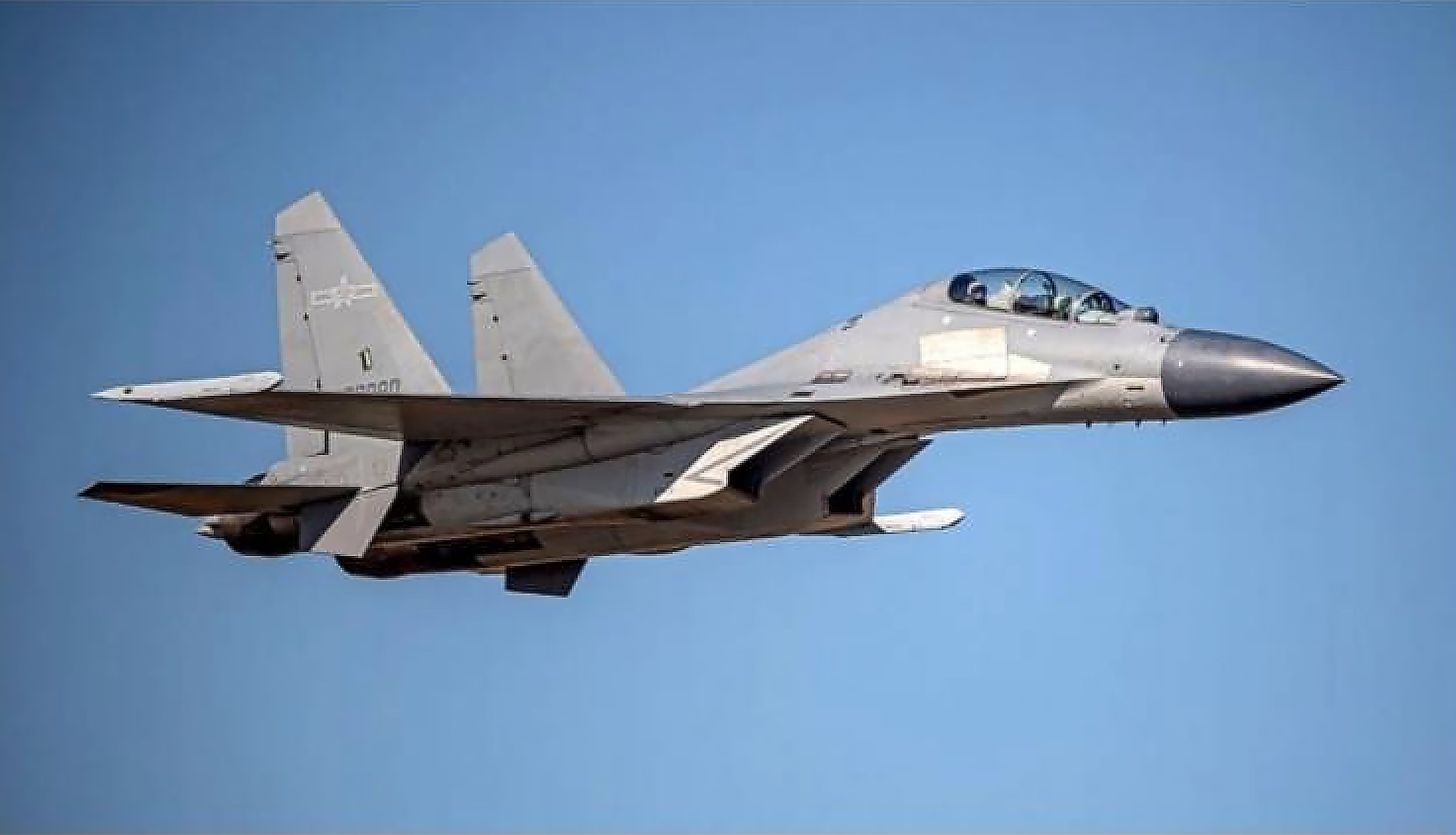
ADIZ refers to the Air Defense Identification Zone, which is an airspace designated by a sovereign state for national security purposes. Over the past two years, the People's Liberation Army has primarily dispatched J-16 fighter jets into Taiwan's air defense zone, along with multiple types and numbers of fighter jets, jammers, early warning aircraft, and bombers from the Chinese Eastern Theatre Command Air Force, which took off from various airports along the eastern coast to carry out strikes on several important targets within Taiwan.
China May Be Adjusting Its Military Strategy.
Data released by Taiwan's Ministry of National Defense show that the PLA sent 76 Chinese defense aircraft and 15 naval vessels around Taiwan. Activity peaked towards the end of the year with China dispatching 130 defense aircraft to Taiwan, indicating the heightened political pressure on Taiwan during that period. In January, Taiwan reported nearly 256 Chinese defense aircraft intrusions into Taiwan's Air Defense Identification Zone (ADIZ), while the number dropped dramatically in March, raising concerns about whether China is adjusting its national defense strategy.
Domestic Reasons
As tensions in the Middle East intensify and the U.S.-Iran conflict escalates, the Chinese People's Liberation Army may be adjusting its military strategy. The original Trump-Xi meeting was scheduled for March 31st to April 2nd; however, it has now been confirmed that the meeting is postponed because the CCP has adjusted its strategy regarding a potential military attack on Taiwan, influenced by the recent conflicts in the Middle East involving President Trump.
Wang Yi, the Prime Minister of Foreign Affairs, stated the need for an immediate cease-fire and resuming diplomatic negotiations.
Given the economic downturn in China and ongoing speculation regarding Taiwan's political situation, Washington is unlikely to take any actions that could jeopardize U.S.-China relations, especially with the expectation that Xi Jinping will remain in power. In October 2025, the Fourth Plenary Session of the 20th Central Committee of the Communist Party announced that China is prioritizing its economy over national defense due to an urgent need to reinvigorate economic vitality, which includes adopting more resilient, less rigid, and less diplomatically influenced economic policies, as well as expanding foreign trade.
From a business standpoint, the period during which China deliberately reduced the entry of People's Liberation Army aircraft into the Taiwan Air Defense Identification Zone indicated a strategic move to lower tensions with the United States, particularly in the context of improving diplomatic relations.
The Fourth Plenary Session of the 20th CPC Central Committee approved China's "14th Five-Year Plan" (2026-2030) last year. On March 18, a spokesperson from the Taiwan Affairs Office of the State Council stated that China still upholds the One China, indicating the Chinese government doesn't give up on taking over Taiwan.
On the military's side, on January 24, the Chinese Ministry of National Defense declared that the military's highest-ranking generals, Zhang Youxia, Vice President of the Central Military Commission, who ranks second only to President Xi Jinping, and Liu Zhenli, are under investigation for significant breaches of discipline and law. In 2025, 46 senior officers were missing, 20 times more than in 2024. Taylor Fravel stated that approximately 52 percent of senior officers in PLA leadership held the position. These purges illustrate Xi Jinping's ambition to reform the PLA and eliminate corruption within the organization.
Taiwan
Under the large-scale intrusion of Chinese military aircraft and warships into the airspace and waters surrounding the Taiwan Strait, the Taiwan Ministry of National Defense has maintained its usual stance, declaring that Chinese military aircraft and warships are harassing the airspace and waters around Taiwan under the guise of "joint combat readiness patrols." The Taiwanese military will use joint intelligence, surveillance, and reconnaissance methods to closely monitor the situation and deploy mission aircraft, ships, and shore-based missile systems as needed.
Conclusion
PLA aircraft reduction indicates a strategy shift in which Beijing relies more heavily on gray-zone methods to mold Taiwan's security environment without provoking outright war. This shift indicates that China is increasingly utilizing subtle methods like cyber operations and economic coercion to advance its goals concerning Taiwan, which may include undermining Taiwan's political stability and influencing public opinion without direct military confrontation. Additionally, the Chinese government is currently reassessing its military strategy, as indicated by the upcoming Xi-Trump meeting, the decrease in the defense budget, the reduction of military aircraft intrusions into Taiwan, and personnel adjustments in the Chinese military.
