
Middle East: Youth Unemployment and Vocational Training in Jordan
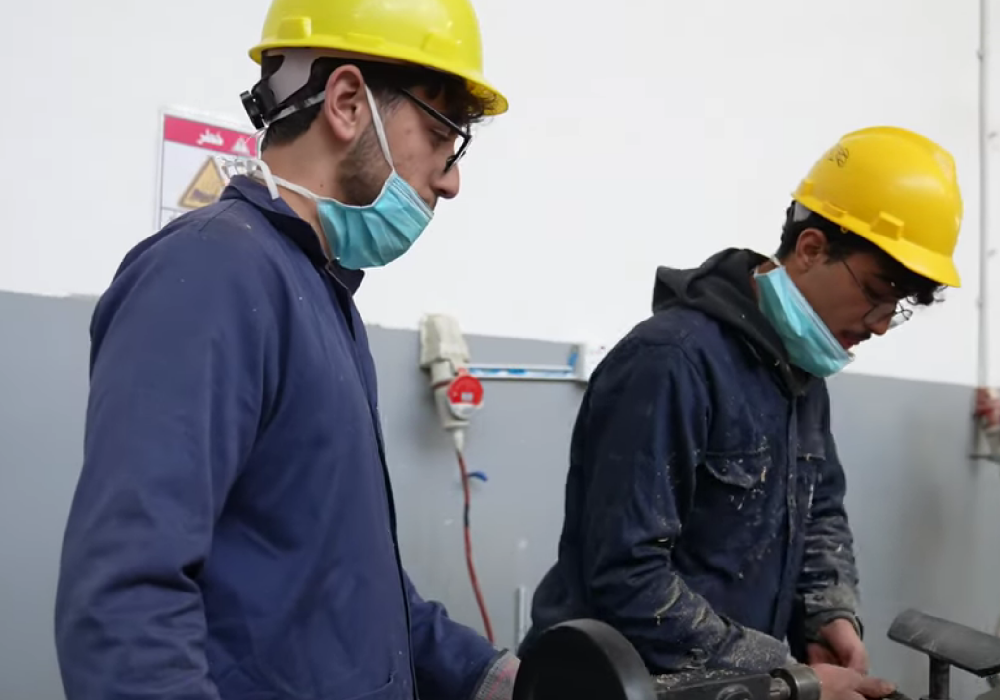
Jordan is often framed as the “buffer state” or the “quiet neighbor” to regional crises in the Middle East. However, Jordan is aggressively pivoting toward Technical and Vocational Education and Training (TVET) as the primary engine for youth stability and growth. With a median age of 22.4 years and nearly 70% of the population under 30, Jordan’s greatest asset is its youth. As youth unemployment figures hover near a staggering 47%, the government's Economic Modernization Vision 2022-2023 has placed vocational reform at the center of its plan to integrate one million young Jordanians into the workforce.
Historically, Jordan’s economic activity and training opportunities were heavily concentrated in the nation's capital, Amman, which accounts for 59.1% of net jobs created. Today, there is a significant shift underway, as vocational programs expand into rural and semi-urban governorates where unemployment rates are often highest. Interestingly, while Amman hosts the largest share of the total workforce, it registers some of the lowest rates of “green” employment (jobs that contribute to the benefit of the environment) in the country. Green jobs are clustering in the rural north, with the city of Ajloun leading the nation at 28% green employment, followed by Mafraq (21%) and Jerash (18%). These regions are emerging as places where environmental and practical skills are required, despite finances and investment flowing toward more urban centers.
Institutional support, such as the non-profit INJAZ, has expanded to focus on youth employment and entrepreneurship across the country from its Amman headquarters. International cooperation has also inspired the construction of industrial schools and technology institutions, such as the six-decade-long South Korea-Jordan friendship and KOICA (Korea International Cooperation Agency) investing $11 million in a Korea-Jordan Training Institute (KJIET) at the University of Jordan in Amman.
Furthermore, Jordan is moving away from a reliance on the public sector, which currently employs a massive 46% of the workforce, towards specialized private-sector vocations. Current training programs are preparing young people for three distinct tiers of employment: aviation, practical trades, and the “green” economy.
The College for Advanced Vocational Training, a Crown Prince Foundation initiative, recently signed a Memorandum of Understanding in December 2025 with Joramco, an aircraft maintenance company. This partnership develops training workshops in carbon fiber composite technology for aircraft maintenance, repair, and overhaul (MRO), preparing youth for high-tier engineering roles.
“Nowadays, the labour market demands hands-on graduates, rather than those who are merely book smart. I need someone who knows what he is doing from day one, even if he initially needs some orientation. It saves time and effort. We give priority to practice, rather than theory. Practice is king” - Unnamed employer within the vehicle maintenance field
The above quote speaks to the current job market demand in Jordan, where institutions like the Vocational Training Corporation (VTC) and private colleges like Luminus Technical University College (LTUC) focus on “education for employment” by aligning their curricula for employer needs. Luminus achieves a 70% to 80% job placement for its refugee graduates in sectors like hospitality and HVAC.
Contrary to popular belief, green jobs in Jordan are not exclusively in high-tech renewables. They actually also consist largely of existing trades like auto mechanics performing emissions-reducing maintenance, construction tilers implementing energy efficiency and environmental inspectors. These existing trade green jobs account for approximately 75% of environmental employment in the country.
Whether these efforts actually result in meaningful economic mobility depends on wage outcomes and social perceptions. Data suggests that green jobs offer a powerful mechanism for reducing inequality. While they do not pay more on average, these jobs significantly lift the floor for the most vulnerable workers. In Jordan, workers at the 10th percentile of the wage distribution earn 28% more in green jobs than in comparable non-green roles.
Green Premium percentage per Wage Percentile
However, a massive barrier to mobility is the “culture of shame” (‘ayb), a social stigma where youth and their families regard manual or vocational workers as “beneath” those with academic potential, leaving many Jordanians preferring to wait years for a “prestigious” public sector job rather than accepting a well-paying technical role.
“Jordanian youth are not willing to pursue employment for lower-class jobs which are carried out by the expat community. They will consider themselves as degraded as they believe that such jobs don’t match their skills and education. They fear to be looked at by others in a different light. -Unnamed male participant”
Success stories are being used to combat this, like Hassaan (3.1 of this article), a VTC graduate whose passion for automobiles led to a successful career as an auto mechanic despite initial social pressure. People like Hassaan serve as role models for the financial independence that vocational training can provide. However, for vocational training to be a true engine of mobility, it must address the exclusion of women and refugees. Jordan’s female labor force participation is among the lowest in the world at roughly 19.1%. A stark educational paradox exists, where 74% of the female workforce holds a bachelor's degree or higher, compared to only 27.1% of males. Despite being highly educated, women face barriers ranging from gender-segregated occupations to a lack of safe transportation and childcare. New policies such as the National Childcare Policy of 2024 aim to reduce these barriers to facilitate women's entry into the workforce.
Refugee integration also remains a priority for domestic stability. Programs like Luminus Education have provided scholarships to over 4,500 Syrian refugees, achieving high employment rates in the formal labor market. Other private sector initiatives, like the IKEA Social Entrepreneur Initiative, hire both Jordanian and Syrian refugees to produce textiles for global sale, aiding social cohesion through employment. Innovative social enterprises like Sanivation further integrate refugees into value chains by employing them in “waste-to-value” roles, turning human waste into fuel briquettes.
Jordan’s vision for its future through the TVET program indicates that the nation is inching towards a productivity-based economic model. By decentralizing the programs to the governorates and by aligning the curricula with private-sector needs, Jordan is building a future for youth employment that goes beyond the region's conflict-heavy headlines. Moreover, the success of these programs is very telling. In the second half of 2023 alone, the Jordanian market created 48,779 net new jobs, with the private sector contributing to over 65% of that growth, and that growth rate has been relatively stable since. While social stigmas and gender barriers remain, technical education currently provides young Jordanians with a more reliable path to formal employment than many traditional university degrees, offering a new blueprint for youth stability in the Levant.
