
Middle East: The Euphrates is Drying
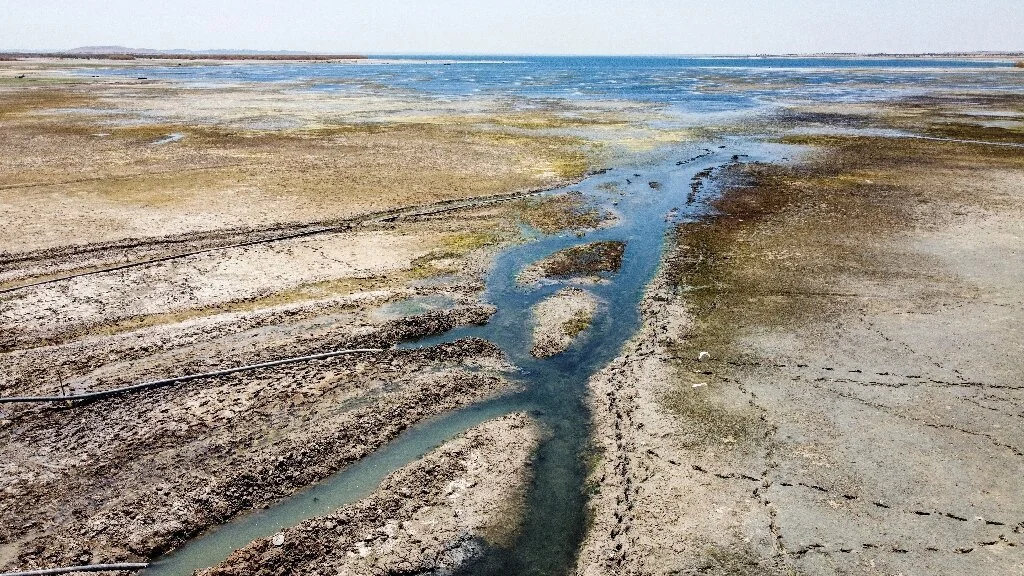
The Euphrates, the longest river in Western Asia and famously known as the “Cradle of Civilization,” is facing a modern existential crisis. Once known as a symbol of fertility and abundance that sustained empires such as Sumerian, Babylonian, and Assyrian, the Euphrates is now drying up. Consequently, the livelihoods of millions across Turkiye, Syria, and Iraq are threatened. This environmental collapse isn't just a local issue, but an emergency that risks the stability of an entire region already scarred by conflict. As the Iraqi Ministry of Water Resources warns, the river could be entirely dry by 2040.
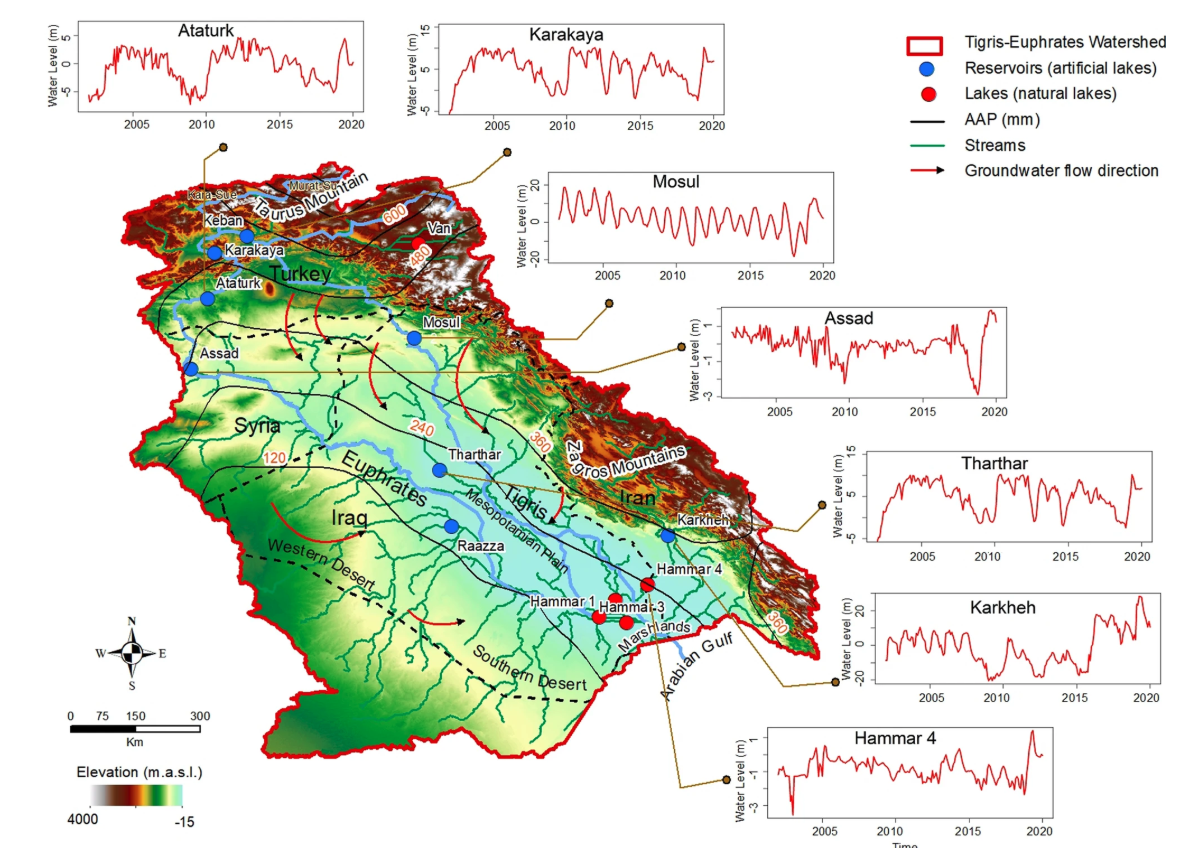
Abdelmohsen, K., Sultan, M., Save, H. et al. Buffering the impacts of extreme climate variability in the highly engineered Tigris Euphrates river system. Sci Rep12, 4178 (2022).
Climate change is the primary driver of the river's decline. Temperatures in northeastern Syria have risen by one degree Celsius over the last century, while average rainfall has decreased by 18 millimeters per month per century. Rising temperatures have caused a massive reduction in snow and ice cover in the Taurus Mountains, which feeds the rivers’ headwaters. These shifts, combined with record-low rainfall and increased evaporation rates from reservoirs, have left the basin in a state of chronic water stress.
Upstream hydraulic infrastructure has altered the river's natural flow as well. Turkiye’s Southeastern Anatolia Project (GAP) is a massive network comprising 22 dams and 19 power plants. The project's centerpiece, the ‘Ataturk Dam’, creates a reservoir large enough to hold the entire annual discharge of the Euphrates. Syria and Iraq also maintain significant dams, such as the Tabqa Dam (forming Lake Assad) and Haditha Dams, which further contribute to water loss through massive evaporation.
Unsustainable water usage has placed immense pressure on the basin as well. Agriculture is the dominant consumer, accounting for more than 70% of water use in the region. Outdated irrigation methods, such as flooding fields instead of using targeted techniques, lead to massive waste and the further depletion of already low river levels. The retreat of the Euphrates has triggered a devastating series of crises, with agricultural collapse being the most immediate. In Iraq's Fallujah district, cereal cultivation areas have plummeted, with some farmers experiencing 90% wheat crop failure due to water scarcity. As soil loses its moisture, it begins to go through intense salinization, turning once fertile landscapes dry, cracked, and sun-baked. In Syria, the wheat harvests have reportedly dropped by 75% since 2011, leaving rural populations in a precarious state of food insecurity.
This environmental disaster is also driving humanitarian displacement. The drying of marshes of southern Iraq, a UNESCO World Heritage Site, has forced tens of thousands of Marsh Arabs, who have inhabited the region for 5,000 years, to abandon their traditional way of life. Families are increasingly moving to crowded urban centers like Basra and Baghdad, leading to social friction and increased vulnerability to recruitment by non-state actors, leading to more potential destabilization in the region.
Public health has also suffered, as low water levels have caused pollutants to become more concentrated in the stream. Cholera outbreaks, such as the major one reported in Syria in late 2022, have been attributed directly to poor access to clean water and the use of contaminated sources from the river.
Turkiye, Syria, and Iraq have initiated various strategies to mitigate the effects of the water shortage, ranging from local infrastructure projects to historic bilateral agreements. A major diplomatic breakthrough occurred in November 2025 with the signing of the Iraq-Turkey “Oil for Water” deal. Formally known as the Framework Agreement on the Financial Mechanism for Water Cooperation Projects. The deal establishes a mechanism where Iraq uses its oil export revenues to fund water infrastructure projects executed by Turkish firms. These projects include building modern dams, land recovery, and upgrading wastewater treatment systems in Iraq to ensure "efficient, effective, and sustainable use” of shared resources. Iraq has also launched the “Our Water… Our Future” initiative, focusing on technological advancements such as sprinkler irrigation, desalination, and the use of artificial intelligence in water management.
Furthermore, Iraqi researchers are exploring the use of Archimedes screw turbines on river barrages, such as those at Ramadi and Fallujah. These turbines can generate clean electrical power without requiring high water heads or large storage reservoirs, making them ideally suited for the Euphrates’ low-flow conditions. In Syria, the government has focused on restoring vital infrastructure, such as the Deir Ezzor water plant, which supplies over half a million residents with water. Syria is also investigating the potential for desalination of brackish water in its eastern regions and has provided some farmers with salt-tolerant wheat varieties, although they move past current conflicts in the region.
While Syria and Iraq have a long-standing agreement to share the Euphrates water, Turkiye has historically maintained a stance of absolute sovereignty. Turkiye refers to the Euphrates as a “transboundary” rather than an “international” river, arguing that it should not be subject to equal-sharing conventions. However, Turkiye’s status as an EU candidate has forced it to begin transposing the EU Water Framework Directive, which mandates “appropriate coordination” with co-riparians (nations that share a common water source). International organizations like the World Bank have withheld funding for some GAP projects until a formal trilateral sharing agreement is reached among the three states.
Abdul Walid Abdul, a 50-year old Marsh Arab who was forced to leave his home with his family, says, “It was like heaven… Now there is no more farming. I have had to stop it all. As there is no rain or water it is impossible to farm.” The survival of the Euphrates and the civilizations it supports depends on transitioning from a “zero-sum” rights approach to a benefit-sharing approach. Experts have been advocating for treating the river as a global treasure rather than a national commodity. Only through regional cooperation can the world's Cradle of Civilization hope to prevent its giver-of-life from fading.
