
India Insights: From Ceasefire To Uncertainty – The One Year Anniversary Of The India Pakistan Border Conflict.
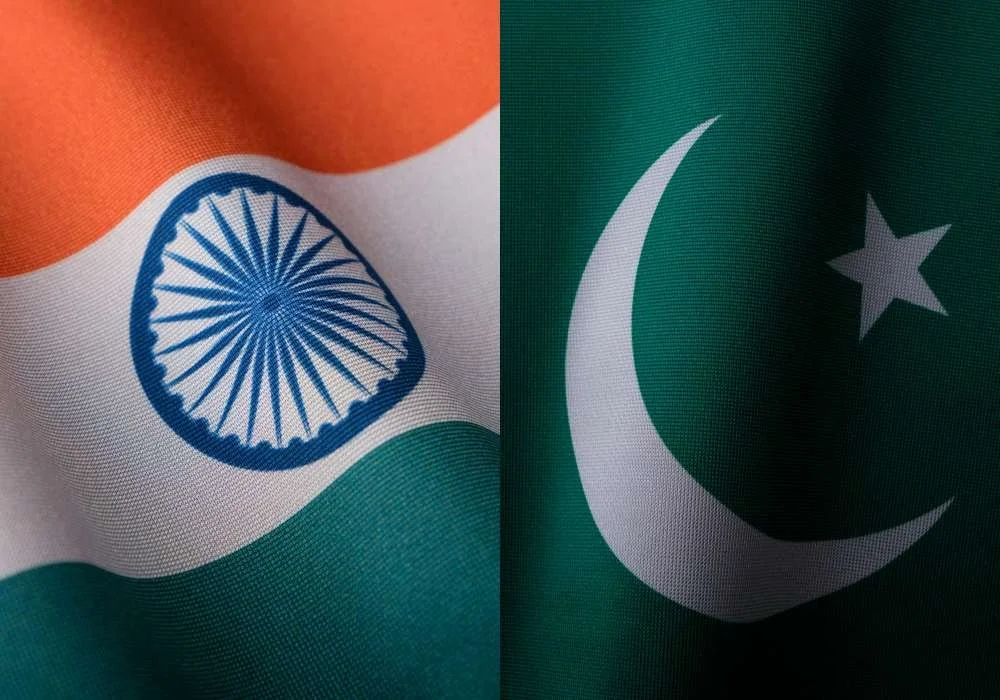
engin akyurt
The animosity between India and Pakistan is a historical affair that dates back to India’s independence. The British division of India in the two countries was executed recklessly; it divided a larger portion of Muslims in Pakistan and a Hindu majority in India. Following the independence and partition, violent riots took place killing thousands, or even millions, of people in the process. Many members of minority groups in both nations had to immigrate to survive and live without the fear of persecution. A defining feature of the rivalry between India and Pakistan is the border disputes, especially in the Kashmir region.
In May 2025, a conflict sparked in the Indian-administered portion of Kashmir, lasting four days and involving both nation’s military capabilities. It is understood that the trigger for the confrontation was a gunmen attack in Pahalgam, leaving 26 people dead, which took place on April 22, 2025. The attackers were Pakistani citizens, but they weren’t representatives of the country, meaning that they were a paramilitary group. The victims of the attacks were domestic tourists, who were visiting a tourist landmark in the region. It was a shock to the authorities that the victims were tourists, as in almost 40 years of dispute, the targets largely were not everyday passerby.
May 10, 2026, marks one year since the ceasefire, implemented in response to the confrontation’s events, was established. Overall, the history of the border clashes among the nations is deeply complex and intricate, requiring deep analysis in order to comprehend it.
History Of The Border Conflict
The border emerged as an issue during the British partition. Since 1947, Kashmir has been a disputed region of Muslim majority, where there are areas of Indian administration and Pakistani administration; China is also responsible for controlling a part of the border, which it also shares it with both nations. In 1948, following the bloody revolts and violent encounters amongst Indians and Pakistanis, the recently established (at the time) UN issued a resolution, which assisted into solidifying a temporary ceasefire. This then led to the creation of a referendum of the Kashmiris to determine the future of the area. Although both nations agreed on the concept, they did not reach consensus on the policy’s implementation. After the failed referendum, the UN developed a peace fire line.
In the India-Pakistan War of 1971, or the third Indo-Pakistani War, the border remained a prominent issue. Even though the Bangladeshi Independence movement, originated in East Pakistan, was the main driver of the war, India and Pakistan also engaged in fights in the west frontier of Kashmir. The major results of the war were the creation of the Bangladeshi state, and the Simla agreement, which made Kashmir into the Line of Control (LoC). In spite of the LoC, both countries have violated the agreement in several instances, in which their militaries have crossed the border. It was then in the 1980s that the situation began to escalate again with the appearance of an insurgency within the India-administered area; the movements mostly support an independent Kashmir or for the integration of the region with Pakistan.
The 2025 Conflict
On April 22, 2025, a terrorist group opened fire against tourists in Pahalgam, which led to 26 casualties. India’s first response to the attack was to immediately close its borders with Pakistan, suspend all trades, and threatening to halt the Indus Water Treaty, a crucial treaty in regulating the administration of the Indus River. The river is a foundation to both nations’ irrigation and hydropower supply. Borrowing a page from India’s book, Pakistan halted bilateral trades and closed borders, as well as threatening to cancel all bilateral treaties with India.
It was, then, on the night between May 6 and 7,2025, that India conducted its first military strikes against Pakistan’s administrated area in Kashmir and Pakistan’s internationally acknowledged territory. This attack was called “Operation Sindoor”. According to Shri Vikram Misri, India’s Foreign Secretary, India only targeted what they called “terrorist infrastructure”; however, it is unknown what criteria India used to determine this categorization. Pakistan heavily contested the terrorism claim, arguing that civilians were also targets of the attack, and then launched “Operation Bunyan al-Mar-soos” in retaliation. From that point forward, the three days of strikes consisted of mutual attacked targeting the other’s military facilities. In the first night on the conflict, Pakistan managed to intercept one of India’s aircraft by using its J-10C jets. Furthermore, the confront reached a ceasefire on May 10th, 2025.
The days of the conflict developed an unstable environment within the region. Due to both India and Pakistan being nuclearized states, tensions rose rapidly in the continent, leading to uncertain days, not only in Asia, but in the whole world. Moreover, the number of casualties is uncertain and vague, as both sides display different data and information. Additionally, both countries claim victory over the conflict, although scholars say that no party can receive the status.
India And Pakistan After May 2025
Since May 10, 2026, India and Pakistan have both displayed billboards celebrating their self-proclaimed victories across many cities. The ceasefire remains in place and is yet to be violated. However, even a layperson could assume that their relationship has not improved since then. Besides the events in May 2025, other international developments have hindered their diplomatic and economic relations. For instance, the ongoing war in the Middle East is another event that strengthened the rivalry amongst them. Pakistan has positioned itself as a mediator between the United States and Iran, hosting meetings in Islamabad. On the other hand, India is not pleased, as its relationship with the Unites States is a pillar to the country’s economy. Additionally, by Pakistan positioning itself in the international stage, another dispute may blossom from it, the dispute for regional leadership. China, India, and Pakistan are seemingly after the title, having fought for it in several international areas, such as trade and partnerships. Overall, the diplomatic relationship amongst them still strained, considering the closure of borders and the halting of bilateral trade partnerships. It is difficult to predict what future developments will look like, nonetheless, the India – Pakistan rivalry is further from ending.
