
Mideast: Sustainability As Survival Behind Oman’s Green Hydrogen Push
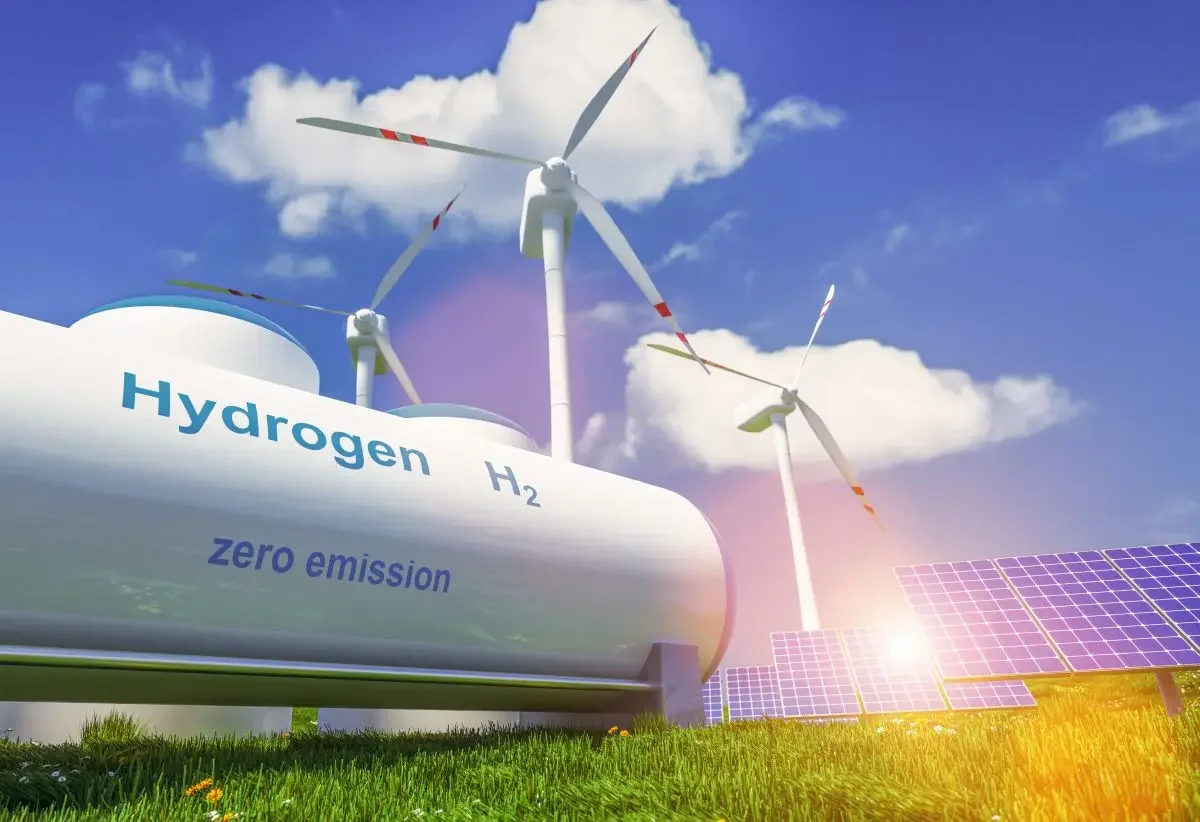
As the world’s capacity for renewable energy has exploded 415% since 2000, and annual worldwide investment in low-carbon technologies rose from barely $50 billion to more than $2 trillion since 2005, the Sultanate of Oman has proven itself determined to stay ahead in the global renewable energy transition. Declaring a net-zero-by-2050 emissions goal and dedicating over 65,000 square kilometers of land to building renewable hydrogen plants, Muscat has taken significant strides towards sustainability. This is not merely to claim a stake in the clean energy game with its larger and richer neighbors, however. It is also a move for survival.
Despite Oman’s steady status as a petro-state since the late 1960s, with oil and gas revenue currently funding nearly 70% of the government budget and accounting for roughly 30% of the GDP, it is a system the Sultanate, environmental scientists, and local workers alike understand cannot last, not least due to mature oil fields running dry. Muscat’s solution is green hydrogen produced by renewable systems such as solar and wind, and if their work goes according to plan, it would position Oman to be the sixth greatest producer of green hydrogen globally, diversify its economy, attract billions in investments, and reinvigorate a deteriorating national energy grid currently dependent on fossil fuels.
The transition is not without its challenges, projected and current, chief among them being infrastructure and financing concerns, along with the ongoing fragility of the Omani economy due to its dependency on oil. That dependency is complicated by escalating tensions among regional players in the Middle East and OPEC partners, which jeopardize oil flow and Oman’s main source of economic stability.
Oman, for all its reliance on oil, does not have the luxuries of abundance that the United Arab Emirates and Saudi Arabia have today. Instead, Oman is faced with the difficult reality of an oil reserve that has bowed under the weight of extraction demands; data from the Omani Ministry of Energy and Minerals state the country’s proven crude oil reserves stand at only 4.8 to 5 billion barrels, which is less than 2% of Saudi Arabia’s stores to the north; Oman’s natural gas reserves stand today around 23.3 trillion cubic feet, a significant drop from 30 trillion in 2009. Projections estimate that the country will run through such reserves — and have insufficient means to domestically power its electricity and water desalination systems — within just 10 to 20 years.
Extracting oil has become a much more intensive process than it was in the early days of Oman’s oil boom; many of Oman’s oil fields have been active since the 1960s, 70s, and 80s; today. their natural stores are thoroughly depleted. The process for extracting oil from these fields now is as intensive as it is costly — Enhanced Oil Recovery methods, which are projected to be responsible for nearly 30% of all national oil exports by 2031, more than double the cost per barrel from $4 - $5 to $10 - $20 and massively cut into governmental profit margins.
Such costliness is stressed all the more by the global disruptions to the supply chain and Oman’s desire to capitalize on its position on the Arabian Sea. The nation is uniquely unrestricted by the ongoing difficulties of transporting through the Strait of Hormuz, demonstrated by Oman’s oil production increasing 7.5% in the first 6 months of 2026 while neighboring nations dependent on the Strait have experienced the devastating effects of near total collapse in their energy export sectors. As it stands today, Oman is working to increase their production flows, with a projection to produce 1.1 million barrels per day by 2027.
Against this backdrop of limits of their domestic oil and natural gas reserves, the Sultanate is looking to green hydrogen as a way out. Produced primarily by solar and wind systems, green hydrogen provides an energy alternative that produces zero greenhouse gases. Through the electrolysis of water, these systems instead produce oxygen that can be harmlessly released into the atmosphere and hydrogen, which is then collected for use. When needed, the hydrogen is recombined with oxygen inside a fuel cell, producing only electricity and clean water vapor.
Oman has invested significant time, resources, and land into producing green hydrogen since 2020, making it a fairly new undertaking, and a large one. Tens of thousands of square kilometers of land primarily in the Al Wusta and Dhofar governorates — approximately the same size of the entire country of Slovakia — were dedicated to solar and wind farms that renewably power the electrolysis process. They’ve also committed internationally, bringing upwards of 50 billion dollars of international investment into the country for green hydrogen and signing several binding agreements with other nations to produce it. Oman will take part in developing the world’s first commercial liquid hydrogen corridor connecting it to Germany and the Netherlands, and has already launched the National Hydrogen Alliance with 13 other members from public and private sectors, academia, and research institutions to coordinate green hydrogen work. If projections hold, Oman will significantly reduce their dependency on oil and natural gas by renewable sources of energy accounting for 20% of their energy use by 2030.
This work isn’t without its challenges, however, or critics. Because of the significant need for purified freshwater in creating green hydrogen, there is concern about water access considering Oman has a natural scarcity of freshwater. This scarcity forces Oman to go through a costly desalination process of seawater, but the entire process of creating the green hydrogen itself is so costly that all stakeholders must hedge their bets that technology costs fall rapidly and demand soars to make this undertaking commercially viable in the long-term. It leaves the Sultanate in a difficult position: they must transition to a lesser reliance on oil and natural gas for the sake of Oman’s future stability, but pursuing green hydrogen too aggressively could jeopardize the massive investments they must make along the way.
