
China View: Beyond the World Cup, Why China's Local Governments Are Investing in Football.
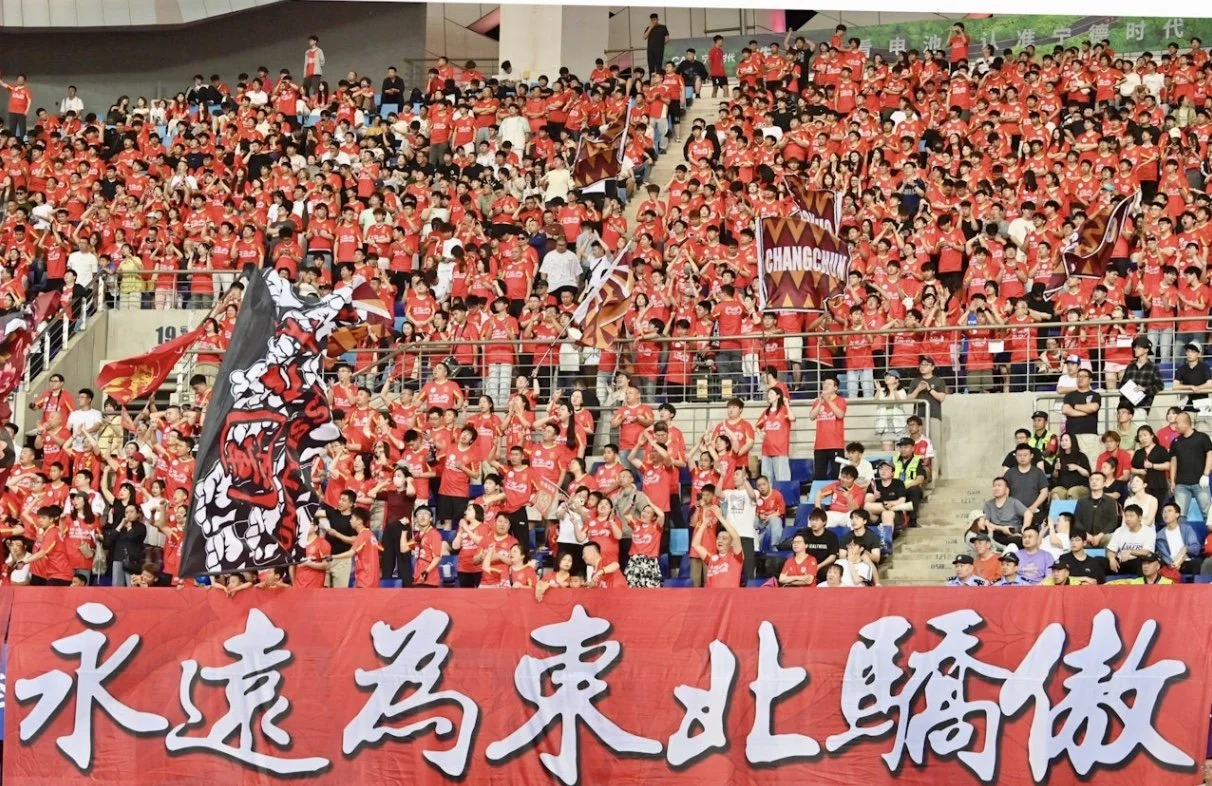
The World Cup is currently underway, and both the Japanese and South Korea National Football Teams have entered the competition. However, China has not qualified for the FIFA World Cup since its only qualification in 2002. On May 23, 2026, the Northeast China Football League kicked off its opening matches simultaneously across four cities: Shenyang, Harbin, Changchun, and Hohhot. This mass event, jointly organized by the three northeastern provinces and one region, attracted about 100,000 people to cheer on the first day of the competition. China's sports industry now contributes 1.19% of the national GDP, as reported by the Ministry of Finance in 2025, demonstrating that sports are increasingly viewed as part of the country's economic development rather than merely recreational activities. This raises the question of why China's local Football League offers Chinese football fans an opportunity to play and continues to attract viewers despite the country's issues with global competitiveness.
Although China did not qualify for the World Cup, it is still home to a significant fanbase, and Chinese brands remain involved as major sponsors. The Chinese World Cup audience, which has steadily grown over the past decade, reached 192 million viewers during the latest event. Rowan Simons, the founder of ClubFootball China, contends that years of corrupt draft systems and lackluster international results in China have dissuaded many parents from motivating their children to pursue football, leading to a decline in grassroots participation. Yet the corruption in China's national football team cannot be easily addressed, while the enthusiasm in the football game has provoked both the Chinese government and the public to square away.
As China National Football Team remains absent from international football stage " World Cup", China regional government is turning amateur leagues into engines of tourism and economic growth.
The Ministry of Sports in China introduced the concept of the Northeast China Football League in October 2025 with the aim of revolutionizing amateur football in the region. The league is the first cross-province amateur football league in China, which was launched jointly by Liaoning Province, Jilin Province, Heilongjiang Province, and the Inner Mongolia Autonomous Region. Cao Yang, minister of the Liaoning Provincial Sports Department, said that the Northeast Football League aims to promote local culture and the tourism economy by revitalizing northeastern football and integrated development. Given the success of previous sporting events in the region, such as the Winter Sports Festival, local governments aim for the game to boost the local economy during the peak tourism season in the Northeast provinces of China.
Participants in the league often share stories of how the inclusive environment and accessible opportunities have allowed them to pursue their dreams of becoming a football star, emphasizing the league's commitment to inclusivity and accessibility. Chinese state media has referred to the Northeast Football League as the “public football league” to highlight its inclusive nature and accessibility, emphasizing the league's mission to involve a wide range of participants. Being a formal football player in China cannot earn money, while the Northeast football league offers Chinese football fans an opportunity to play football in a formal league.
Conclusion
The Northeast China Football League consists of eight representative teams and eight city competition zones, totaling 34 games. The upcoming schedule is expected to last about four and a half months, including a single round-robin regular season with home and away games, followed by knockout rounds. The competition format includes a single round-robin regular season with teams playing each other both at home and away, promoting fair competition. This is followed by knockout rounds, where teams compete in elimination matches to determine the ultimate winner, all governed by simple and straightforward rules. The Northeast Urban Football League alone cannot solve China's long-standing football draft system. However, it reflects a broader shift in local policy: football is increasingly being treated as an economic development tool rather than simply a competitive sport. The question of whether these regional leagues can ultimately enhance China's football culture remains unanswered, with factors such as grassroots development, community engagement, and talent identification playing pivotal roles in shaping the future of football in the country.
