
India Insights: Education Fighters – India’s Famous Cockroach Janata Party
DIBYANGSHU SARKAR
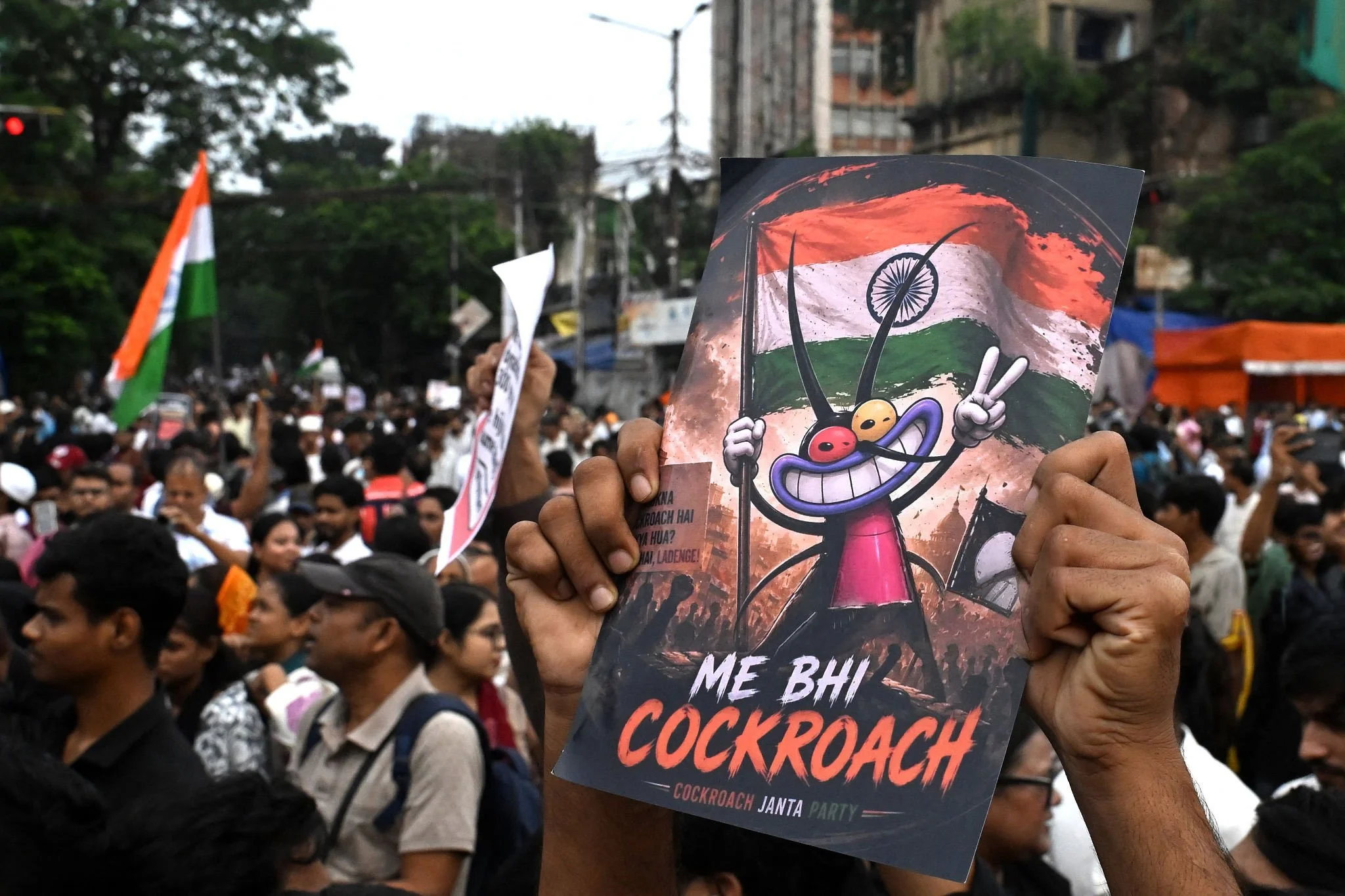
Founded in May 2026 by a recent graduate from an American University, Abhijeet Dipke, a 30-year-old Indian man, who was enraged by statements made by the nation’s chief of justice regarding India’s unemployed youth. “Cockroaches”, “parasites” are some words used by the chief when talking about the current young unemployed population. Motivated by his dissatisfaction with the chief’s comments, Dipke posted on social media a “joke”, which had large repercussions. “What if all cockroaches came together?”, wrote the graduate. It was after the post went viral that Dipke decided to resignify the words and make them a part of the fight for justice, leading him to creating the CJP. The name of the party is a satire of Narendra Modi’s Bharatiya Janata (BJP), a right-wing party whose policies have been deeply rooted in controversy and public unhappiness since Modi’s ascension to power. In two weeks of the party’s Instagram being live, it already had 22 million followers, becoming more popular than BJP’s social media. CJP is, by far, India’s largest student movement in the past several years. This symbolises the youth’s rage not only towards the chief of justice’s words, but also towards unemployment indexes and education policies. Modi’s government, which is famously unforgiving of any sort of criticism, attempted to block CJP’s online presence, which was unsuccessful.
Dipke directed the movement towards a pressing matter in India: the leaking of medical entrance exams. These leaks have, time and time again, been sold to the person who could spend more money, generating an unequal and unfair entrance system for universities. “A political party for the people the system forgot to count”, is the movement’s tagline present within the critical manifesto. At the centre of the students’ unhappiness lies the question: can the national government provide a fair method of entering higher education? Given that India is a deeply stratified nation (caste system), getting into university is one of the only ways for youngsters to ascend socially and create a better and stable future not only for themselves, but also for their current and future families. A senior visiting fellow at Brown University has spoken to the BBC regarding the issue. Yamini Aiyar explained: “The exam and education system cuts across caste, class and gender to quite a large degree”.
Students seeking to enter universities have to undergo overwhelmingly high levels of competition, where over 2 million students fight for 130,000 spots within the higher education facilities. Given the competitiveness of the exams, many families spend large sums of money leading them into deep debt, many spend all their savings, to hire a coach so the young person’s chances of passing the exam increases. The leaking of these exams, known by the acronym NEET, have obliged several candidates into taking re-sittings. According to The Guardian, private education is seeing more financial injection compared to the entire government’s expenditure on higher education. Unfortunately for Indian society, NEET is not the only exam that has been leaked in recent years, and it has also been linked to many young people’s suicides.
Modi’s government has been accused by the CJP of not acknowledging their blame in the “exam fiasco”, which is the central motivation of the growing presence of CJP in the streets of India and the movements call for the resignation of Dharmendra Pradhan, the country’s education minister. Other pillar complaints made by the CJP concern the staggering youth unemployment levels, where close to 40% of India’s recent graduated population, under the age of 25, are currently facing the hardships of unemployment. The movement highlights the overall failures India’s educational and examination systems.
In the early days of June, CJP ventured into the streets of India to call for Dharmendra Pradhan’s resignation. In the spirit of leadership, Dipke made his way back from the United States to attend CJP’s events in Delhi and all over the nation, which are still taking place and remain one of the most important topics of India’s domestic politics. Within the many protests led by the CJP, one of the most powerful and that generated the loudest “buzz” was Sonam Wangchuk’s hunger strike. The education activist and engineer embarked on this journey in solidarity with the students and the CJP and promised to only eat following the minister’s exit. When the hunger strike hit the 18-day mark, the Indian courted ruled that Wangchuk was to be hospitalised immediately, even if that was against his will. His wife judged the decision as an “illegal detention”. The Gandhian hunger strike lasted 26 days, until it was no longer possible for Wangchuk to continue his manifestation, ending on July 23, 2026. From his hospital bed, the activist called for students to stand outside of the parliament on July 20, 2026, and demand Pradhan’s leave. Although CJP has been protesting heavily for the past months, no other manifestation had the proportions of the one on July 20, reaching over 20,000 protestors. Police did not allow the protest to move close to the parliament, which led to many instances where police acted with brutality towards the individuals present.
On the morning of the protest, Modi’s government offered CJP a meeting. A CJP’s spokesperson explained that the meeting was very rapid and no official agreements were reached. Additionally, the government did not respond to the Pradhan’s resign request and is yet to release any sort of statement regarding the movement and the protests. Dipke, through a post on the platform X, assured CJP’s followers that the protests are not ending and the fight for educational justice will remain alive.
