
Mideast: Are Current Measures Enough To Stop Jordan’s Water Crisis?
SIMON BENI
Even with the gift of an unusually robust season of rainfall between 2025 and 2026, Jordan’s water crisis has continued on its downward spiral deeper into severity. The political and military turmoil that has engulfed the Levant and neighboring regions in the past several years have compounded an already tumultuous regional game of diplomacy and resource sharing; Jordan, with a population that has doubled in the past two decades and painfully insufficient natural water resources to meet their needs, has found itself in an extremely vulnerable position. And while there are ongoing plans from the Jordanian government to address this issue, scientists and public officials doubt its ability to make a meaningful, lasting change to the water crisis.
Jordan’s water crisis is considered one of the most severe in the world, having an annual renewable freshwater supply of only 100 cubic meters per person, which is far below the threshold for “absolute water scarcity” set by the United Nations at 500 cubic meters. Despite nearly the entire population technically having access to physical water infrastructure and being connected to a managed water network, the reality remains that roughly half the population receives running water only once per week. In some of the most rural communities in Jordan, some households wait as much as two to three weeks for municipal water deliveries; even in the major urban areas like Amman, water still only flows through the grid for approximately 12 to 24 hours per week.
It is predicted that by 2030, 90% of low-income Jordanian households will plunge into severe water insecurity. By 2100, it is expected that available municipal supply will drop even further to under 40 liters per person per day for 11 months out of the year, which would be an unfathomable drop from the crisis-levels of water per person already existing today.
This situation is the result of a unique set of circumstances that have seen a multitude of issues converge. All of them together have established a deep-rooted and pervasive water crisis that, as a result, cannot be solved with a focus on only one singular root of the problem. Instead, one could look from climate change to geopolitical diplomacy to infrastructure and find responsibility in all of these places.
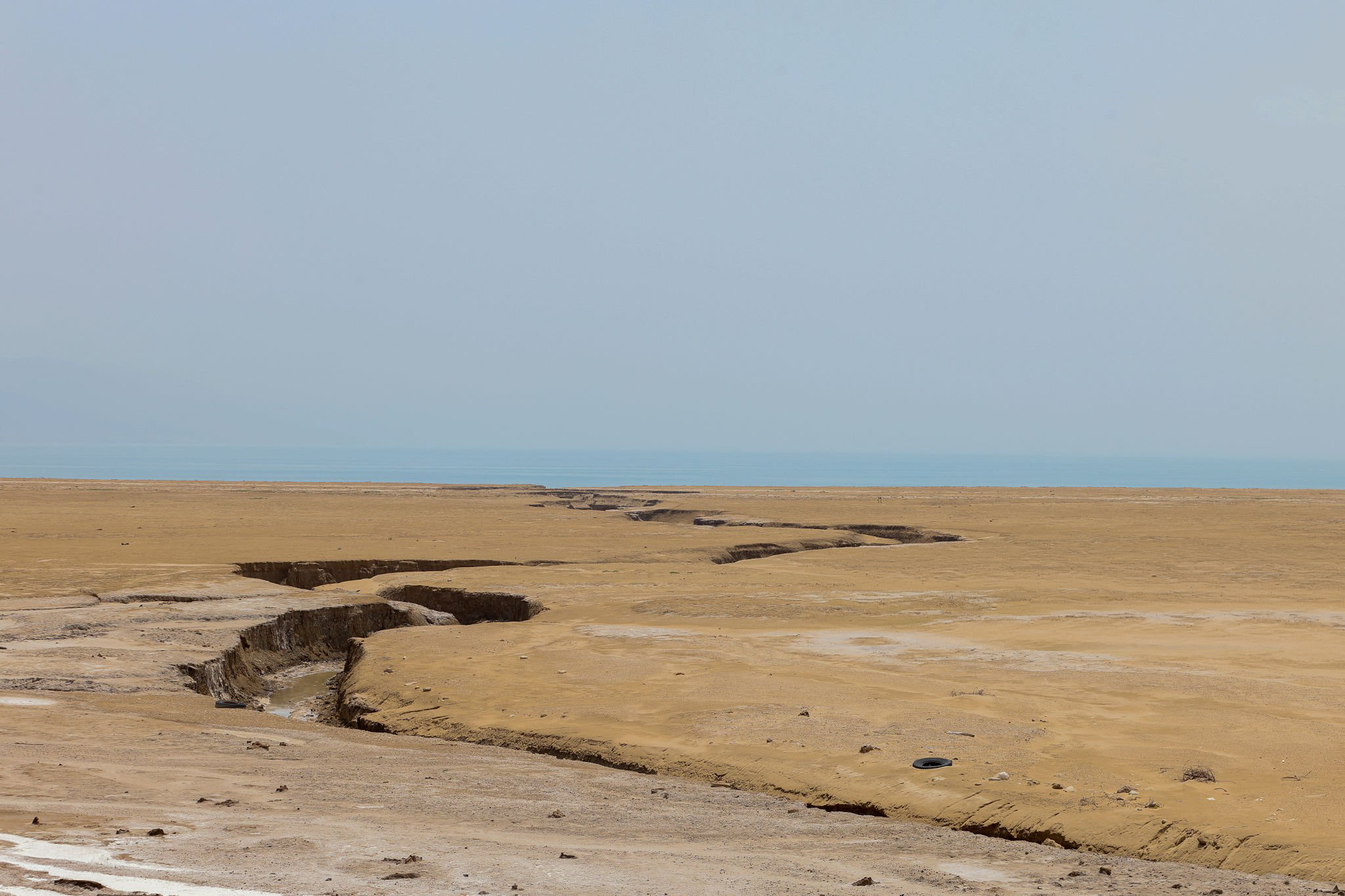
The Middle East, as a region, is one of the most rapidly warming places on earth while also being home to the world’s most water-scarce areas. As the earth heats up, this region has deeply felt the impacts, witnessing extreme declines in overall precipitation levels over time and iconic water bodies, such as the Dead Sea, shrinking as water is diverted for human consumption.
To compound an already fragile regional ecosystem, conflicts that spread throughout the region from the Levant eastward to Iraq have brought about a new wave of water insecurity as old legal diplomatic agreements fall through in their shadow. Jordan was hit particularly hard by the lapsing of the “add-on” water deal with Israel in late 2025, while saw 50 million cubic meters of water slashed from Jordan’s supply, halving its intake from Israel back down to levels first established in the 1994 Wadi Araba Peace Treaty.
Even if the water agreement with Israel had not lapsed, Jordan’s water infrastructure is unequipped to properly handle the water the population needs. Although the country’s water infrastructure is accessible to almost the entire population, this infrastructure has devastating shortcomings, with nearly half of all Jordanian drinking water never reaching citizens and instead being lost to aging, leaking pipes, infrastructure damage, and illegal water theft.
Despite the vast water needs of the population not being met, nearly half of all Jordan’s freshwater resources are devoured by an agricultural sector that only accounts for 7% of the country’s GDP. In a desperate bid to meet the high demand, 10 out of 12 of Jordan’s groundwater aquifers are being overpumped so severely that they are dropping by over 10 meters annually.
As such, the water crisis and safe, reliable water access has become a flashpoint in Jordanian politics. The Jordanian government has moved forward with numerous plans to address the multitude of causes, including initiatives to establish extensive desalination sites, transform water delivery efficiency in partnership with the World Bank, transition agriculture to using recycled wastewater, and tackle water loss.
But the question remains: will it actually be enough?
As it currently stands today, journalistic analysts, global development leaders, climate scientists, and regional governments are well aware of the reality that all of the projects underway — including those to the tune of billions of dollars — are all merely bandages for a problem that grows bigger each and every day.
Over the next fifty years, as climate change continues and water resources become increasingly scarce, it is projected that the work done today by the Jordanian people will ultimately be for naught; climate change and population growth are expected to reduce water resources by 30 percent by 2040, meaning that none of what is currently underway will be enough to stop or reverse the crisis at hand.
Across the region, even as the Middle East and Northern Africa produces massive amounts of “new” water and accounts for roughly 42% of global desalination capacity, the amount of water needed is simply incompatible with natural resources, existing infrastructure, and current balances of water per sector. This means that, for the millions of people who call the region home, they are left in an extremely difficult position: they will likely never see the water security parts of the rest of the world knows, despite pouring billions of dollars into solving the issue.
