European Central: Ethnic Violence Avoided In Kosovo
Ognen Teofilovski/Reuters
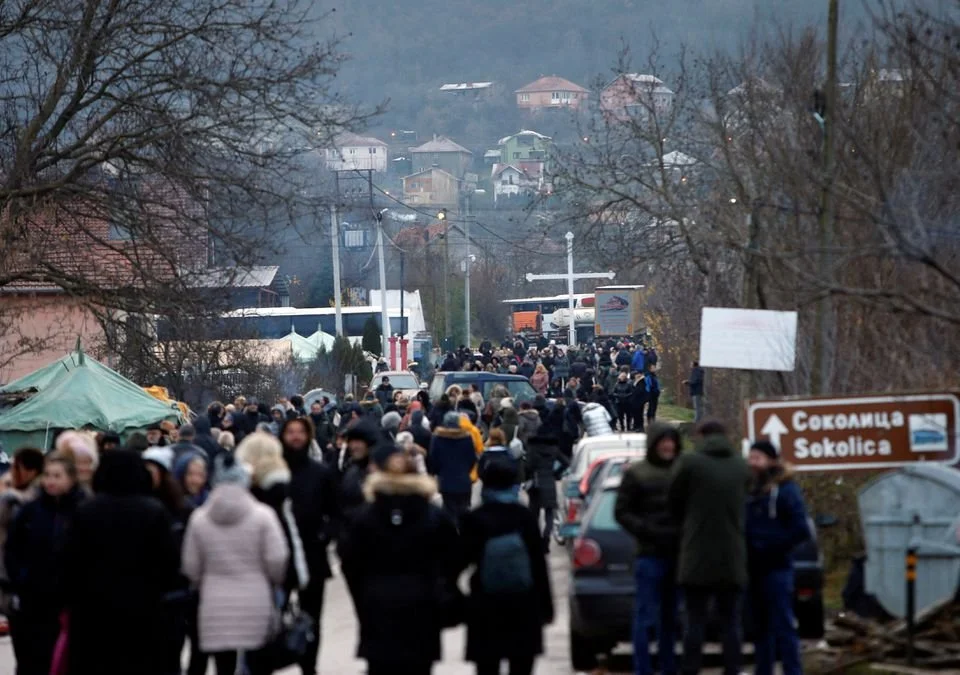
Relations between Serbia and Kosovo have been tense for years. Recently however a decision has been made to soothe these tensions between the two nations to prevent more ethnic violence in the Balkans. While people may imagine the latest crisis to be caused by a dramatic event it is instead something that is mundane, license plates. Kosovo attempted to demand that ethnic Serbs in Kosovo register their cars with Kosovar license plates and not continue driving their cars with Serbian plates. If they did not, they would be fined 150 dollars euros, a costly fine considering that in June 2022 average monthly wages were slightly under 550 euros. 600 ethnic Serb police officers resigned in protest along with judges and Serbian mayors. Kosovo first announced this requirement to switch license plates on September 1st of this year with the original deadline at the end of the month. This resulted in Serbs setting up roadblocks in protest of the announcement and NATO peacekeepers were sent to prevent further escalation of tensions. The requirement was then delayed yet has now been paused. It is estimated that only a dozen ethnic Serbs actually switched their license plates. This pales in comparison to the 50,000 estimated to still be using Serbian plates in northern Kosovo, where most ethnic Serbs reside within Kosovo.
This issue shows only a very small part of Kosovo’s difficulties in becoming a fully independent nation. While the agreement prevents a further breakdown in relations with Serbia or potential violence, it shows the weakness of Kosovar institutions. The refusal of ethnic Serbs in Kosovo to register their cars with Kosovar license plates is a defiance of Kosovar authority and makes it difficult for Kosovo to move towards independence. Simultaneously, ethnic Albanians in Kosovo who make up the overwhelming majority of Kosovo’s population refuse to live under Serbian authority, resulting in effectively a frozen conflict.
This issue follows an issue earlier this year when tensions flared up between Serbia and Kosovo over ID cards. With the assistance of EU foreign policy chief Josep Borrell as a mediator, Serbia agreed to abolish entry and exit documents for people possessing Kosovo ID meanwhile Kosovo agreed to not create entry and exit documents for Serbia ID holders. Since 2011, Serbia refused to recognize Kosovar ID cards and instead required people with these IDs to receive temporary declaration documents valid for 90 days upon entrance to Serbia. In June of this year, Kosovo finally decided to reciprocate this measure to Serbian ID holders, resulting in Serbia agreeing to drop the requirement if Kosovo dropped the measure as well. While Serbia conceded this, it still maintains its view on Kosovo’s claim for independence. A disclaimer is written in Serbian and English on the border between the two nations that says “Enabling the use of Identity Cards issued by Pristina (Kosovo) is done exclusively for practical reasons, for the purpose of making the position of individuals easier and for enabling their freedom of movement in accordance with the Agreement on Freedom of Movement reached in dialogue in 2011; it cannot be interpreted as recognition of unilaterally declared independence of Kosovo”.
As five European Union member states still do not recognize Kosovo as independent, this would make it tricky for the member state to join the European Union. New member states must be admitted to the EU by a unanimous vote. One example of a member state that does not recognize Kosovo’s independence is Spain. This can be explained by the region of Catalonia’s desire for independence from Spain. As Spain does not want Catalonia to break off from the country it cannot then recognize Kosovo’s ability to break away from Serbia. As Kosovo is considered by Serbs to be the birthplace of Serbia this can help explain why Serbia is so unwilling to recognize Kosovo as an independent nation. This sentiment dates back to June 28th, 1389 when Serbs fought Ottoman Turks at the Field of Blackbirds. This event is remembered as Serbia resisting the Ottoman Turks and slowing their invasion of Europe. Back then Kosovo was ethnically mixed but by the 17th century, the majority of inhabitants were ethnic Albanians. Kosovo is also important to Serbia as it was the medieval seat of the Serbian Orthodox Church and some of the religion’s most important sites are located in Kosovo including four Serbian Orthodox Churches which are known as the Medieval Monuments in Kosovo, A UNESCO world heritage site since 2006.
A potential solution some discuss is a swap of territory. Serbia would gain North Kosovo meanwhile Kosovo would take the Presovo valley. The majority of Serbs in Kosovo live in North Kosovo meanwhile a majority of those living in the Presovo valley are Albanian. This is not a foolproof option as each area still has areas inhabited by ethnic minorities who do not want to become a part of the other nation. An example is Rakovac, a small Serbian village in the Presovo valley and is opposed to the idea of becoming part of Kosovo. With this, there is a generational difference as well. Those older still feel nostalgia for when different ethnic groups lived together in Yugoslavia meanwhile the younger generation is more suspicious of other ethnic groups due to growing up in an environment of ethnic division and war.
The animosity between ethnic Albanians and Serbs even spills over into cafes. While these two ethnic groups may drink coffee together to conduct business, it is never done as friends. Cafes drop not-so-subtle hints that the other ethnic group is not welcome through means such as nasty Wi-Fi passwords. An example would be “Albanians are not welcome here” in a Serbian café and similar passwords are provided in Albanian cafes to Serbians.
This latest disagreement in Kosovo only shows that the conflict continues with Serbia indefinitely. For now, 3,700 NATO peacekeepers remain in Kosovo as a result of this stalemate. License plates were not the first source of conflict nor will they be the last between Kosovo and Serbia. No simple solution exists to resolve the problems between Serbia and Kosovo, yet relations need to normalize for the benefit of both nations and the region. It cannot be ignored that all of this focus on imposing restrictions on residents from the other nation detracts from the ability of both nations to develop economically and raise the quality of life for residents. If either nation wants to be part of the European Union, both must accept the free movement of workers. This could mean Serbians moving to live and work in Kosovo and Kosovars living and working in Serbia, without the need for NATO peacekeepers to prevent ethnic warfare.