
The Commons: A Crucial Year On Migration?
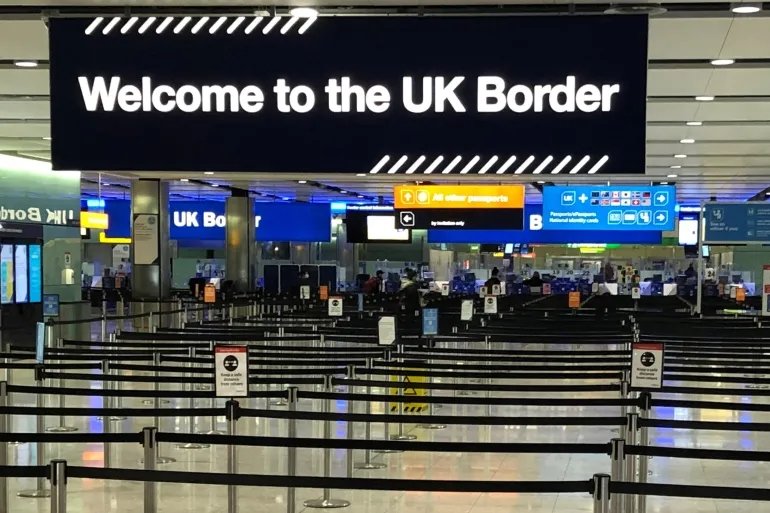
As we brought in the New Year, it was reported that 2025 had seen the second highest number of crossings of the English Channel by migrants on record, and the highest in three years. With a total of 41,472 migrants recorded as crossing the Channel in small boats over last year, this was an increase of almost 5000 more than over the previous year, and the highest number overall since 2022.
These figures will likely only serve to further inflame the debate about migration, which had already become one of the most politically charged issues of the year, with it frequently being listed as the single most pressing issue for many voters.
Parties such as Reform, led by Nigel Farage, which have emphasized the need for greater controls on migration, have consistently led in the polls for the past eight months, leading to speculation that the old two-party system governing the UK may be breaking down. From the start, an ability to manage the numbers of migrants crossing over the Channel in small boats has been portrayed as a crucial test for the historically unpopular Labour government, after Keir Starmer made smashing the gangs a key pledge at the last election.
There had previously been speculation on whether winter conditions would bring with it a reduction in the number of crossings, with the period from mid-November to mid-December marking no crossings for the first time since 2018. This was largely attributed to the harsh weather conditions however, with crossings increasing again over December.
As many as 803 people were recorded as crossing on the 21st of December alone, breaking records for the number of crossings seen at this time of year. Meanwhile immigration raids across the UK have risen by 77% over the past year and a half.
This is a point emphasized by Ron Harper, the founder and owner of the Canada based law firm OTD Legal.
“We should not anticipate that the number of migrants crossing the border illegally will dramatically decrease during the remainder of winter. While winter will definitely reduce the number of illegal crossings when the sea is very rough; criminal organizations will be able to find ways to keep the flow of people coming into this country faster than the government can develop policies to stop them.”
The government has attempted to show they are in control of the situation, with the Home Office stating that "the number of small boat crossings are shameful and the British people deserve better. This government is taking action. We have removed almost 50,000 people who were here illegally, and our historic deal with the French means those who arrive on small boats are now being sent back."
Labour have taken an increasingly hard-line approach in some of its policies on migration in recent months, as they have attempted to make good on their election pledges. Last month saw a set of radical changes introduced to the legislation around migration, with restrictions in the amount of sponsorships for people from abroad that employers and universities can offer, as well as stricter requirements around English language skills, and the expectation that migrants will now have to wait up to ten or even twenty years before they can be granted an indefinite leave to remain. Meanwhile, refugee status for many will be temporary only, with the amount given in benefits available for asylum seekers to be cut.
But with these policies seemingly doing little to actually stem migrant crossings, it remains unclear whether this will have an impact on Labour’s political fortunes going into the upcoming local and regional elections scheduled for May of this year. Though mostly being held for the appointments of local councils and regional governments across the country, these elections are, in the face of Starmer’s plummeting performance in the polls, likely to be treated much like midterms, as an essential barometer for how the government is faring, and how well each of the different parties may expect to perform at the next General Election.
Starmer has already gone on air to dismiss the idea that the upcoming local elections can be treated as a ‘referendum’ on his premiership, downplaying speculation that the results may prompt an internal challenge to his leadership within the Labour Party.
Meanwhile, Reform appears set to use perceived failures over immigration and its recent success in the polls to try and score big at these elections, and present itself as the next government in waiting. Farage has described the elections as "the single most important event between now and the general election," with as much as £5 million to be spent by the Party on its upcoming campaign.
It seems likely that they will continue to be able to capitalize on this issue going into the campaign, owing to the apparent failure by the government to manage the crisis. “The Labour government is facing a growing credibility gap on migration,” states More in Common’s executive director, Luke Tryl, who points out that even if the government’s policies do succeed in bringing numbers down, the perception around migration remains out of step with the reality of the situation.
Whilst the numbers of those arriving in small boats have increased, net migration had fallen overall throughout 2025, dropping by more than two thirds. Despite this, the perception that it is rising continues to be prevalent, with a majority of people seemingly having no confidence in the government’s ability to control it. “That tells us that numbers alone are not enough,” Tryl states. “Until that credibility gap closes, Labour’s migration migraine will persist.”
This being said, some more recent polls have indicated that Reform may have hit their peak in terms of popularity, with the Conservatives and others appearing to gain from the greater scrutiny that Reform have faced over their wider policies; such as on the economy.
And whilst the small boats crisis appeared to be among the biggest stories of 2025, others have pointed out that wider issues besides immigration are likely to become far more crucial once voters go to the ballot box in May. Ron Harper adds that whilst issues such as the allocation of housing for asylum seekers will be a major aspect of this, council spending is likely to be far more important when it comes to the elections for local councils.
“The next local election will not be decided based on the candidates' moral position on immigration, but on the ability of the council members to demonstrate control over the basic needs of the community. Thus, candidates who claim they are ‘tough’ on illegal immigrants, but lack specific details regarding how they plan to enforce the laws, will have difficulty getting elected. Voters want to know exactly how many reception places are available in their area, how many hours of police time are devoted each week to enforcing immigration laws, and how much money is being spent each month on housing for asylum seekers.”
However important this issue ends up being during these elections, the rising numbers of migrant crossings will continue to be a headache for the Labour government ahead of this. So long as the perception around migration remains out of sync with the actual numbers, it is an issue on which there will be few easy answers.
