
The Commons: Starmer V Musk – Could X Be Banned?
Gemini
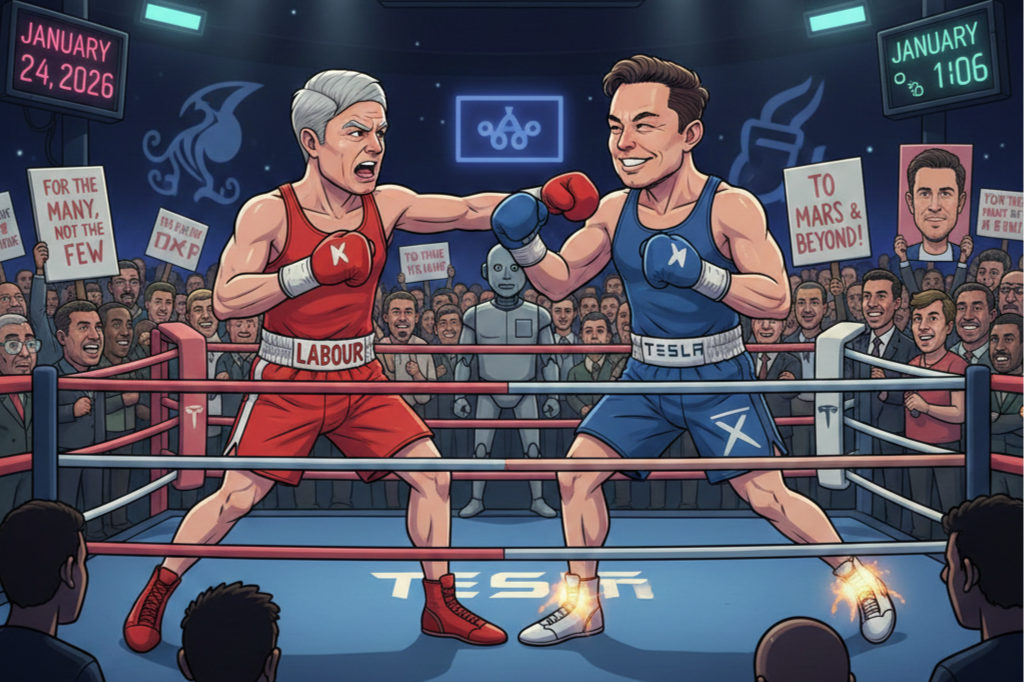
Over the past week, the UK’s media attention has again been captured by the intermittent feud that seems to have developed between Keir Starmer and Elon Musk. This isn’t the first time the two appear to have clashed – this time last year, the tech billionaire had similarly attacked the Prime Minister on issues such as grooming gangs. This time, the dispute has come over the controversy around the AI chatbot Grok, developed by X, which has been used by people online as a means of digitally undressing images of women and children, something that Starmer has described as “disgusting and shameful.”
The UK government is now looking at bringing in a new law to criminalize the creation of non-consensual intimate images, but Starmer’s statements that X must be made to comply with UK laws, and even indicating that the platform could face a ban in the UK if it did not take action, was condemned by Musk as “fascist”. Musk made headlines by using the app to post an image of Starmer himself in a bikini, insisting that complete freedom for users of Grok was essential for freedom of speech.
Since then, criticism of Musk’s attitude towards this does appear to have prompted something of an about turn, however. X has now stated that it will seek to comply with UK law on this, and that action will be taken to prevent Grok users from creating such images, with an official post from X clarifying that “we now geo-block the ability of all users to generate images of real people in bikinis, underwear, and similar attire via the Grok account and in Grok in X in those jurisdictions where it’s illegal.”
Starmer welcomed this update when speaking in the Commons, stating “I have been informed this morning that X is acting to ensure full compliance with UK law.” This did however come with the qualification that; “if so, that is welcome, but we're not going to back down, and they must act. We will take the necessary measures. We will strengthen existing laws and prepare for legislation if it needs to go further, and Ofcom will continue its independent investigation."
A Number 10 spokesperson later confirmed that there had apparently been no official contact between Keir Starmer and X, with Starmer having been responding to media reports rather than any new information from the social media giant itself.
In any case, the investigation into X, launched by the UK’s independent media regulator Ofcom, is expected to still be ongoing, with the possible implications of this remaining unclear. Whilst the controversy has focused specifically around the AI chatbot Grok, and its use in creating such images, and whether X itself could be trusted to regulate this, there has continued to be discussion on whether the government could go so far as to ban X, if it fails to follow through with its requirements under UK law, and if this is even feasible.
This is something that appears to have come with the backing of senior ministers, with Technology Secretary Liz Kendall stating, “I would remind xAI that the Online Safety Act includes the power to block services from being accessed in the U.K., if they refuse to comply with U.K. law. If Ofcom decide to use those powers they will have our full support,” she said in a statement.
This comes after the passing of the Online Safety Act, introduced in 2023, and added to by the current government midway through 2025. The Child Safety Codes that were added to the law during the summer brought in strict age verification standards for sites hosting pornography, as well as any other content deemed harmful for minors, whilst social media platforms such as X were required to implement much more stringent content moderation systems, aiming at preventing harmful content being accessed by children and young people.
Child safety charities largely welcomed this change to the law, with Lynn Perry, Chief Executive of Barnardo’s stating;
“Ofcom’s new protections are an important stepping stone towards making sure that children are safer online. They must be robustly enforced. With the threats to children online constantly evolving, it’s vital that both the government and Ofcom continue to build on protections for children – finding new ways to keep children safe and encouraging innovation to get ahead of new and emerging dangers.”
At the same time, however, many criticized the new bill on the basis both of its effectiveness for keeping children safe, as well as its implications for personal and even political freedoms. This row over the status of X and Elon Musk’s own role within UK politics has now been portrayed by many as the first real test for the new bill, and whether the rules it sets are in fact enforceable.
Commentators have pointed out that even if platforms such as X were blocked, similar criminal images could still be created elsewhere, meaning that a blanket blocking of X in response risks endangering public debate and free speech, and furthermore may not even be legally enforceable. Meanwhile, it has been pointed out, the use of VPNs to get around regulations could in fact only make the laws around creating these images harder to enforce.
The issue of VPNs also raises the problem of this being inherently an issue that is difficult to keep contained within any one country's borders, due to the nature of these sites. The UK had reportedly been in talks with countries such as Canada and Australia as part of a “coalition of decency” in an attempt to establish a coordinated international ban on X. Canada has since announced that they don’t intend to pursue this any further, whilst the US have gone so far as to threaten to bar entry for UK officials if there is a ban on the platform.
Since the announcement, it seems that Ofcom are no longer considering the so-called ‘nuclear option’ of a ban – at least so long as X makes good on taking action to address the problem. However, the government has made clear that it remains on the table, depending on the outcome of Ofcom’s investigation, and whether X themselves are able to effectively deal with the problem.
