
reuters
This month saw yet another U-turn in policy from the Labour government, after it announced it was to be dropping plans for Digital ID’s to be mandatory for all those wishing to work in the UK.
This has come after numerous such reversals in policy over the last few months; from their row back on the particularly controversial policy of means testing for the Winter Fuel Allowance, to further about turns on policies such as the amounts payable on inheritance tax for farmers and on business rates for pubs.
As with these other policies, the government’s proposal that all those working in the UK would be required to have a form of Digital ID had been met with immediate controversy. Keir Starmer had initially put forward the policy as being essential for controlling immigration and ensuring that people could not work in the country illegally. It was further argued that this would make it easier for people to access vital government services, with Liz Kendall, the Secretary of State for Science, Innovation and Technology stating the new scheme would help to modernize public services and give people “power and control over their lives.”
Opposition parties were quick to criticize the policy as undemocratic and ill thought out. The Liberal Democrats argued that such a policy posed a risk both to civil liberties and individuals personal security, whilst both the Conservatives and Reform maintained that the policy was unlikely to be effective in clamping down on migrants coming to the UK to work illegally. Nigel Farage pointed out that the use of Digital IDs in countries such as Germany had made no difference in clamping down on illegal immigration there, whilst Kemi Badenoch labelled it as a "rubbish policy" that would prove overly intrusive into people’s lives.
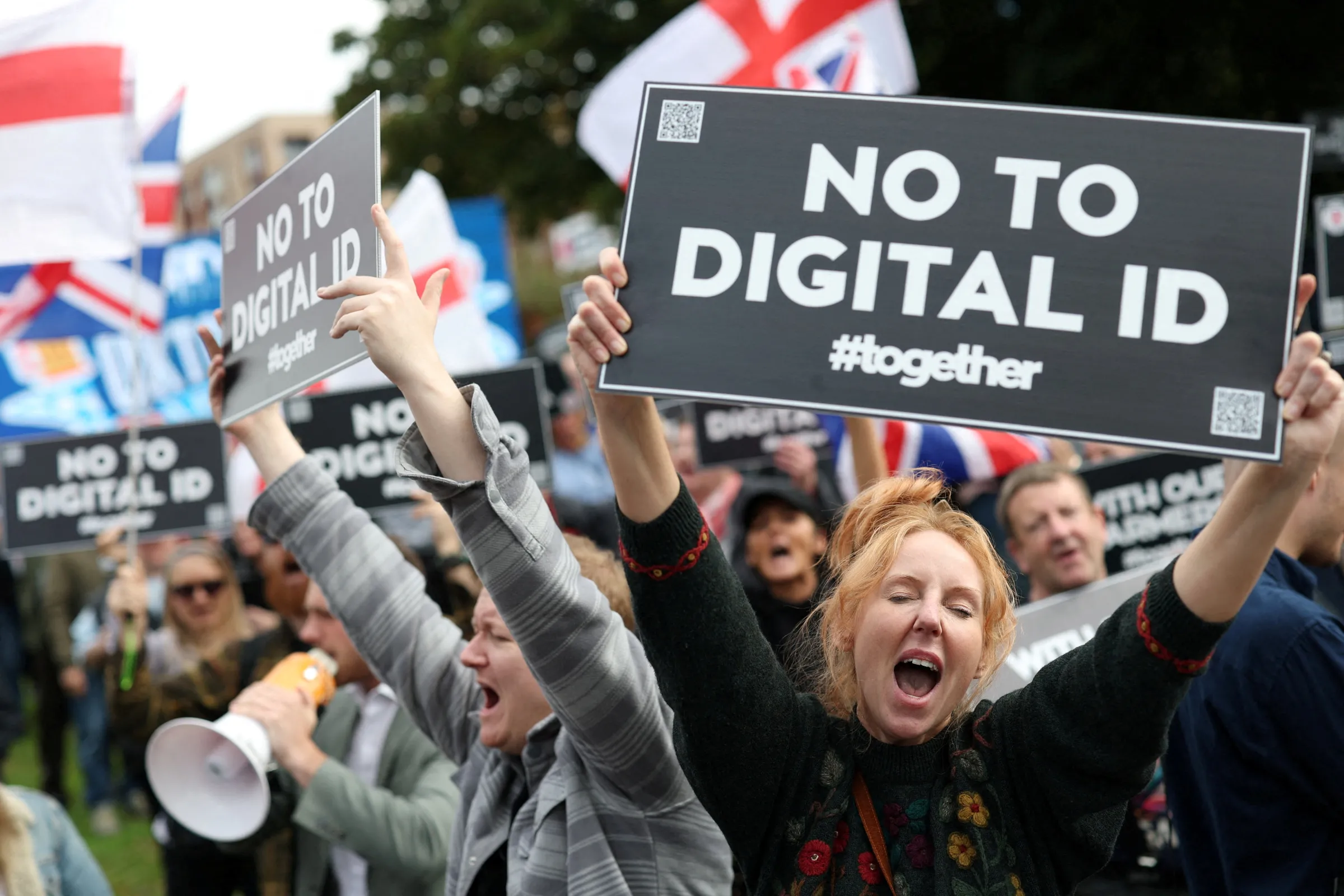
Outside of the main political parties, however, the policy also attracted widespread concern across civil society and amongst activists. Nearly three million people signed a petition against the idea, whilst groups such as Big Brother Watch, a civil liberties group campaigning against the monitoring of personal data by government and corporations, described the move as an attack on individuals’ personal liberty.
The group argued that it would lead to a “checkpoint society” in which everyone would become reliant on a digital pass to go about their daily lives and would herald “a new era of mass surveillance.” At the same time, the group also raised questions about the effectiveness of such a policy, in that it could leave people open to hacking and cybercrime, as well as being a disadvantage to the elderly, the disabled, and low-income individuals .
On their website, the group also points out that the British public has long held a deep and enduring skepticism around attempts to introduce additional compulsory ID’s, noting how; “from WWII IDs, to Blair-era ID cards introduced in the wake of 9/11 and vaccine passports in 2021, the British public has repeatedly and successfully fought back against identity card schemes.”
The scheme to introduce national IDs had been a consistent goal during the New Labour government, with Tony Blair first introducing the act to bring in a new form of National ID back in 2006, after the idea had first been brought up in the immediate aftermath of 9/11, it then being portrayed as essential for any meaningful counter-terrorism strategy. These plans were promptly dropped by the Coalition government in 2010 however, with both the Conservatives and Liberal Democrats having been opposed.
Blair, along with his think tank and consultancy, the Tony Blair Institute for Global Change, have continued to push the policy in the period since, with the organization being a prominent backer of Starmer’s proposal after it was announced in September, stating that its implementation still remained a viable solution for a whole range of problems; on everything from the economy to potholes. This in turn raised questions about the extent to which these figures from the last Labour government have helped to inform the policy, with rumors quickly swirling about the possibility that Blair’s son would himself be given the opportunity to develop the proposed Digital ID scheme – though these were ultimately shown to be entirely unsubstantiated.
However, the record of the Blair years, and the controversy that they faced on the question of ID cards, nevertheless raises the question of why the current Labour government did not seem to see this storm coming when putting the policy forwards in the first place. When first announcing the policy, Starmer pointed out that the debate has "moved on in the last 20 years" and that "we all carry a lot more digital ID now than we did."
This was an argument echoed by numerous other Labour MPs, and even some Liberal Democrats, whose main source of frustration was that the government was not doing enough to explain the policy properly, so people understood “this is for them, and it’s not being done to them.”
On the other hand, if this was an issue that the government saw coming, and were convinced that it was still the correct policy to be pursued, this then raises the question of why it has now been dropped, with yet another U-turn prompting accusations of a lack of any clear strategy from the government.
“It raises questions about judgment, that’s the problem,” one cabinet minister was reported to have said. “It’s salvageable but we’ve given the public the worst first impression.” Another stated “the thing that is very frustrating is that we’ve seen not just unforced errors, but issues that were foreseeable, like with ID cards. The policy was rushed out and ended badly and now we’re having to do a big clear-up operation.”
Conservative leader Kemi Badenoch welcomed the government’s climbdown over Digital ID, but derided Starmer as being "clueless" and showing "no sense of direction whatsoever," describing him as "blowing around like a plastic bag in the wind" and querying which policies would be U-turned on next.
Meanwhile, the words of Health Secretary Wes Streeting, who earlier in the month had said the government's new year resolution should be “to get it right first time” have been much seized as potentially another shot fired in a possible leadership race, with much speculation last week also over the possibility that Manchester Mayor Andy Burnham might challenge Starmer for the Labour leadership. The Labour Party NEC’s subsequent blocking of Burnham from running in Manchester’s upcoming Gorton and Denton by-election may well prevent him from mounting such a challenge, but will do nothing to quell the prospect of another challenge from within Labour, whilst opening Starmer up to accusations of empowering Reform.
For now, the government has confirmed that, instead of the proposed Digital ID, all current checks, using documents such as biometric passports, will move fully online by 2029. Meanwhile, Business Secretary Peter Kyle emphasized it’s vital the government improves its methods of communications and that Labour ministers better justify the reasons behind new measures, stating “what I am concerned about is we get better at explaining our policies, we get better at showing the relevance of it."
