
Imago
The Islands in NATO’s “Lake”
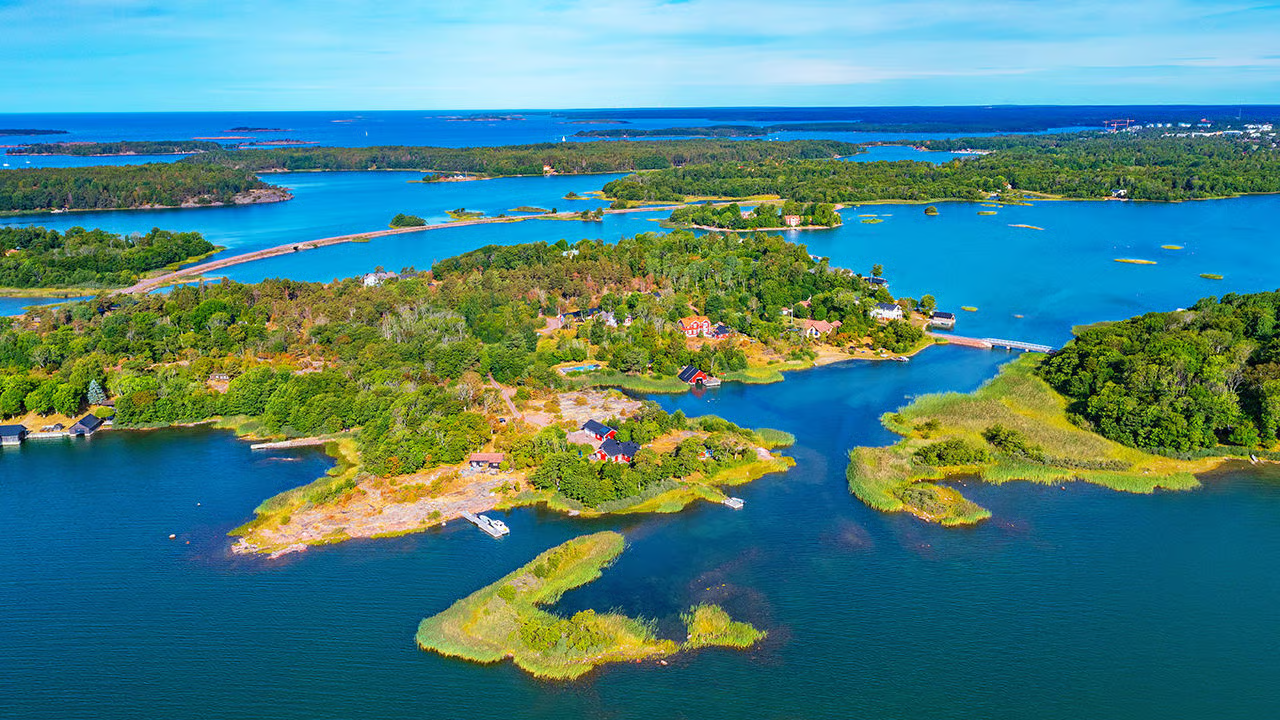
Just off Finland’s southwestern coastline lies the idyllic and picturesque Åland Islands. Made up of over 6,700 islands, only 60 are inhabited by the province’s 30,000 residents.
The island is unique in a few different ways. For starters, they are an autonomous region of Finland, but they maintain one representative within the Finnish Parliament to ensure that Åland’s interests are protected within the realms of foreign affairs, civil and criminal law, customs and taxation. Their link to Finland also affords them special privileges within the European Union, as they are considered a “third territory”, a distinction which enables the sale of tax-free goods to individuals travelling between the islands and other EU member states.
Throughout their existence, the Åland Islands have witnessed some of the most seismic shifts across Europe, and the current geopolitical developments have been especially suspenseful for this small island nation.
The Åland Islands have recently come into focus due to their strategic location within the Baltic Sea and amidst the ongoing tension between Russia and NATO, which Finland joined in 2023. Since the 1921 Åland Resolution, the islands have been designated as autonomous and demilitarized. As part of this deal, their citizens are also not compelled to serve in the Finnish Armed Forces.
This brings up an interesting conundrum, because given their link to Finland, the Åland Islands are considered part of NATO as well. Finland joined the alliance in 2023, partly due to the rising tensions in Europe. Åland’s status as being autonomous and demilitarized would prevent them from engaging in any hostilities, even if the Finnish mainland was attacked.
In the event of a conflict, Finland will be obligated to defend its territory, which would include the Åland Islands. While it seems inconceivable that the neutral island would be militarized in the event of a war, it is not without precedent.
Finland militarized the Åland Islands during the Second World War as a bulwark against the Soviet Union but did not utilize the islands for power projection. A possible military buildup on the island would likely be made up of either Finnish or NATO troops.
How Long Can Åland Stay Neutral?
Mosse Wallen, a retired journalist, has been part of a contingent of people regularly demonstrating outside of the Russian Consulate in Åland’s capital city of Mariehamn since the start of hostilities.
Wallen sees Finland’s move to NATO as a collective good for Åland, if the islands can maintain their neutral status. Wallen is quick to highlight Åland’s status, stating that if Åland was attacked in a possible conflict, it would be equivalent to “bombing a hospital”.
The Åland Resolution has been cited as a success story to emerge from the League of Nations, the short-lived multi-lateral peace organization that formed immediately after the First World War.
The example of an autonomous territory with a different ethnic population thriving and living harmoniously in concert with a “host” nation of a different ethnic group as the majority has been utilized as a possible blueprint to soothe tensions in places like Northern Ireland and the Aceh Province of Indonesia.
Despite the success of the Åland Resolution, and the fact that the citizens have lived under its terms and have had no interest in altering the terms, it may come undone soon – not through struggle between Åland and Finland, but due in part to external factors.
The “Finnish Turn”
Finland’s foreign policy shift may be the biggest determining factor to the future neutrality of the Åland Islands. With their move to NATO, the nation has been pursuing a more proactive foreign policy, something that is now being referred to as the “Finnish turn”, when a nation recognizes its old policies are not working in the face of a changing geopolitical environment.
This change in foreign policy may have long-term effects on the Åland Islands. As Finland has also enjoyed the status of neutrality, the shift towards formally joining an alliance such as NATO signals their metamorphosis into a true middle power.
Some people in Åland believe that the policies taken by Finland will benefit Åland in the long run in the face of the strong influence of the much larger powers like Russia and the United States.
How The Levels Of Power Will Affect The Åland Islands
Susann Simolin, the director of the Åland Peace Institute believes that medium-sized nations aligning themselves will serve to insulate them from the effects of decisions made by great powers.
She goes on to say that the established system amongst the great powers has held strong, despite challenges. She also said that “If confidence and agreements and rules is diminished and eroded and it becomes more common to slip on them or question them, then it can also affect us indirectly and in the long term.”
The ever-shifting geopolitical environment in Europe has and will continue to be a unique challenge for the Åland Islands, but the relationship between the province and Finland is undoubtedly paramount to their safety and prosperity moving forward.
