
The Commons: Prisons Threatening To Break
GARY DOAK
The prison system in Scotland risks finding itself on the verge of collapse, it has been warned, as rates of overcrowding have put increasing pressure on the prisons system nationally.
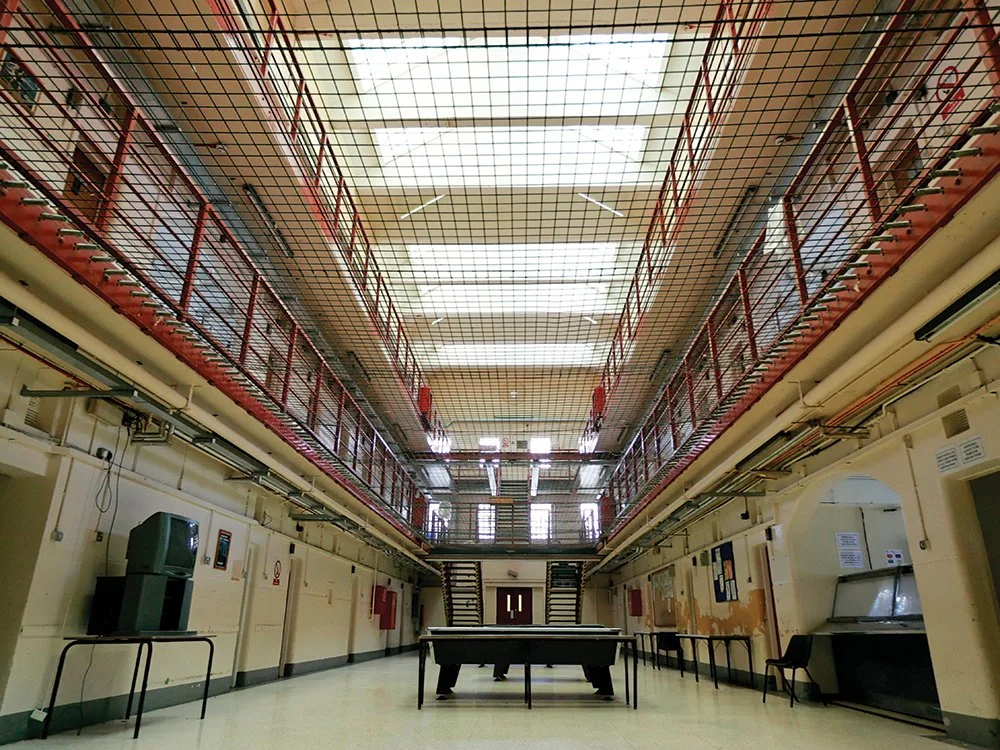
The Scottish Prison Service (SPS) reported this month that the system has been pushed to the brink, with prisons struggling to meet “basic legal standards” amid both rising numbers of serious offenders and longer sentences. Prisons such as HMP Barlinnie in Glasgow, which had already been described as not fit for purpose back in 2019, have now been said to be “beyond safe capacity” by the SPS, who have stated that “the prisons system in Scotland is stretched and only meeting basic legal standards.”
Theresa Medhurst, chief executive of the SPS, has claimed that the current level of overcrowding could lead to a “catastrophic failure” for jails across Scotland. Speaking at the Scottish Parliament in Holyrood, Edinburgh, she described prison staff as having been under relentless pressure over the past two years, with the long-term prison population having increased by 800 since over 2021 and 2022, whilst the number of those convicted for sex offences increased by as much as 900; supposedly enough to fill an additional prison the size of Edinburgh's.
Overcrowding has been reported to be having a disastrous impact not only on conditions within prisons and on prisoners safety, but also on their chances at rehabilitation, and at finding new opportunities upon release. In October of last year the prison population in Scotland reached a record high of 8,430, with HM Chief Inspector of Prisons Sara Snell stating, “it is deeply troubling that in 2025, we are still seeing prisoners housed in conditions Victorian society deemed unacceptable. Overcrowding is paralysing the system and placing immense strain on staff and services.”
Meanwhile, MSPs have warned of the growing problem of drugs within prisons, with the use of drones and other methods having created an evolving supply chain that the prison system has been unable to stem.
A cross-party criminal justice committee found that there was a “systemic failure of health provision manifesting inside prisons, requiring a whole-system response across justice, health and community services. The impact is felt across the whole prison environment — on people in custody, staff safety, families, and recovery outcomes.”
These problems have of course been common issues across the UK. Headlines have frequently reported on the ever growing pressures facing the country’s prisons system as a whole, as overcrowding has resulted in rising rates of drug use, violence, and suicides within British jails over the last few years. It is an issue that subsequent governments have attempted to tackle with only limited success, with former Prisons Minister Rory Stewart describing the state of UK prisons as “the most shameful part of our society.”
Prisons in England and Wales have themselves seen a record high in the numbers of prisoners, which exceeded 87,000 back in 2024 - the highest since as far back as 1900.
Much of the pressure on Britain's prisons can be traced to a failure to expand on places in prisons since the early 2000s, as well as the impact of the budget cuts enacted by the 2010 coalition and subsequent Conservative governments as part of their policy of austerity. This, along with rising sentencing has left many prisons struggling to cope.
Under Rishi Sunak's government, the prison system had deteriorated to such an extent that they faced complete collapse on as many as three occasions over 2023 and 2024, with the government refusing to take steps to cut the numbers coming in. Subsequently, when Keir Starmer's Labour government was elected in the summer of 2024, they pledged to seriously tackle the problem, with incoming Prisons Minister James Timpson asserting that there needed to be a serious overhaul of the lengths of sentences being given.
"We’re addicted to sentencing, we’re addicted to punishment," Timpson stated. "So many of the people in prison in my view shouldn’t be there.” The government has since pressed ahead in trying to bring prison numbers down, last month passing the 2026 Sentencing Act, which will see as many as a third of prisoners becoming eligible for early releases.
Controversially, the government has also been pressing ahead with plans to remove juries for all but the most serious crimes, something which the Deputy Prime Minister and Justice Secretary David Lammy has stated will be essential for alleviating pressure on the courts system. Opposition parties have strongly condemned these plans, with the Conservatives stating that the early release of prisoners would put the public in danger, whilst legal practitioners have also criticized moves to reduce juries as dangerous for democracy and for the proper serving of justice. The government has insisted however that these plans are essential for preventing a complete collapse of the justice system, with Lammy maintaining that, “we're overhauling sentencing and building thousands of prison places fast to protect the public and make sure there is always a cell for dangerous criminals.” Whether these policies will be successful however remains to be seen. There have already been almost 40,000 early releases from English and Welsh prisons since September of 2024. In spite of this, levels of overcrowding have continued to grow nationally, with forecasts indicating that prisons in England and Wales will again run fully out of capacity this year if the government’s measures are not successful.
Whilst the picture in Scotland has been broadly matching that of the rest of the UK, with many of the same underlying issues, this is nevertheless an area for which the Scottish government itself bears ultimate responsibility, and where it has had its own failing. Prison services are one of the policy areas that Scotland had maintained responsibility for even prior to devolution in 1999. Theresa Medhurst has been among those criticising the Scottish government for their own range of cuts, which has helped this to become just as serious a problem in Scotland as in the rest of the UK. Medhurst attacked the Scottish government's allocations of funding for prisons over 2026 and 2027, saying it falls short of what is needed by as much as £15.3 million. She has further emphasized that this gap in funding will not only impact facilities in the short term, but also poses the risk of causing “a degradation of services” that will further prevent inmates from accessing the rehabilitation they need. The end result is likely that many more people across Scotland will find themselves stuck in prisons for even longer.
“Very simply, we don’t have capacity for the number of people,” Medhurst stated. “So the population needs to reduce.”
Like the Westminster government, Holyrood is attempting to tackle this problem by pushing through more early releases for prisoners, with more than 400 prisoners being freed earlier than expected over recent months, and judges being encouraged to avoid long sentences where not suitable. In a report published this month, the Scottish Sentencing and Penal Policy Commission stated that "when passing a sentence of fewer than 24 months, members of the judiciary should provide a written note of all the available alternatives considered and why, bearing in mind the particular facts and circumstances of the case, no other method of dealing with the person was appropriate.”
A national ‘decarceration plan’ is to be implemented by the Scottish government, with the aim of setting out clear milestones to bring down rates of incarcerations, reviewing the performance of Scottish courts, and developing a policy to keep released prisoners off the streets. But with such early releases having apparently only had limited success in the rest of the UK, it will remain to be seen whether this has any impact on relieving Scotland's own prison system.
