
Tiziana Fabi/AFP
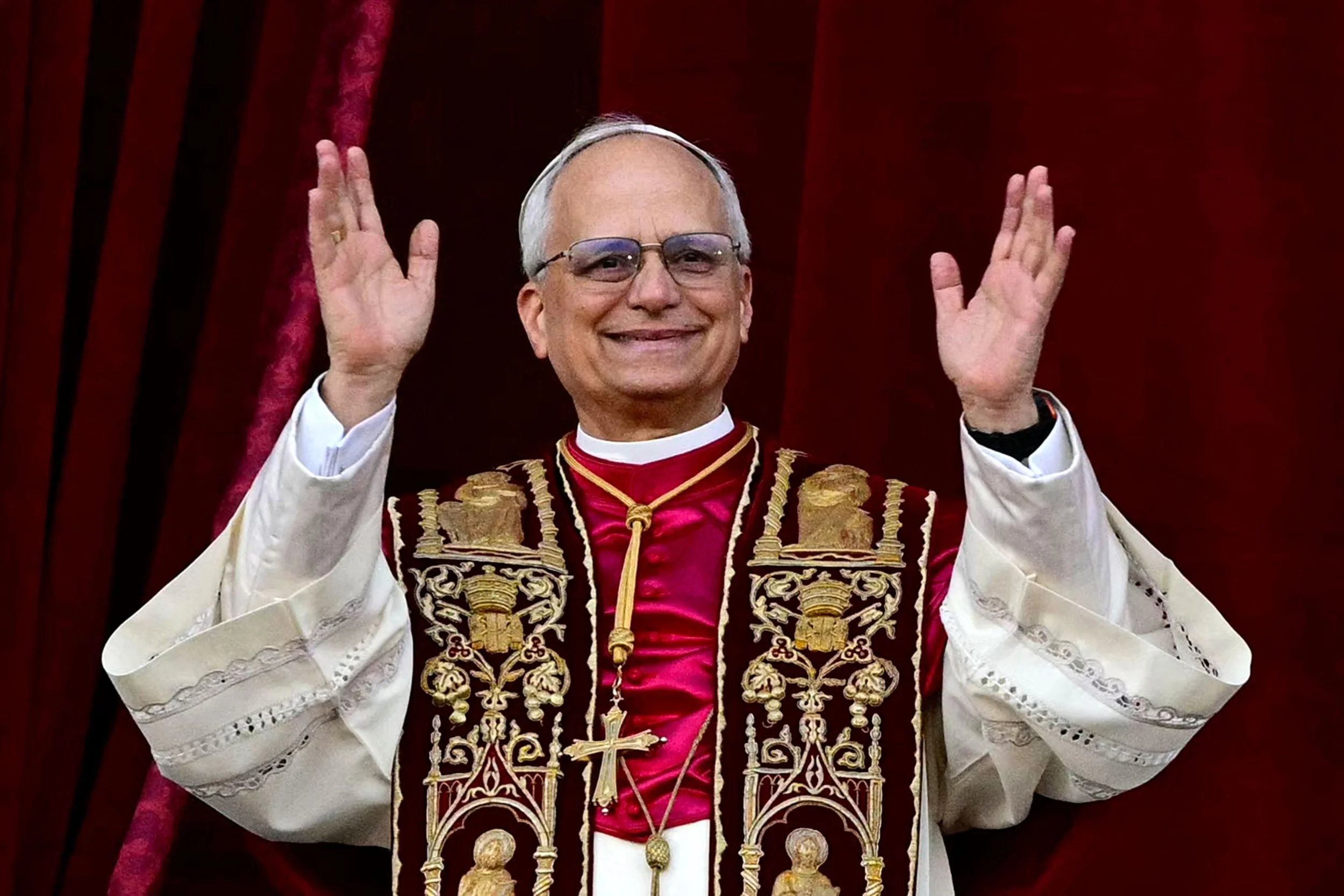
Following the death of the reform-minded Pope Francis in April 2025, his mantle of absolute power and authority within Vatican City passed to a Chicago native, along with his titles. While closing legal loopholes and mending technicalities, Pope Leo XIV has undertaken significant financial, administrative, and structural reforms within the city-state and church. Now, as he nears the end of his first year as Supreme Pontiff of the Roman Catholic Church and the Head of State of Vatican City, both the citizens of VC and Roman Catholics worldwide are reflecting on the work he’s done so far.
Financial Reform
Pope Leo inherited the financial crisis plaguing the Vatican along with his titles. Despite his steady assurances that “things are going to be OK,” Vatican City’s finances are defined by their high deficits, particularly within the pension fund. But this crisis is only a part of the nation’s particularly difficult past six years, which began with the 2018 London property scandal that brought international embarrassment, reaped a loss of 140 million euros, and saw one Cardinal imprisoned for financial crimes.
In response, and in an effort to bring the state’s financial processes under closer scrutiny, Pope Francis introduced a law in 2022 that centralized banking for the church and “concentrated control of the Holy See’s assets in the hands of the Vatican bank.” In October 2025, Pope Leo used his first executive decree to repeal and replace this law, signaling “a marked shift in Vatican financial policy, reopening the door to using non-Vatican banks for managing the Church’s considerable global assets.” There is concern, however, that this decentralization and rolling back of local safeguards to banking processes has also reopened the door to the state being vulnerable to another scandal.
Administrative & Structural Reforms
Despite Pope Leo’s decision to loosen safeguards signaling his confidence in the Vatican’s administration, he initiated notable administrative and structural reform in the months surrounding his October executive decree.
The month prior, on September 27, Pope Leo removed Monsignor Roberto Campisi from his post following his questionable appointments to a fundraising committee, with his transfer suggesting a plan to “revamp the commission and perhaps name new members who would lend the commission more gravitas and credibility with key donors.”
Perhaps the most significant administrative reform came on November 25, when, by “approving a revised statute for the Office of Labor of the Apostolic See (ULSA),” the Pope quietly “[redrew] how labor relations, employee protections, and workplace governance function inside the Vatican’s complex institutional ecosystem.” At the core of this move was an expansion of the ULSA’s governing body and a restructuring of how it operates; the statute improved representation in the council for various funds and enabled individual councillors to independently propose items for discussion at council meetings, reflecting “Leo XIV’s insistence on shared responsibility and institutional dialogue.”
Also in late November, Pope Leo officially made it lawthat “members who are not cardinals — such as laymen and women — may lead the [The Pontifical Commission for Vatican City State],” which “oversees the Vatican’s legislative and administrative life.” The change is more than just a technical one — but it came months too late. On the first of March, 2025, Sister Raffaella Petrini had become the first woman to be elected as President of the Governorate of the Vatican City State and President of the Pontifical Commission, and yet some doors remained closed to her; she was not a Cardinal, despite her station, and some governmental procedures demanded all participants be members of the College. It created an administrative dilemma, excluding her from procedures she should’ve been involved in, which has finally been rectified.
Direction For Future Reform
As of early 2026, Pope Leo has begun working towards further reforms, holding the first formal meeting of his pontificate, bringing all the world’s Cardinals to participate in a two-day setting of his priorities and gathering of support and advice in a manner that was described as “extraordinary.”
Considering the practices of his predecessor, who kept a small group of Cardinals close to him for advising, this change “promises greater consultation and a more collegial, ‘new style of governance’” within the Pope’s inner circle.
The priorities outlined in the meeting signaled further reform, as well as its direction. “For starters, Leo signalled an emphasis on more fully implementing the reforms of the Second Vatican Council,” the 1960s meetings that “set off a process of deep transformation within the Church itself, and in its relations with the modern world, and other Christian Churches and non-Christian religions.”
Time at the consistory was also spent on a study of Pope Francis’s past mission statement and a 2022 restructuring reform, discussing the pontificate becoming “more "synodal," or responsive to the needs of rank-and-file Catholics,” as well as addressing “divisions within the church over the old Latin Mass.”
How Does Pope Leo Sit With VC Citizens & Catholics?
As of early 2026, the international response to Pope Leo and the first several months of his papacy has been overwhelmingly positive. Gallup’s International End of Year Survey found him to be “the world’s most positively viewed global leader, commanding broad goodwill across continents,” producing a net favourability score of +24— “the only clearly net positive global score among all leaders measured.”
Shortly after his appointment, Pope Leo, an established “global citizen” who was born in Chicago, has Creole heritage, lived in Peru for decades and speaks at least three languages,” was embraced by the global Catholic community, reflecting a desire for “a pope for all the people.” Among American Catholics in particular, a Pew Research Center survey found 84% of American Catholics viewed the Pope favorably; however, it’s notable that another Pew survey found 25% of participants reported they did not know anything about him at all.
As Pope Leo continues his work and nears the culmination of his first year in the office of the papacy, the reforms he takes forward, and those he does not, will continue to shape the opinions of the great many people with their eyes watching him. For those who still don’t know of him or his work, his second year promises further opportunity to establish himself in his position.
