
EU Currents: Germany’s Fleeing Youth
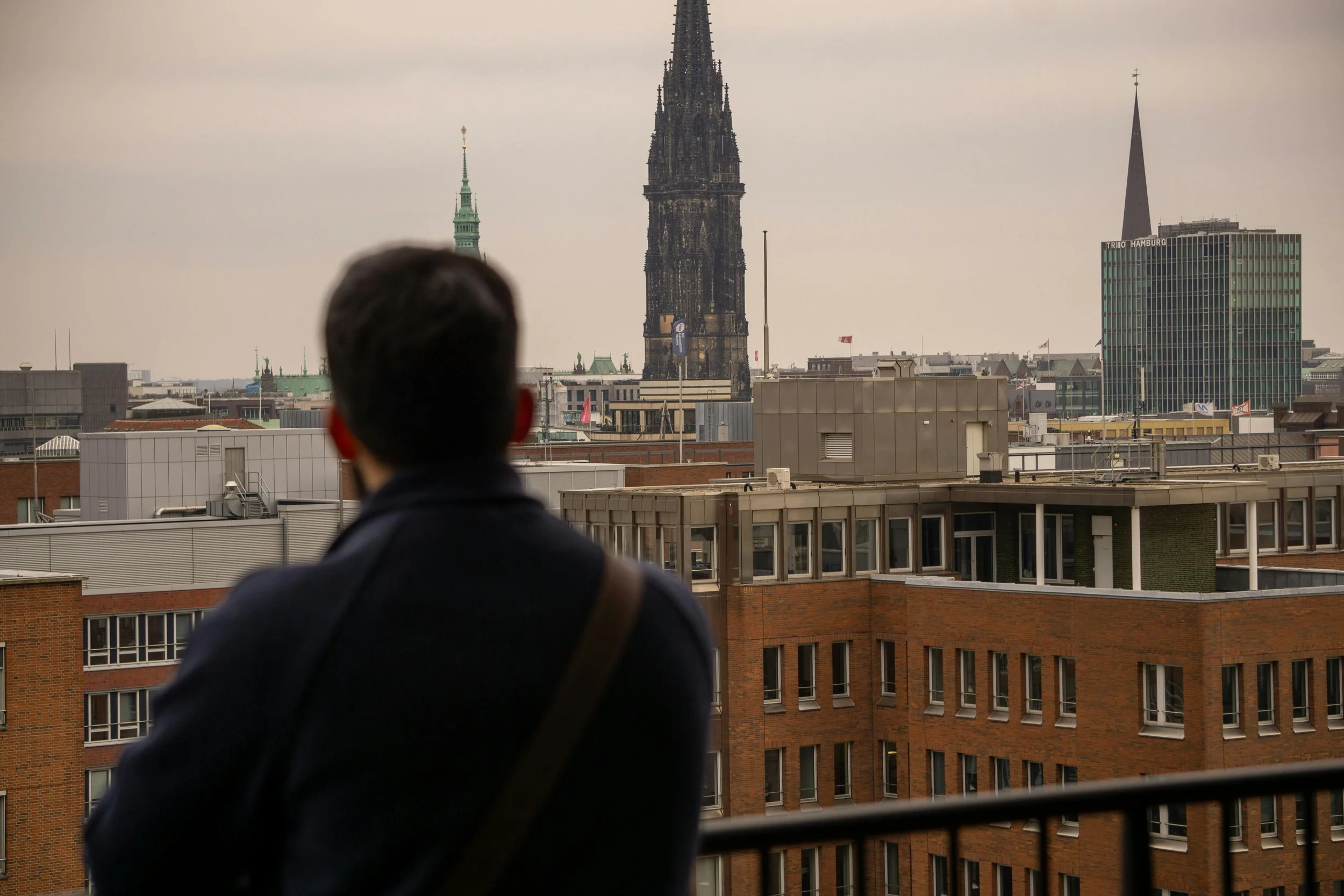
Muhammed Hanefi
More than one in five Germans aged 14 to 29 are looking at establishing a life outside of Germany, according to a survey of 2,012 people conducted by Datajockey Verlag. Many cite the increasing economic woes in the nation, coupled with rising costs of living and dwindling career prospects.
Recent geopolitical tensions have contributed to an energy crisis that Germany has been struggling with for the past four years. The nation’s economy is struggling in part due to supply chains that have not diversified, leading to energy uncertainty after decoupling from the Russian gas supply. The decision has raised energy costs, which have decreased consumer purchasing power and have stoked fears of rising inflation.
The Social Construct
There is a social aspect involved in this phenomenon, regarding the rising influence of right-wing politics in Germany in the wake of Alternative for Germany’s (AfD) rise to prominence across the country. The AfD is gaining traction with younger Germans, causing friction and increased polarization in the political sphere. In a recent state election in Rhineland-Palatinate, the party garnered 21% of all voters under age 25. Conversely, the left-wing party, Die Linke, only garnered 19% of voters under age 25.
Riff, a student at Humboldt University in Berlin, had this to say in an interview with DW: “I think that every one of my friends is thinking about it—especially if you’re racialized, if you’re part of a minority in some way.” She highlighted the fact that Chancellor Friedrich Merz and his fellow coalition partners are actualizing changes that were outlined in their platform goals.
She added, “I’m getting increasingly worried, especially since a lot of the cultural jobs, jobs that are working for democratization, are being cut. I think fascism is on the rise.”
A Struggling Mental Health Apparatus
Mental health across the total spectrum of the population has become a persistent issue, especially amongst young Germans. The Datajockey study showed that more than 29% of young Germans are seeking psychological support, with the numbers highest among women, students, and unemployed young people.
Last month, the Extended Assessment Committee, an arm of Germany’s healthcare system, ruled that fees paid to therapists through insurance providers will be cut by 4.5% as of April 1st, 2026.
Losing these fees will have a ripple effect on a system that is already shorthanded. The Federal Chamber of Psychotherapists estimates that Germany’s public healthcare system requires 7,000 more psychotherapy treatment locations than are currently extant, and the number of prospective patients is expected to increase by 23% by 2030.
Costs and the ability to find appointments in a prompt manner have caused Germans to resort to unconventional methods. Many have either sought help virtually through providers in other EU member-states or have utilized AI tools to assist.
Nia, a resident of Berlin, struggled to find care for her depressive disorder, going through four consultations with therapists who were forced to decline care due to the lack of resources. She was later admitted to an inpatient clinic as her symptoms worsened and now sees a therapist in another EU member-state with rates lower than Germany’s.
“I eventually decided to go abroad on my own, out of my own pocket,” Nia said. “It felt like life or death.”
The use of AI within the field of psychotherapy attracted attention from some therapists in the field, drawing concern about patients using AI and receiving harmful or inaccurate psychological advice.
“It’s Complicated”, a Berlin-based digital therapy platform, conducted a study of AI’s employment within the field of psychotherapy in Germany. More than 52.4 percent of Germans seeking mental health treatment have used AI, and more than 51.2 percent of private practice therapists reported experimenting with AI tools in their daily practice.
The study noted that the use of AI by therapists was mostly in non-clinical tasks like note-taking, research, or producing content. Considering AI’s approach to patients, Johanne Schwensen, the founder of It’s Complicated, had this to say:
“AI can scale access, but only humans heal. The future of mental health care is hybrid, innovation supported by ethics, evidence, and humanity.”
Where Are Young Germans Going?
When it comes to desired landing spots, many prospective emigrants aren’t looking to move far. According to a 2024 poll conducted by Destatis, Germany’s statistical office, Switzerland is rated as the top destination for young Germans, with Austria rated as a strong second choice.
Zurich and Vienna have been consistently ranked amongst the world’s most livable cities due to robust public infrastructure, low crime rates, cultural offerings, and commitment to sustainability. For young Germans seeking a landing spot, the culture and sustainability aspect may be what draws them to these cities, along with a perception of escaping a widening gap between the rich and poor in Germany.
Kaspar Ten Haaf believes that many young Germans are attracted to nations like Switzerland and Austria because of the strong social programs in these nations, and that more social responsibilities should be shouldered by higher-income earners in Germany to close the socioeconomic gaps.
Ten Haaf stated, “We have a huge difference between rich and poor here in Germany. We have lots of taxes on normal workers, but not on the wealth that rich people inherited from their ancestors. We really need more taxes on the rich and to support these workers delivering packages or working in hospitals.”
