
European Central: Moldova In Its Eighth Prime Minister in the Last Seven Years
NurPhoto
Is it that hard to be the prime minister of Moldova? Judging by the country’s political history, the answer appears to be yes. Since its independence from the Soviet Union, and particularly in the past decade, Moldova has cycled through more than a dozen prime ministers and caretaker prime ministers, with one lasting only 38 days and few serving longer than two years. The latest resignation came in early July, when then-Prime Minister Alexandru Munteanu stepped down after less than eight months in office, prompting President Maia Sandu to nominate a new figure, who is set to become the eighth head of government in the last seven years. As the country continues its progress toward joining the European Union, Munteanu's leaves the post amid a range of corruption allegations exposes the challenges of governing this former Soviet satellite.
Scandals and Russia Turn Moldova Westward
In Moldova's parliamentary republic, much of the executive authority, alongside the legislative power, rests with the prime minister and the cabinet. The sitting president nominates the prime minister, and once appointed, the government remains dependent on maintaining support from its coalition partners and other political parties in the parliament.
Most of Moldova’s post-Soviet politics has been defined by the struggle against instability and by balancing ties to Moscow with pro-European public sentiment. A notable moment that has defined the country’s domestic politics for years to come and exposed the connection between Moldovan oligarchy and the Kremlin came in 2014, when approximately one billion dollars disappeared from three Moldovan banks as part of a large international Russia-led fraud called "Russian Laundromat" or “Moldovan Laundering Machine”. The revelation of direct involvement of Moldovan officials, judges, and oligarchs in the fraud sparked mass protests in the country, accelerated the collapse of the then-government, and influenced the brevity of the cabinets that came after.
They have faced further difficulties with gathering public support as a result of the economic challenges and security concerns over Russia’s invasion of neighbouring Ukraine. With war raging just on the other side of the border, Moldovans have seen a sharp rise in energy prices and increased inflation and have become worried about their country’s national security and territorial integrity.
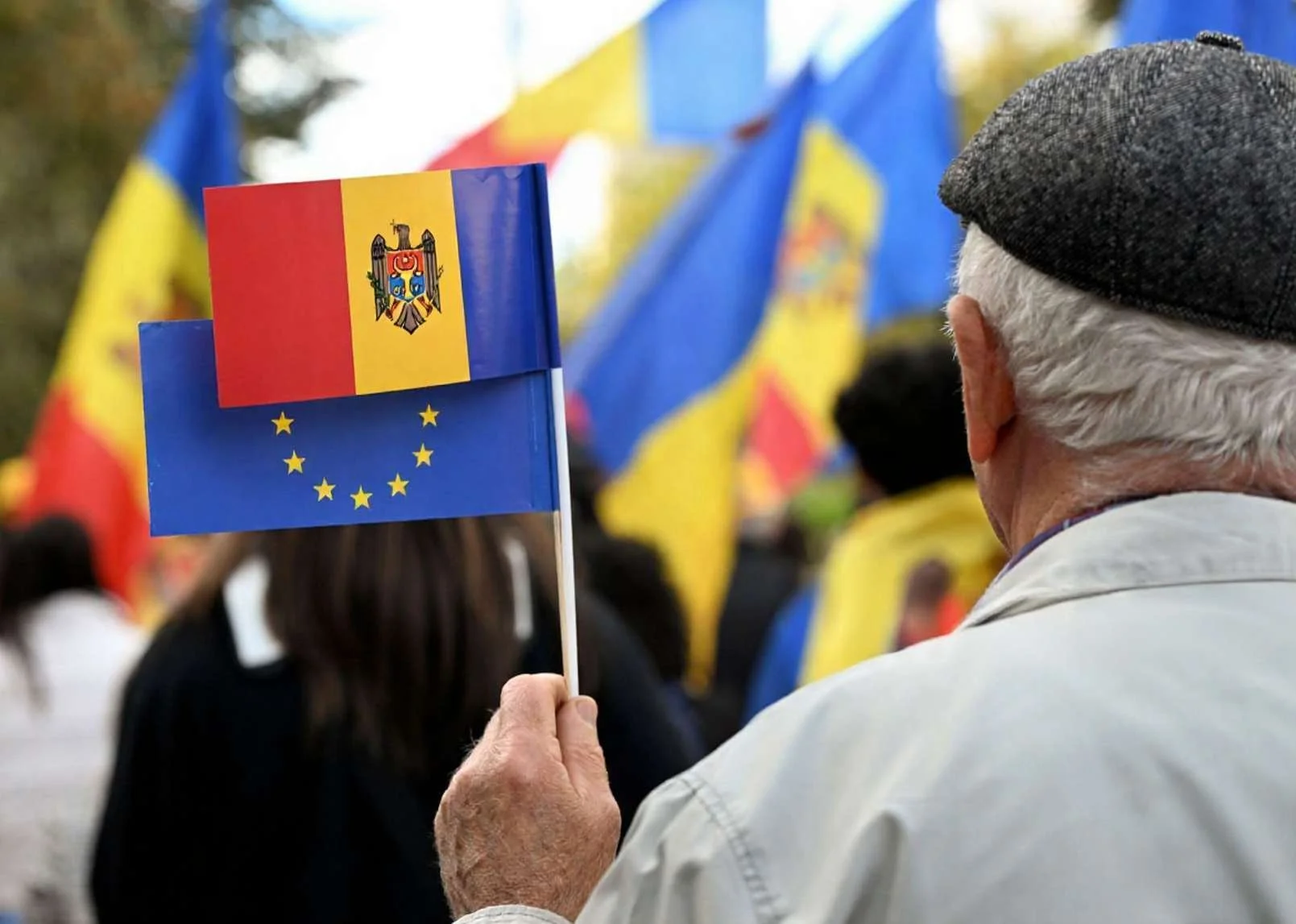
As a result, Moldova’s turn toward Westward has accelerated. In 2022, the country became a candidate for EU membership and has been engaged in negotiations that require the implementation of reforms in areas including the judiciary, public administration and anti-corruption legislation. Talks continue in tandem with the Ukrainian accession bid and are set to conclude as early as 2028. Both countries could join the bloc in 2030.
The prospect of EU membership is supported by the majority of the public, with 63% of Moldovans saying they would vote ‘yes’ in a referendum on accession, according to polling from September 2025.
The Rollercoaster of the Prime Ministerial Office
Since the 2014 banking fraud, few prime ministers have completed a full term in office. Chiril Gaburici resigned in 2015, less than four months into his term, after questions emerged over the authenticity of his educational qualifications, while his successor, Valeriu Streleț, was removed by parliament in a vote of no confidence just 92 days after his appointment as a fallout from the mass public protests triggered by the revelations around the banking scandal. The following Pavel Filip's administration remained in office for three years, from 2016 to 2019, but eventually collapsed over frequent criticism for behind-the-scenes influence by oligarch Vladimir Plahotniuc, who was earlier this year sentenced to 19 years in prison in relation to his involvement in the banking fraud.
The current president, Maia Sandu, held the prime ministerial role briefly for a little over 5 months in 2019 after an unlikely coalition between Sandu’s pro-European party and the opposition pro-Russian parties united around the objective of removing Plahotniuc's influence from Filip’s government. The coalition collapsed within months and paved the way for the administration of Ion Chicu, who resigned at the end of 2020 to facilitate early parliamentary elections, after which Natalia Gavrilița took office. Although her government secured a parliamentary majority, Gavrilița stepped down in 2023 amid the economic pressures resulting from Russia's invasion of Ukraine. Her successor, Dorin Recean, has remained in office longer than many of his predecessors, but eventually ended his government’s tenure in November last year.
Four caretaker prime ministers also served brief terms in the wake of the government crises in the past 12 years, most recently Eugen Osmochescu, who stepped into the role to temporarily replace Muntenau.
Munteanu Resignation and New Pick
After announcing his resignation on July 3, Alexandru Munteanu became the latest of the many recent prime ministers. Appointed by Maia Sandu in November 2025, the technocrat stayed in the office for eight months. In a post on X announcing his resignation, Munteanu wrote: “I accepted the responsibility of serving as prime minister with a deep sense of duty and the firm conviction that I could help bring positive change. The moment I realized I could no longer carry out my mandate in accordance with my principles and convictions, I chose to step down.”
On July 11, President Sandu nominated businessman and investor Vasile Tofan to become the next prime minister. The managing partner at Horizon Capital is seen as a pro-European figure, and his nomination signals the president's intention to maintain the government's focus on the EU accession process. If approved by parliament, Tofan will become Moldova's eighth prime minister in seven years, inheriting many of the same political challenges that have limited the longevity of his predecessors.
