
European Central: As the War in Ukraine Drags On, What Is Alexander Lukashenko Doing?
reuters
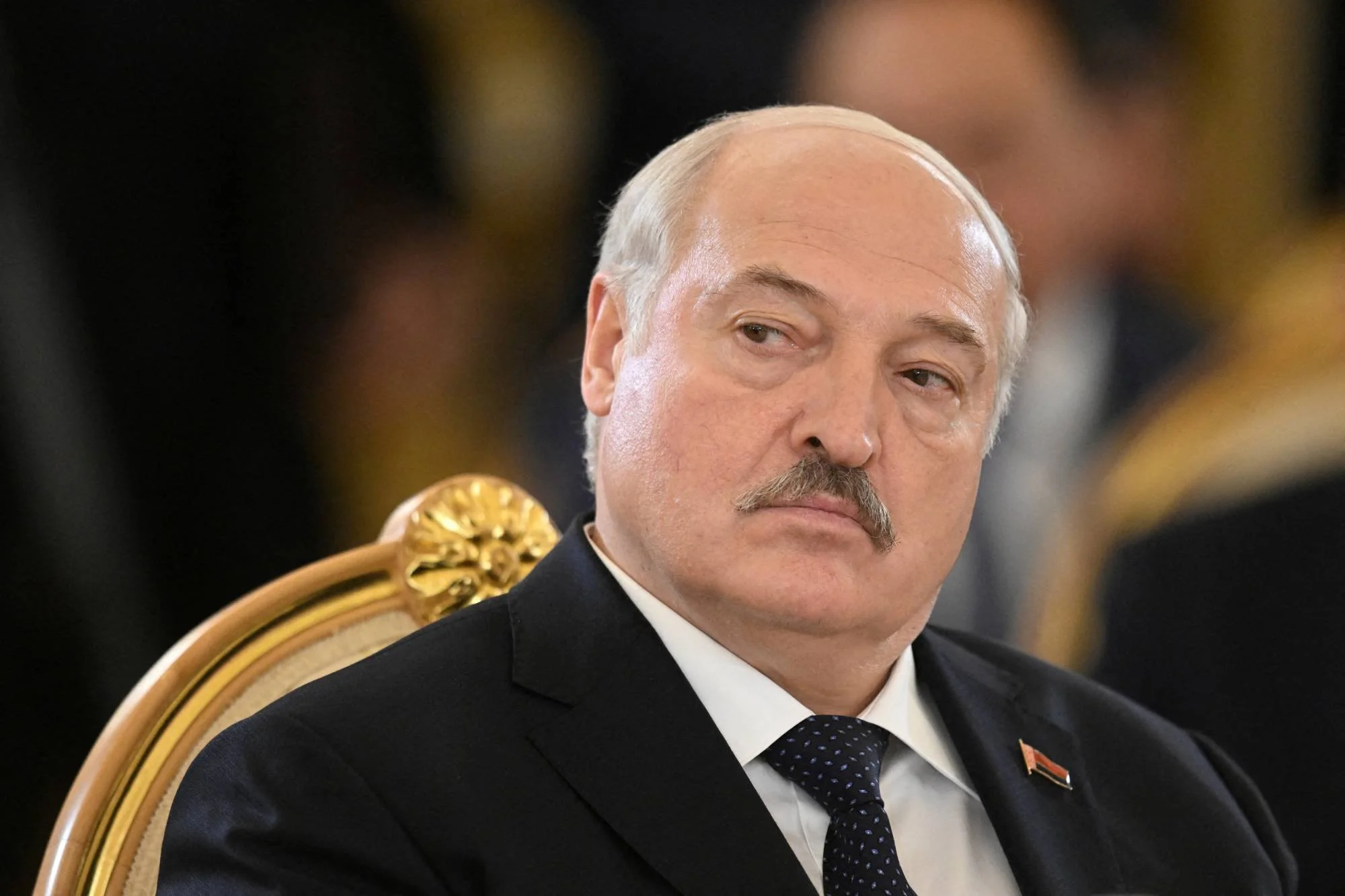
President Alexander Lukashenko allowed Belarus to become the staging ground for Russia in the opening days of the prolonged full-scale invasion of Ukraine. As the war continues to rage over four years later, the role of the former Soviet satellite state, led by a president often dubbed the last European dictator, remains rather vague. Belarus has not committed its own forces to the battlefield – instead, Lukashenko has walked a careful line between supporting President Vladimir Putin and avoiding direct involvement that could threaten Belarus' own security and sovereignty.
Dependency Leads To Balancing
Lukashenko's position has always been constrained by Belarus' close political, economic and military relationship with Russia. But rather than trying to even the Moscow-Minsk connection that remained fairly unequal even after Belarus gained independence in 1991, Lukashenko has deepened his country’s reliance on Putin, practically and ideologically. In the eyes of many European democracies, the final blow to any hopes that Minsk could turn Westward disappeared after Lukashenko ordered a mass crackdown on anti-government protests that spread across the country following the disputed 2020 presidential election. The protesters accused the president of rigging the election result in a bid to undemocratically prolong his, at the time 26-year-long tenure in power. The brutal suppression was rejected by many on the international stage as undemocratic and repressive. As a result, Minsk became largely isolated from the west and moved toward even greater dependency on Moscow.
It seemed like there was little room for Lukashenko to reject Putin’s endeavors, including his demand to acquire Ukraine.
And yet, dependence has not resulted in full participation in the war but rather in a balancing act. Although Lukashenko allowed Putin to use Belarusian territory for attacks and as a station for a portion of Russia’s troops as well as tactical nuclear weapons, Minsk has so far avoided direct involvement in the conflict.
This balancing suggests that Lukashenko is aware that a Russian victory in Ukrainemay pose a threat to Belarusian territorial sovereignty and Lukashenko’s power. If Putin succeeded in enlarging Russian territory in Ukraine, there is no reason to believe he would stop there and spare other former Soviet states in Eastern Europe, including Belarus.
Diplomacy On Two Fronts
While this tactic appears to work for Lukashenko on Russia’s side, frustration seems to be growing on the Ukrainian end. Kyiv has become a daily target of Russian missiles that have destroyed historical and cultural sights and killed innocent civilians on the streets. At the same time, Minsk’s role as a strategic aide to Moscow has grown in recent months: as Ukraine continues to succeed in its long-range drone campaign against Russian military and energy infrastructure, the importance of Belarusian infrastructure and its logistical support from the Russian perspective only increases.
In light of that, Ukrainian President Vladimir Zelenskyy began to put pressure on Lukashenko, starting with an ultimatum issued on June 19. When speaking to journalists, Zelenskyy demanded that Belarus dismantle signal relay equipment allegedly used to help guide Russian drone attacks against Ukraine, and warned that Kyiv would act itself if the equipment remained in operation after one week. Zelenskyy also accused Russia of dragging Belarus toward a direct involvement in the war.
This was an unwanted escalation for Lukashenko.Even though it remains unclear whether it was dismantled or just switched off by the Belarusians, Zelenskyy within a few days announced that the relay equipment stopped functioning on June 22.
The ultimatum was followed by further diplomatic developments, first on the Minsk-Kyiv front. As Lukashenko himself confirmed, he had met representatives of President Zelensky in Belarus and said he had warned Ukraine against attempting to drag Belarus into the conflict. Lukashenko said that Belarus doesn't want to fight Ukrainians and warned that any attempt to involve his country militarily would fundamentally change the nature of the conflict.
Not long after, on June 26, Lukashenko traveled to Russia for a meeting with Putin. While neither side released readouts from the talks, the short period within both diplomatic engagements took place suggests that Minsk is still playing it on both sides but also remains firm on avoiding sending Belarusian boots on the ground in Ukraine.
Lukashenko's Grip On Power
Due to the lack of access to independent public opinion polling, it is difficult to determine and independently verify what ordinary Belarusians think about the war and their President’s balancing act.
According to Belarusian policy expert Igor Tyshkevich from the Kyiv-based think tank Ukrainian Institute for the Future (UIF), 55% to 60% of Belarusians categorically oppose the participation of the Belarusian military in the war, as of June 2026. In 2024, the Belarusian Ministry of Information declared Tyshjevich’s independent blogs as extremist.
The first test of Lukashenko's grip on power following the anti-government protests in 2020 was at last year’s January presidential election.
According to the state-controlled Central Election Commission, Lukashenko won 86.8% of the vote, with an alleged voter turnout of 85.7%. Nevertheless, the credibility of the result was internationally rejected as a sham, including by the European Union and the United States. Similarly to the election in previous years in Belarus, there was no real opposition to Lukashenko’s domination in the All-Belarusian People’s Assembly, the executive branch, and the vast majority of the 110 members of The National Assembly, the legislative branch, is also vetted by him and his aides. The President is now in his seventh consecutive term.
Unlike in 2020, this latest election was not followed by large-scale protests because any public dissent was criminalized under the law in 2021.
According to Freedom House, 200,000 Belarusians are estimated to have left the country between 2020 and early 2025.
