
Checkpoint: Abundance Without Architecture
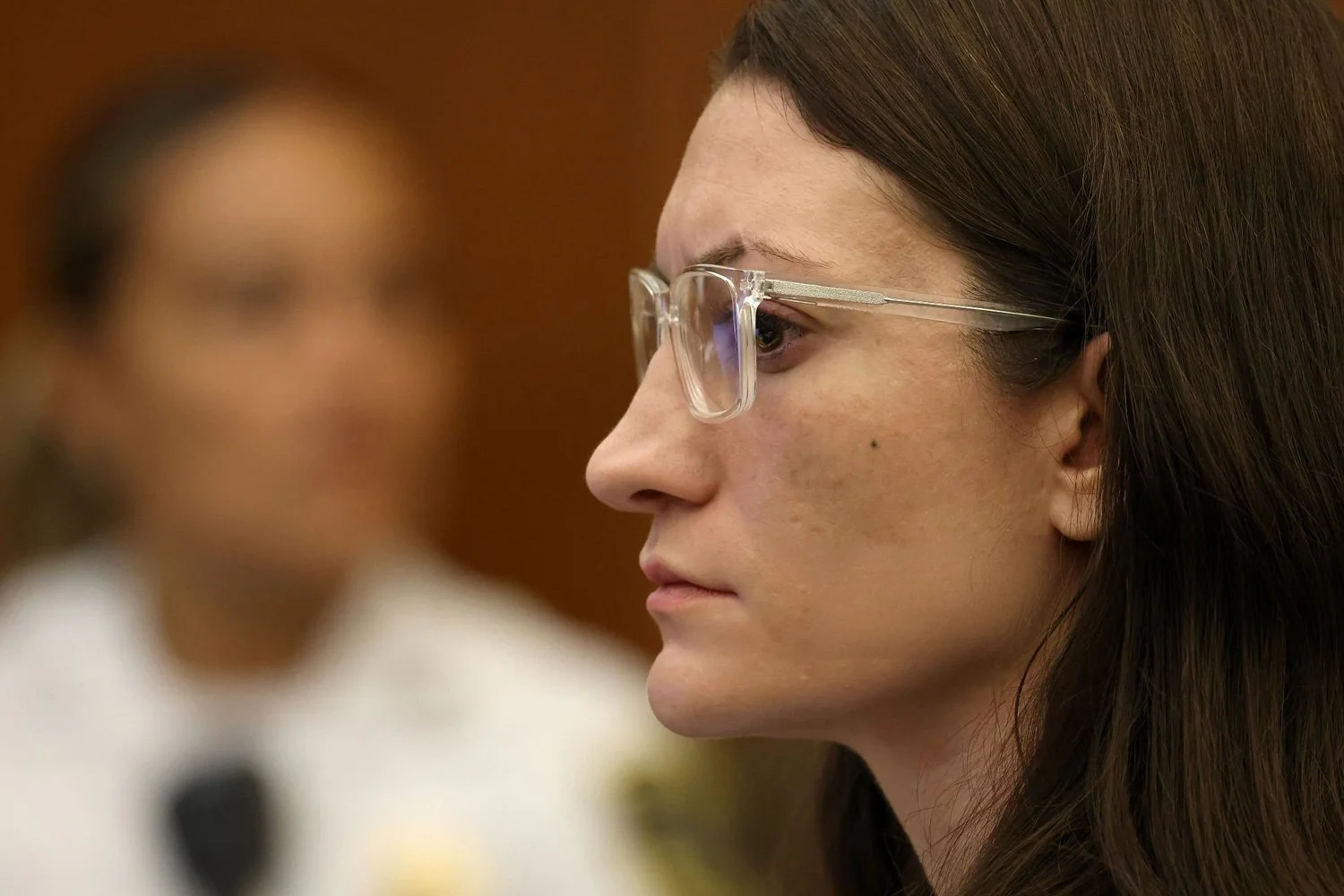
Boston Globe
On September 4, after nearly 40 hours of deliberation over seven days, the jury in Lindsay Clancy’s murder trial told Judge William Sullivan that it could not reach a unanimous verdict. Eleven jurors favored finding Clancy not criminally responsible for the January 2023 killings of her three children; one juror did not. Sullivan declared a mistrial, leaving prosecutors to decide whether to try the case again.
The legal question was whether Clancy was responsible for what happened to Cora, 5, Dawson, 3, and Callan, 8 months, in January 2023. But the case begs another question that a criminal jury was never really equipped to answer: with so many people involved in her care, how did such a profound deterioration slip through the cracks?
Clancy’s case complicates the familiar story of mental-health care as a problem of access. In the four months before the killings, she repeatedly saw clinicians, received psychiatric treatment, entered an inpatient program and was prescribed 13 different psychiatric medications: antidepressants, an antipsychotic, benzodiazepines, a mood stabilizer and sedatives, with more than 30 prescriptions recorded during that period. Her care was overseen by psychiatrists, a nurse practitioner, emergency-room doctors and inpatient providers at institutions including McLean Hospital, Women & Infants Hospital in Providence, South Shore Health and Aster Mental Health, according to malpractice complaints filed over her treatment.
That history makes “lack of access” almost beside the point. Her story highlights a different problem: abundance without architecture. There were appointments, prescriptions, providers, and myriad opportunities to intervene. The missing link was someone responsible for seeing how all those pieces fit together.
That distinction matters because two malpractice lawsuits filed this year—one by Lindsay Clancy herself and another by her husband, Patrick Clancy—describe overlapping concerns about the organization of her care. Lindsay’s own malpractice claim alleges her providers ran her through a disorganized, uncoordinated course of medication changes that missed an underlying bipolar disorder. Patrick's separate wrongful-death suit names several of the same clinicians and accuses them of failing to coordinate Lindsay’s care across providers, and notes that some of her virtual visits lasted barely 17 minutes.
These are allegations, not adjudicated findings, and the defendants haven't been found liable. But it's worth sitting with the fact that a husband suing on behalf of his dead children and a wife on trial for killing them are not natural allies, and yet their lawsuits describe a strikingly similar problem: a patient moving through a system in which responsibility was distributed among isolated providers rather than given to anyone who could see the entire clinical picture.
That does not mean every clinician involved made a bad decision. In fact, that is precisely what makes the problem more difficult to see. A psychiatrist can make a reasonable adjustment to a patient’s medication based on a video visit. A nurse practitioner can respond appropriately to a patient's reported side effects. An emergency-room physician can treat the crisis in front of them without having the full outpatient record. An inpatient team can stabilize a patient during a stay and discharge her into an outpatient system it does not control. None of that, examined encounter by encounter, is obviously malpractice.
The problem emerges in the space between those phases. A system can produce dozens of individually defensible decisions without producing anyone responsible for understanding what those decisions are doing to the patient as a whole. Deterioration can remain visible in pieces without ever becoming visible as a pattern. That is the blind spot of fragmented care.
None of this erases the other narratives running through the trial. Prosecutors argued Clancy moved among providers deliberately, more like she was shaping a record to support an insanity defense rather than stumbling helplessly through a broken system. Clinicians at Massachusetts General's Center for Women's Mental Health have emphasized that postpartum psychosis is among the hardest psychiatric conditions to catch early, even for specialists, so tracing a catastrophic outcome back to any single missed signal risks oversimplifying a genuinely difficult diagnosis.
Both possibilities deserve to be taken seriously. But notice what they have in common: both explanations ultimately focus attention on an individual—Clancy's intentions or a clinician's diagnostic judgment. The reality is, whether she was exploiting a fragmented system or failed by one, the fragmentation had to already be there.
Dr. Adjoa Smalls-Mantey, an emergency-room psychiatrist who discussed the Clancy case, described what that fragmentation looks like from inside the system. A clinician may know what was prescribed within their own health system without knowing what another doctor prescribed elsewhere. When a patient moves among multiple doctors and healthcare systems, she said, “it makes it harder for one person to get the whole picture.”
Clancy’s case is also not an isolated example of how difficult Postpartum psychosis can be to recognize and discuss. Like many women’s health issues, it remains poorly understood: researchers have found no consensus around its diagnostic criteria, limited evidence on how to identify women at risk, and substantial variation in how cases are identified across studies. In an already fragmented healthcare system, that uncertainty matters. The harder it is to establish what clinicians should be looking for, the harder it becomes to recognize when scattered symptoms across different encounters are part of the same developing illness.
And the information clinicians need may not always be volunteered: a systematic review of women’s experiences with the illness found that a fear of being misunderstood or losing custody could make symptoms difficult to disclose, leaving providers to piece together an incomplete picture from already fragmented encounters.
American behavioral health has been described as fragmented for roughly half a century; a 1970s New York law tried to fuse state hospitals with community mental-health services and succeeded in only a handful of counties before collapsing elsewhere. Decades of subsequent integration efforts, case-management pilots, managed-care carve-ins and the collaborative-care model have chipped away at the problem without fully solving it, because the underlying payment system still rewards clinicians for individual encounters, not for the unglamorous work of holding a patient's whole picture together.
Almost nothing in how American medical professionals get paid makes that coordination anyone's actual job, in the accountable, name-on-the-chart sense that an attending physician has for a surgical patient.
That's the missing piece worth considering. We built a healthcare system capable of putting a severely deteriorating postpartum patient in contact with multiple clinicians, giving her over 30 prescriptions, and providing several psychiatric programs in four months, and never included the far simpler safety net underneath it: just one person in the whole ecosystem who can ask whether the care pattern, as a whole, makes any sense. Until we do, we shouldn’t be surprised when abundant, accessible, well-intentioned care still leads to tragic outcomes.
