
Malte Mueller
We have built a world of unprecedented technological convenience, provided you have the body it expects.
Renewing a driver's license, applying for public benefits, or finding out where to vote can take just a few clicks. But a government website that a screen reader cannot interpret, a form that cannot be navigated without a mouse, or a voice-activated system that repeatedly misunderstands someone's speech can make essential services unusable. What should be a routine interaction with the state becomes a barrier to accessing services, exercising rights, and participating in democracy.
This past April, the Justice Department postponed new deadlines requiring state and local governments to make their websites and mobile applications accessible to people with disabilities. Governments serving populations of 50,000 or more now have until April 2027 to comply, while smaller governments have until April 2028. The delay reflects a broader political problem, where accessibility remains something institutions can put off, even when exclusion has immediate consequences.
As the November midterm elections approach, Wisconsin voters with disabilities still face the prospect of being unable to mark their absentee ballots independently and in private. In August, a judge ruled the state’s paper-only system discriminatory but stopped short of requiring an accessible alternative before Election Day.
In effect, people with disabilities are being asked to “sit tight” for equal access to the institutions that govern their lives. Is accessibility truly an optional improvement to be implemented whenever governments have the time and money, or a basic condition of democratic life? When access depends on whether institutions have made the necessary changes, equal participation becomes contingent on someone else's timeline.
The Social Model of Disability becomes important here. Developed through disability activism, the model distinguishes between the terms “impairment” and “disability.” Impairment is a person's physical, sensory, or cognitive condition; disability is the exclusion that occurs when society fails to accommodate it. A person’s inability to walk is an impairment. A polling place accessible only by stairs turns that impairment into a disability, preventing one from exercising the right to vote.
This does not mean that every aspect of disability stems from social barriers, or that better design can eliminate every difficulty. Chronic pain, fatigue, and other symptoms are real, often debilitating experiences that no ramp or accessible website can eliminate. Philosopher Sara Goering emphasizes how disability must be understood through both the body itself and the social environment in which it exists.
But acknowledging what society cannot change should not be an excuse for ignoring what it can. The fact that an impairment is unavoidable does not make every disadvantage that follows from it inevitable. Pain may be inseparable from a condition; exclusion from civic life is not.
The social model asks us to recognize the difference, and to stop treating barriers society has the power to remove as though they were simply an inherent part of being disabled. When disability is treated primarily as an individual problem, the burden falls on people to adapt: finding an aide to navigate an inaccessible building, requesting special accommodations or relying on family when technology fails. Such support can be valuable, but it should not absolve institutions of responsibility. Why should someone have to sacrifice the privacy of their vote or depend on others to exercise a right that public institutions have a duty to protect?
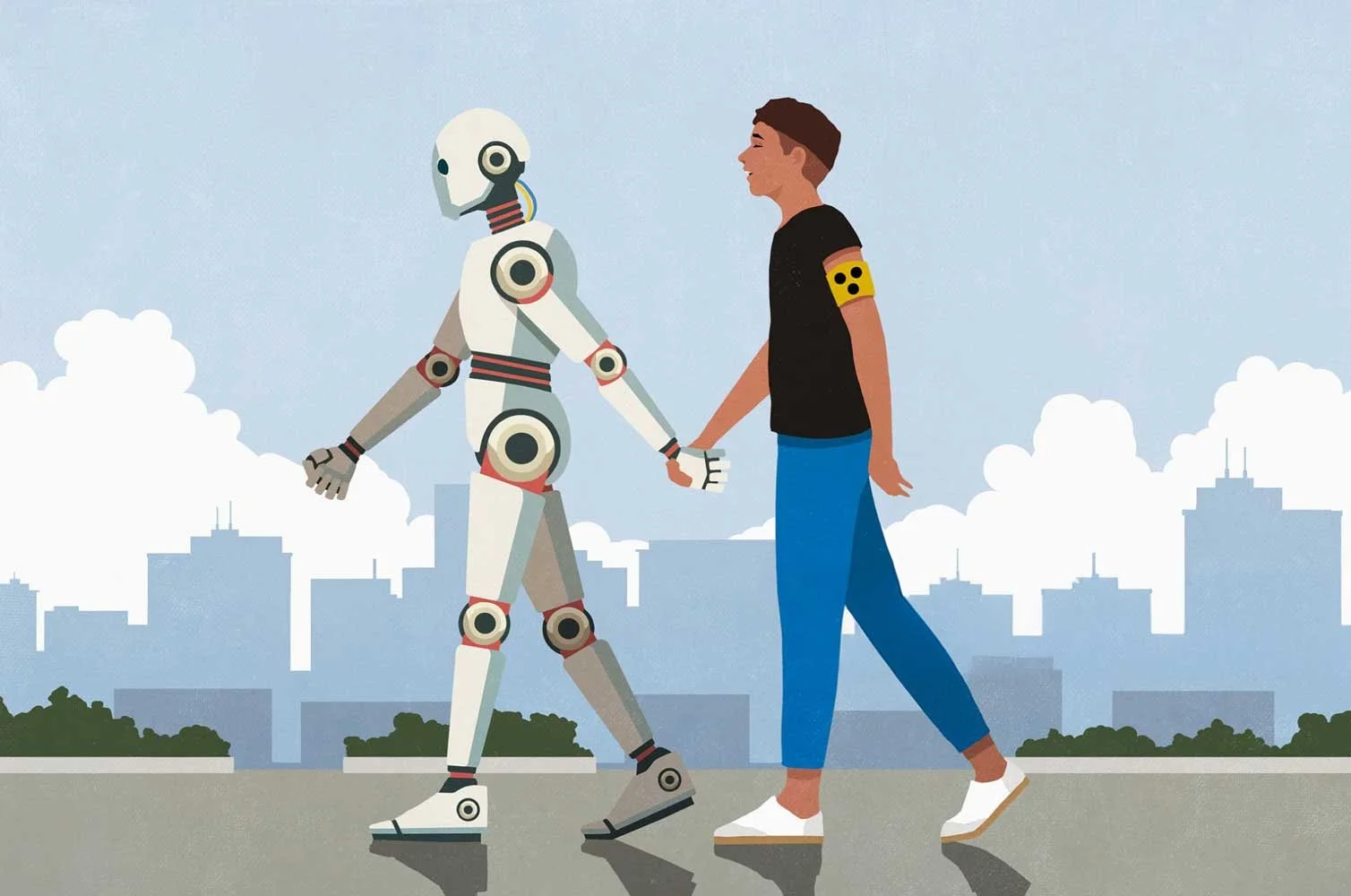
The stakes grow as governments increasingly adopt artificial intelligence to deliver services and improve efficiency. This technology, widely celebrated as making life more convenient, may be just the latest, cleanest interface to reproduce old forms of exclusion.
Consider how the state of Arkansas replaced human nursing assessments with an automated algorithm to determine Medicaid home-care hours. Behind a streamlined digital portal, the system's opaque "black-box" math abruptly stripped vital care from thousands of people with severe disabilities because the software's rigid checkboxes failed to account for complex conditions like cerebral palsy or diabetes. Lacking a human override option, it left vulnerable residents trapped in a system that ignored their physical realities.
The disabled individual is once again left to navigate a system that was not designed with them in mind. A chatbot that cannot interpret a person’s speech, an automated system that misunderstands atypical communication, or an AI tool incompatible with assistive technology can turn the promise of streamlined access into another barrier to participation. Innovation, in other words, is not a substitute for the deliberate work of making public services available to everyone.
This is why decisions to delay compliance deserve scrutiny. The National Council on Disability's 2026 progress report specifically warned that regulatory delays and continuing barriers threaten the protections guaranteed by the ADA. There are legitimate reasons governments may struggle to meet accessibility standards. Small municipalities do not have the same budgets or technical staff to rebuild their legacy systems. But this does not make the people excluded by inaccessible systems less entitled to participate.
Accessibility should be built into public services from the beginning, not added as an afterthought when a deadline approaches or a person is already being shut out. More than three decades after the ADA became law, disability rights are still too easily framed as a question of how convenient or financially feasible accommodation is for institutions.
The Social Model of Disability reverses the question. Rather than treating exclusion as an inevitable consequence of disability, it asks how the design of shared institutions creates barriers to participation in the first place.
Until we treat accessibility as a fundamental right rather than a bureaucratic favor, our digital progress will remain nothing more than a high-tech refinement of an old exclusion. True innovation lies not in how seamlessly a system can automate, but in whether it leaves a doorway wide enough for everyone to enter.
