
Carte Blanche: Marco Rubio, The Munich Security Conference, And An Ultimatium
Be careful what you set your heart upon - for it will surely be yours. - James Baldwin
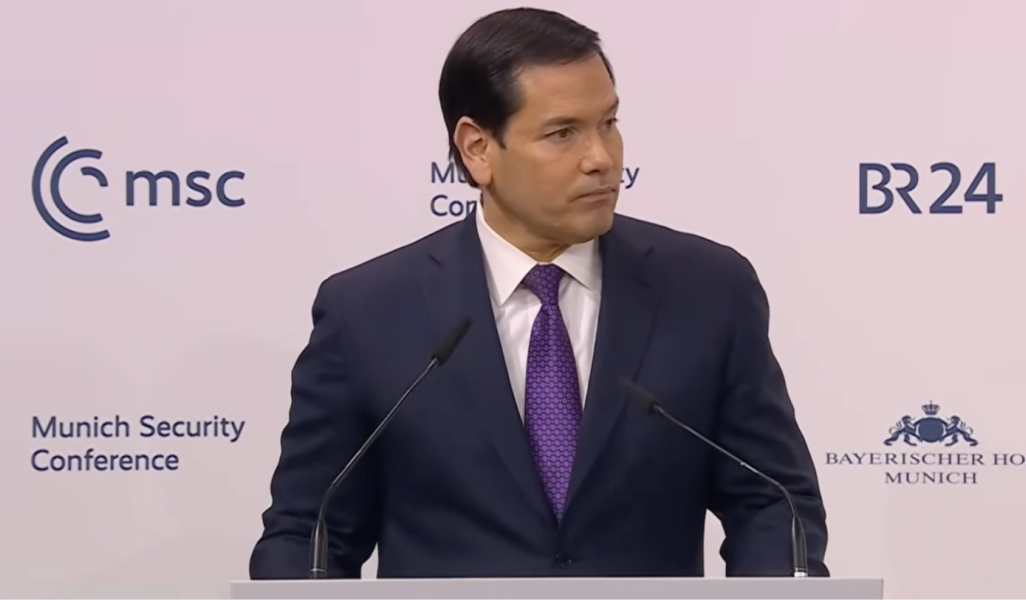
Since 1963, the Bavarian capital of Munich has hosted an annual gathering of elder statesmen, defence ministers, foreign secretaries, and policy experts. The purpose of the gathering, according to the mission statement of the Munich Security Conference, “Is to build trust and to contribute to the peaceful resolution of conflicts by sustaining a continuous, curated and informal dialogue within the international security community.” A noble goal for any organization meant to gather together leaders from different nations and different backgrounds. This year's conference featured many speakers and a wide range of topics. One particular speaker, Secretary of State Marco Rubio, grabbed the audience's attention and major headlines. He gave a keynote speech outlining the US's intentions and expectations for its European allies. It was not a fiery or bombastic use of words, nor was it intended to be an unabashed act of praise meant to flatter the European community into accepting the Trump Administration's latest terms. Instead, it took on a tone of praise, chastisement, and expectations, along with a clear ultimatum about what the US would seek, with or without the consent of some of the nation's oldest allies.
“When this conference began in 1963, it was in a nation – actually, it was on a continent – that was divided against itself. The line between communism and freedom ran through the heart of Germany. The first barbed fences of the Berlin Wall had gone up just two years prior.”
From the beginning, Secretary Rubio sought to remind a continent that prides itself on having a long history and accomplishments of how and why the Security Conference came about. He strove to strike a tone of shared values and shared history. Reminding the audience of America’s origins and the pride he felt, he assured them that Americans still hold dear their founding and the Western Christian explorers who settled and built the new world. He would go on to highlight the great struggles of the 20th century that the West was able to overcome because of its shared culture and outlook. Secretary Rubio highlights the struggle against Communism above all as the great evil that could only be defeated through their cooperation.
“But the euphoria of this triumph led us to a dangerous delusion: that we had entered, quote, “the end of history;” that every nation would now be a liberal democracy.”
One theme he continually highlights is that the last few decades have been driven by the false premise that the world was on a natural path of freedom and economic development that cannot be stopped. He is not wrong in his chastisement. However, he is doing so with the gift of hindsight and in a public forum. It has always been difficult to convince large, diverse communities to cooperate toward a shared goal or vision. It is infinitely harder still to do when you tell them of their failures and how obvious it is that they were going to fail.
“This was a foolish idea that ignored both human nature and it ignored the lessons of over 5,000 years of recorded human history.”
When it comes to motivation, there are ultimately two tools for dealing with human nature. The carrot or the stick. When using the stick, it can indeed spur quick action, which can quickly turn into overreaction and resentment. The carrot, on the other hand, will always maintain an infinite appeal, as people never lose their hunger for more. Secretary Rubio has done a fine job of echoing the intent of President Trump and his current administration, with their belief in “do as I say or else.” It is not only that they tell the Europeans that they were wrong, but that they were foolishly wrong, and they must do everything in their power to abandon their policies, both foreign and domestic, and accept the desires of the American people as expressed in the President’s tweets and speeches. Would the US swallow such sentiments if the shoe were on the other foot? That is not a difficult question to answer.
“And I am here today to leave it clear that America is charting the path for a new century of prosperity, and that once again we want to do it together with you, our cherished allies and our oldest friends.”
Secretary Rubio assures the audience of two things. First, the US sees itself as an inheritor of European greatness because of the founding ideas and cultures of the US. Reminding them of the contributions of English explorers, French fur traders, German merchants and builders, and Spanish cowboys who made the US possible and ensured that it would prosper. Second, after more than a year of the Trump Administration stirring up turmoil about the future of NATO, the UN, and American cooperation, Secretary Rubio assured those present that the US was deeply committed to working with Europe and building upon the current alliances to create stronger bonds in every category that was once so deeply questioned.
“We are part of one civilization – Western civilization. We are bound to one another by the deepest bonds that nations could share, forged by centuries of shared history, Christian faith, culture, heritage, language, ancestry, and the sacrifices our forefathers made together for the common civilization to which we have fallen heir.”
His speech also serves as a call to arms for the Western World to return to the ideals and beliefs that once resonated so deeply with them and dominated the politics and policies of the past. There was no discussion of the mistakes or the destruction those ideas once wrought upon the continent and the world, only that they were once a golden age that must be given life anew so that the West may prosper again and regain its greatness. The intent of his speech was as much to be inspirational as anything else. The fact that it woefully ignores a history marred by terrible destruction and incredible human costs demonstrates a willful desire to focus only on what Secretary Rubio and President Trump view as valuable and important, rather than face realities for a more honest and self-critical approach to the future.
A future where the international community works together to live in lasting peace is something few would disagree is worth striving towards. Deciding that it is only possible if others yield to your desires and living according to the values that you have cherry-picked from history to your liking will not make that future a reality. Secretary Rubio's criticisms on defense, immigration, economics, and cooperation are not without merit, nor were they unwarranted. The fact that he used them as a tool to demand submission and urge an international community to agree to what he and others had decided was right, because the current course hasn’t delivered on its promises, ensures that more difficulties and errors will follow. Submission is not consent; there is indeed a bright future ahead for humanity as a whole, but not so long as one group has decided their ideas are the only ones worth considering. The US and Europe can and should remain close allies and partners in many endeavors. But we must learn to work together, with the consent of the citizens of each country, not at the behest of its leaders.