
Third Way: Is It Worth Rooting For the underdog?
The political stage of the state of North Dakota is, put simply, monolithic. Decades upon decades of elected officials adorned with the crimson badge of the Republican party. A state of largely conservative individuals with right-leaning beliefs and little room for change has led to a perpetual rule of Republican representatives being placed in North Dakota’s seats within the U.S. House of Representatives and Congress, respectively. For this system to witness an upset is not only largely unheard of, but also, in certain cases, inconceivable.
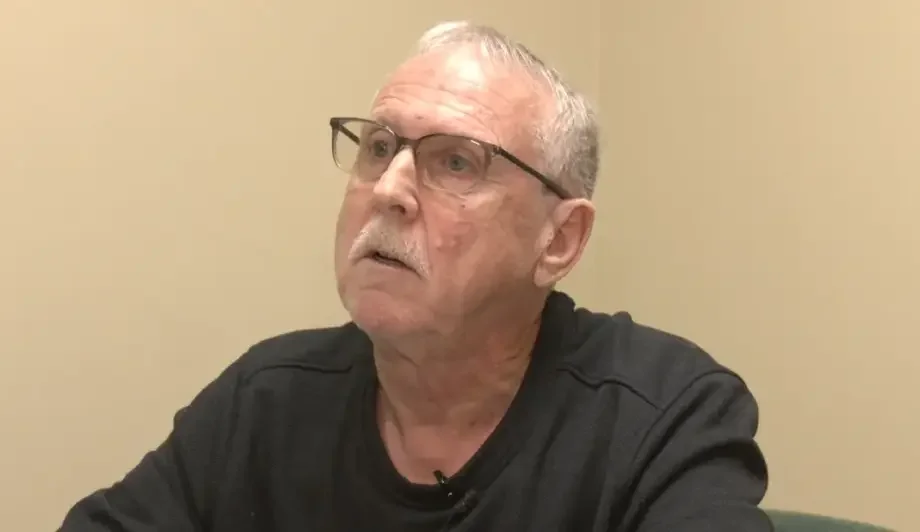
Upsets, however infrequent, do occur though. As is the case of one Vern Thompson, a former Democratic-Non Partisan League (Dem-NPL) state lawmaker who announced his run for the U.S. House of Representatives in early February. Thompson has an abundant political background having served in the North Dakota House from 1989-1990 and the state Senate from 1997-2000.
Thompson likens the political state of not only North Dakota, but the United States as a whole, to that of a baseball game. Assigning himself the initial role of spectator, he states, “I can holler on the sidelines, like at a ballgame, but it’s time to get off my butt and get into the game”. His choice to challenge incumbent Julie Fedorchak is one of bravery and ambition. It marks a distinct moment where the everyman attempts to knock down the ivory tower. This tenacity is something much needed in states such as North Dakota, where political beliefs are often generational and inflexible to growth.
Standing on the opposite side of the aisle is the current U.S. Representative, Republican incumbent, Julie Fedorchak. Fedorchak assumed her seat in the U.S. House in January of 2025 and is seeking re-election for the House Representative term in 2027. Prior to claiming her current position, Fedorchak participated in a variety of other political roles. For 12 years she was a member of the North Dakota Public Service Commission, where she focused her efforts on utility costs within North Dakota and finding the most reliable and affordable way to provide necessary utilities to communities across the state. Fedorchak is only the latest in a long line of Republican Representatives hailing from North Dakota.
Following its grant of statehood in 1889, North Dakota was given one seat within the U.S. House of Representatives. This first seat was, as is to be expected, filled by a Republican candidate. Since this first documentation, of all 32 North Dakota House representatives, a whopping 26 all identified their political ideologies as Republican. Of these 32, five officials identified as aligning with the Democratic party and only one as being non-partisan.
The last Democratic candidate to be elected as North Dakota’s representative in the U.S. House was Earl Pomeroy who served from 1993-2010. When reviewing the previous trends of political affiliation in North Dakota, it is clear just how important it is that Thompson chose to throw his hat in the ring and use his voice and his lived experiences to stand up for those without the means to stand up for themselves.
Thompson unfortunately hit a snag in his ambitions when he lost the Democratic endorsement for the House to fellow democratic candidate, Trygve Hammer. This loss, while disheartening, did not turn Thompson away from his pursuit of legislative action and advocacy for his fellow North Dakotans. Instead, it inspired him to direct his efforts elsewhere as he was endorsed as the Democratic candidate for the North Dakota State Agriculture Commissioner.
This willingness to not give up and embolden oneself to refocus and redirect is a shining example of the ambition and dedication to the service of the state Thompson calls home. Thompson currently works as an independent trucker and previously within the farming industry. Because of not only his political background, but his agricultural background as well, he is incredibly well suited to his endorsed position as the North Dakota State Agriculture Commissioner.
It is imperative that those in such an intense position of power such as that of the U.S. Representatives in the House, be in touch with the people they are representing. When there is a disconnect between the represented and their representative, very little can be properly accomplished. However, in order for this communication to occur, one must also acknowledge the opinions that oppose their own. They must be willing to do the hard work and have the difficult conversations, for those are what will yield the most tangible results. As a society and as a nation, America is divided enough as is. The political stage is one of volatile actions, discouraging words, and a decidedly clear lack of professionalism where it matters most. There should be political civility across the board, however; at the very least, it needs to be present in the states. Particularly in states as small as North Dakota where even a small political shift could create waves of change that will echo into the future.