
Third Way: The Future Of The Democratic Party
Wall Street journal
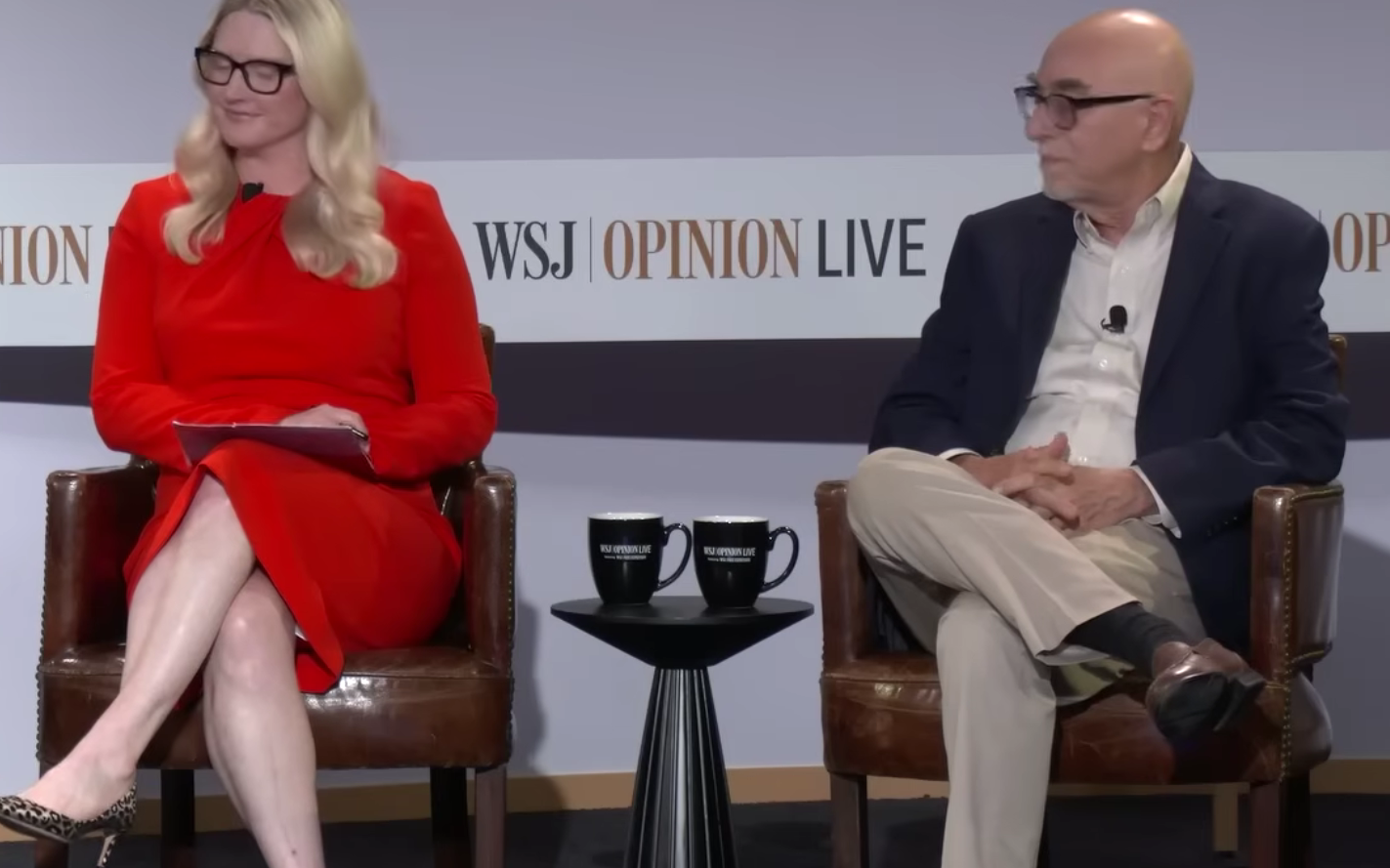
The Wall Street Journal conducted a pair of political panels featuring prominent professionals hailing from both sides of the aisle. The democratic panel featured Ruy Teixeira, a senior fellow at the American Enterprise Institute, and Marie Harf, Executive Director of Perry World House at the University of Pennsylvania. The panel was titled: The Future of the Democratic Party.
“The Future of the Democratic Party” is a sentence that reads just as poorly as its counterpart: The Future of the Republican Party. My colleague, Noah Veon did an astute job of pointing out the clear, and underwhelming constants between both discussions.
Noah makes a very important point early on in his article. Which is, that no political party will agree on every issue. Benjamin Franklin may have been correct in 1789, when he stated that, “nothing is certain except death and taxes”, however, seeing as how it is now 2026, I’d like to propose a third certainty: political disagreement. The inevitability of the human condition is that everyone will disagree with at least one other person. This is especially true when the discussion of politics settles on the table.
As a society we are prone to discourse, both healthy and not. We hold city council meetings where gavels mark decisions and elevated stages look out over folding chairs, creating a physical manifestation of the power imbalance. We attend court cases ranging from civil violations to federal offenses and we sit quietly in pews and jury stands, waiting patiently to cast judgement. We march in the streets holding signs and linking arms with fellow angry Americans. Engaging in discourse is a civic responsibility, whether we as a society are willing to acknowledge that or not. Because what is voting if not civil discourse? What is democracy if not a result of that discourse? However, this is only politically beneficial when it yields a next step. If instead we dig our heels into the ground and push our heads in the sand, then this stagnation will carry on forever. America will become lost in time, killing itself by way of refusal to grow.
It is the task of elected political officials to ensure this does not happen. They are the mouth through which their parties speak. They represent hundreds of thousands of individuals who on their own do not have a fraction of this impact. Noah is completely correct in his statement that no matter their disagreements, those whom the American people elect to lead them must make decisions that not only are in the best interest of their constituents, but that also align with the desires they present through civic duties such as voting.
Where I respectfully disagree with his stance however, is on his discussion of political “moral high ground” and the view of the Democratic party as occupying it over their Republican counterparts. The Democratic party is no more ethical than the Republic party on the whole, however, when we break down social politics we do see a tangible divide. Democratic leaders, for the most part, appear to care more strongly about the social impact of independence and a freedom from government intervention in the most intimate of affairs. Political discussions such as reproductive rights, women’s rights, and LGBTQIA+ rights being a few of the most widely acknowledged.
The discussion of these issues from a Democratic perspective versus a Republican one is decidedly far more tolerant and respectful to the overall wants of the individual. Republican party representatives have drug religion into their arguments and political agendas more clearly in recent years, particularly in the last decade, and it is deeply frightening. An individual's gender, sexuality, and religion should not be political.
This to me does present a disconnect in the morality of the most outward Democratic social beliefs versus the most outward Republican social beliefs. However, I do believe that Noah makes a strong point in that despite the importance of fighting for socio-political equality, it is likewise important that we not overshadow political discussion related to affordability, healthcare, and American living conditions, as these are also important to the Democratic voter and their livelihood.
Noah’s analysis of the Democratic party’s refusal to acknowledge past failures as indicative of a need for correction within their own policies and executions is one of great importance, I feel. Within today’s political arena it often feels as if each side is competing for the coveted position of “lesser evil”. Very rarely do we see political parties aiming to better themselves and advance their politics for the greater good of the people. Instead, we see them settling for being better than their opponents.
It is true that much of Democratic politics these days appear to be an argument against the other side of the aisle, especially in terms of immigration. Democrats take a clear stance on immigration yet they do not offer many counter solutions to the Trump administration's violent “deployment” of masked mercenaries. In order for the Democratic party to make waves during the 2028 presidential elections they must shift their politics from leaning on the misgivings of Republicans to standing on its own two feet.
The truly detrimental and disheartening truth is that neither panel yielded much of a result. No conclusions were drawn, no progress made, and very little criticism of one's own party. This kind of political obstinacy is not only detrimental to the morale of the American people, but to the entirety of the United States Government as we know it.