
Liberty Exposé: Conservative Conservationism, Relevant Regulations
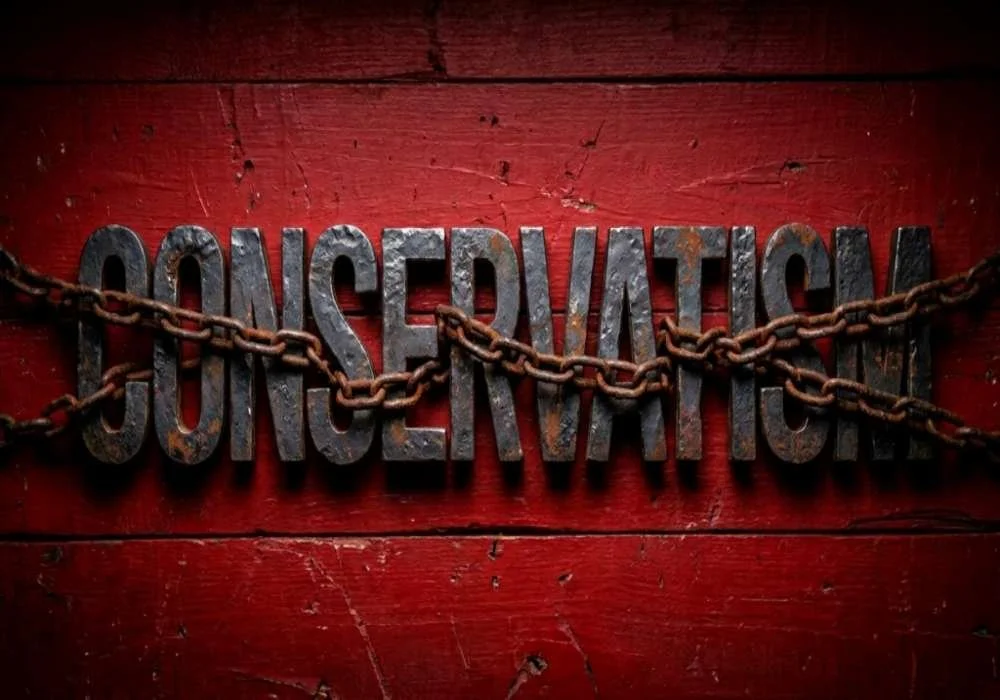
For decades, conservatives have crusaded against the ‘crippling’ forces of regulation, striking down systems and repealing rulesets wherever they may be found. Deregulation has cemented itself as a cornerstone of mainstream Republican economics, with conservative politicians rallying against regulations that stifle economic growth and expand the all-encompassing reach of federal bureaucracy. Neither is their cause entirely unfounded, as excessive regulations can hinder the economy, potentially curbing necessary innovations and industry development.
There’s little incentive for entrepreneurial Americans to strike out their own small business dreams when countless unnecessary bureaucratic regulations are blocking their pathway to economic opportunity. Likewise, industries that might revitalize an economically impoverished community aren’t quick to setup shop in ‘Smalltown, USA’ when yards of regulatory red-tape comprise the welcoming banner. Too much of a good thing can indeed be bad. But the opposite holds just as true, as a nation devoid of any regulations poses a danger to the environmental and economic interests of Americans from coast to coast. Everything in moderation, regulations included.
Yet somewhere along the road from the post-Reagan era, conservatives en masse have forgotten the holistic benefits of moderation, casting them aside in favor of a more dangerous reflex; that all regulations are bad regulations, and must be opposed at any cost. Nowhere is this notion more evident than in President Trump’s second term, with his administration requiring agencies to eliminate ten existing regulations for every new regulation imposed. A staggering 645 deregulatory maneuvers were taken by American agencies in 2025 alone.
But conservatism as a political ideology has never been about the abandonment of all rules, and for many Americans, the philosophy is synonymous with the concepts of preservation, responsibility, and stewardship. It’s unfortunate that the same ideological framework conservatives apply to faith, family, and free enterprise (or the Constitution itself) is utterly absent when Republicans tackle issues of commercial or environmental regulation. Eliminating superfluous bureaucracy and constraining regulative red-tape is at times necessary, but striking down relevant regulations that protect American communities, taxpayers, and our national resources should not be enshrined as the Republican status quo.
After all, conservation is the root word of conservatism.
Pay Now or Pay Later
Generally, the most common conservative argument against regulation is cost. You’ve got to spend money to make money, and according to a recent report from the Competitive Enterprise Institute, “regulations cost the US economy at least $2.153 trillion annually, averaging $15,859 cost per household.” Regulatory compliance requirements can increase operating expenditures, stunt development, and discourage investor involvement into respective business ventures. That being said, conservatives should understand that the underlying costs of doing business, regulations and all, is often far cheaper than the cost of cleanup.
Littered across America’s historical tapestry are disasters of devastating proportions, whose cost of cleanup eclipsed the price of prevention and regulatory oversight. The 2010 Deepwater Horizon oil spill released millions of barrels of oil into the Gulf of Mexico, wreaking havoc across Gulf communities and ecosystems. By 2018 ,“BP paid around $63.4 billion by the end of September to cover clean-up costs and legal fees linked to the largest environmental disaster in U.S. history” and throughout the “seafood industry, Deepwater Horizon cost up to $952.9 million in total sales, up to $309.8 million in income”, leaving a legacy of suffering that local residents and wildlife are still grappling with nearly two decades later. The immediate and long-term consequences of the spill could have been prevented were it not for “the violation of numerous federal regulations designed to protect the integrity of offshore operations”, as reported by Director Michael R. Bromwich of the Bureau of Safety and Environmental Enforcement (BSEE).
Flint, Michigan’s 2014 water crisis was sparked by the “cost-saving move” of redirecting the city’s water supply from nearby Detroit to the Flint River. In their shortsighted pursuit of choosing revenue over regulations, state-appointed managers decimated the lives of nearly 140,000 citizens, and “Flint residents are still awaiting justice as they continue to grapple with serious health issues caused by the water crisis.” Much like Deepwater Horizon, Flint’s water crisis was “preventable with enforcement of proper regulatory safeguards”, and the “application of federally mandated anticorrosive water pipe treatments would have cost Flint an estimated $100 a day. Absent such treatments, the cost to replace Flint’s lead water pipes is an estimated $1.5 billion.”
In 2023, a Norfolk Southern freight train loaded with a cargo of hazardous chemicals derailed in East Palestine, Ohio. Anxious over a potential explosion, “officials decided to vent and burn five tank cars, releasing 116,000 gallons of the carcinogen vinyl chloride into the air.” Although officials from the Environmental Protection Agency (EPA) reported that soil samples collected from East Palestine contained “no unsafe levels of harmful chemicals”, an independent study conducted by Scott Smith of Eco Integrated Technologies found “an increased dioxin burden on the community as a result of the Norfolk Southern train derailment and controlled burn.” National Transportation Safety Board (NTSB) chair Jennifer Homendy stated, “It should never have occurred. I said this from day one. It was 100% preventable.” Although carrying carts of hazardous materials, the derailed train was not classified as “high hazard” as such designation is reserved for “crude oil and other liquid fuels”, despite prior prompting from the NTSB to include chemicals like vinyl chloride in regulations. While the NTSB lacks “regulatory authority”, and the Federal Railroad Administration “sometimes issues guidance that railroads are not obligated to follow”, it falls to Congress to enforce regulations that would prevent another East Palestine derailment that has impacted the health and livelihood of Ohio residents and cost Norfolk Southern $2.2 billion as of 2025.
These disasters followed a similar pattern, in which precautionary measures and regulations were viewed as burdensome and largely overlooked in favor of maximizing corporate profit, much to the economic and environmental detriment of American citizens. If fiscal conservatism can be conceptually distilled down to living within one’s means and ensuring responsible investments today for a debt free tomorrow, than enforcing proper commerce regulations isn’t incompatible with conservatism. It’s proactively safeguarding industries, workers, and residents through an upfront cost that, no matter how expensive, pales in comparison to the cost dealt in dollars and public mistrust that preventable regulatory disasters bring to the table.
America the beautiful?
“There is [no question] which compares in importance with the great central task of leaving this land even a better land for our descendants than it is for us”— President Theodore Roosevelt
Alongside economic concerns, the Republican Party’s take on environmentalism has skewed many conservatives against the relevance of regulation. Viewed as a nominally partisan issue, perhaps due to the Democratic Party’s fixation on climate change, conservatives largely consider environmental stewardship an entirely progressive concept alien to their own ideology. But this hasn’t always been the case, as one of the most influential Republican presidents of the 20th century was instrumental in keeping America beautiful; President Theodore Roosevelt.
There’s a reason his nickname is Teddy. Roosevelt, enamored with the natural wonder of the American landscape, advocated tirelessly for conservation, spearheading the creation of the U.S. Forestry Service, expanding the National Park System and laying the groundwork for future presidents to declare national landmarks under the Antiquities Act. Following the example of his predecessor, President Nixon continued Roosevelt’s legacy by establishing the EPA in 1970 and enacting environmentally protective legislation throughout his career. Both presidents were vehement conservatives, regarding conservation not as a rejection of economic growth but a necessary requirement for the longevity of American prosperity.
While low-hanging comparisons can be made between Nixon and our current Commander-In-Chief, the parallels between Trump and Roosevelt are undeniable. Roosevelt pioneered the idea of “speak softly, but carry a big stick”, and Trump has capitalized on his predecessor’s ‘Big Stick Diplomacy’ within his own doctrine of “Peace Through Strength”. But strength is not only demonstrated in formidable armed forces or military actions abroad, it’s also showcased by safeguarding the interests and resources of Americans and the communities they call home. It’s made manifest by holding corporations accountable for actions that jeopardize public health and environmental stability. If Trump is so keen on parroting one part of the Bull Moose philosophy, perhaps its time he adopted the more salient legacy of conservation left by Roosevelt.
Nor has the need for a conservative return to conservation ever been in greater demand, as the influx of data center construction spurred by the AI Gold Rush demands more than just investor backing. Beyond the massive water requirements utilized daily by data centers, with 2/3s of data centers built or under development since 2022 constructed in already water impoverished areas, keeping America at the forefront of the AI arms race requires immense quantities of electricity. To meet these electrical demands, Trump is poised to announce the spending of “nearly $700 million to support coal-fired power plants and coal exports.” But profiting from the Silicon Rush shouldn’t come at the expense of Americans’ quality of life and the natural resources their communities depend on.
The problem isn’t merely an increase in pollution from coal-fired plants, it’s the administration’s willingness to deregulate guardrails that protect against one of the coal industry’s most dangerous byproducts. Coal ash, remnant material leftover once coal is burned into electricity, “contains a number of substances harmful to human health—arsenic, chromium, lead, and mercury among them.” Exposure to coal ash can “cause cancer and nervous system impacts such as cognitive deficits, developmental delays” as well as a variety of other negative health impacts. Typically, coal ash is either stored in water-dammed repositories known as coal ash ponds or in traditional dry-storage landfills. Largely because the majority of coal ash storage systems are unlined, toxic containments already leech into regional groundwater, resulting in “groundwater with toxins above levels that the U.S. Environmental Protection Agency deems safe for drinking water.”
The deregulatory mindset of the Trump administration threatens to further exacerbate this problem, with a recent EPA proposal that would rollback federal coal ash regulations and “would dismantle current coal ash safeguards, needlessly endanger people” while “allowing the coal industry to contaminate our drinking water with impunity.” EPA Administrator Lee Zeldin dispelled environmentalist concerns, citing the importance of reversing “burdensome regulations” that “hold American communities back from the new opportunities presented by this new 21st century energy reality.” But members of the Environmental Protection Network, an organization comprised of former EPA officials, state, “by prioritizing the massive energy demands of AI and data centers over the safety of local communities, the agency is allowing toxic discharges to go untreated” and refutes the EPA’s “mission to protect public health and the environment.”
The detriments posed by unregulated coal ash waste treatment will not be encountered directly by Zeldin or boardroom executives. Instead, this burden of deregulation will fall heaviest on rural and blue-collar Americans, with more than half of American coal plants located in low-income areas and 60% of coal fired plants generating electricity in rural areas. Smaller, rural communities depend on groundwater for sustaining themselves, and the question of groundwater contamination is not a statistic to be debated upon, but a reality that threatens their local rivers and streams, wells, farmland and livelihoods.
Ironically, those most at risk of suffering from the EPA’s proposed regulation rollbacks now constitute the backbone of the Republican Party’s voter coalition. Trump won 94% of rural counties in his 2024 election, and 50% of voters with a yearly income of under $50,000 favored Trump over Kamala Harris. Rural Americans are tied to the land around them, and an administration that campaigned on the promises of “America First” shouldn’t forsake the hollers and hills these voters call home in favor of “yet another handout to the coal power industry at the expense of our health, water, and wallets.” Why would rural Americans continue to back a political party that overlooks not only their best interests, but their bare necessities as humans?
Conservatives lament that the government has lost the trust of the American people, but rebuilding that trust requires more than slogans and empty promises. Americans on any side of the aisle may disagree about the size and scope of government, but every citizen can agree that uncontaminated, clean drinking water and preventing disasters through proper regulation is a baseline expected to be upheld and fought for by those in Washington. Conservatives should not be lockstep in opposition to regulations, and regardless of whether or not the EPA’s coal ash rollbacks take effect, it falls to Republican legislators at every level to ensure that America remains beautiful through necessary regulations and a return to their conservationist roots.
