
Giant Asparagus
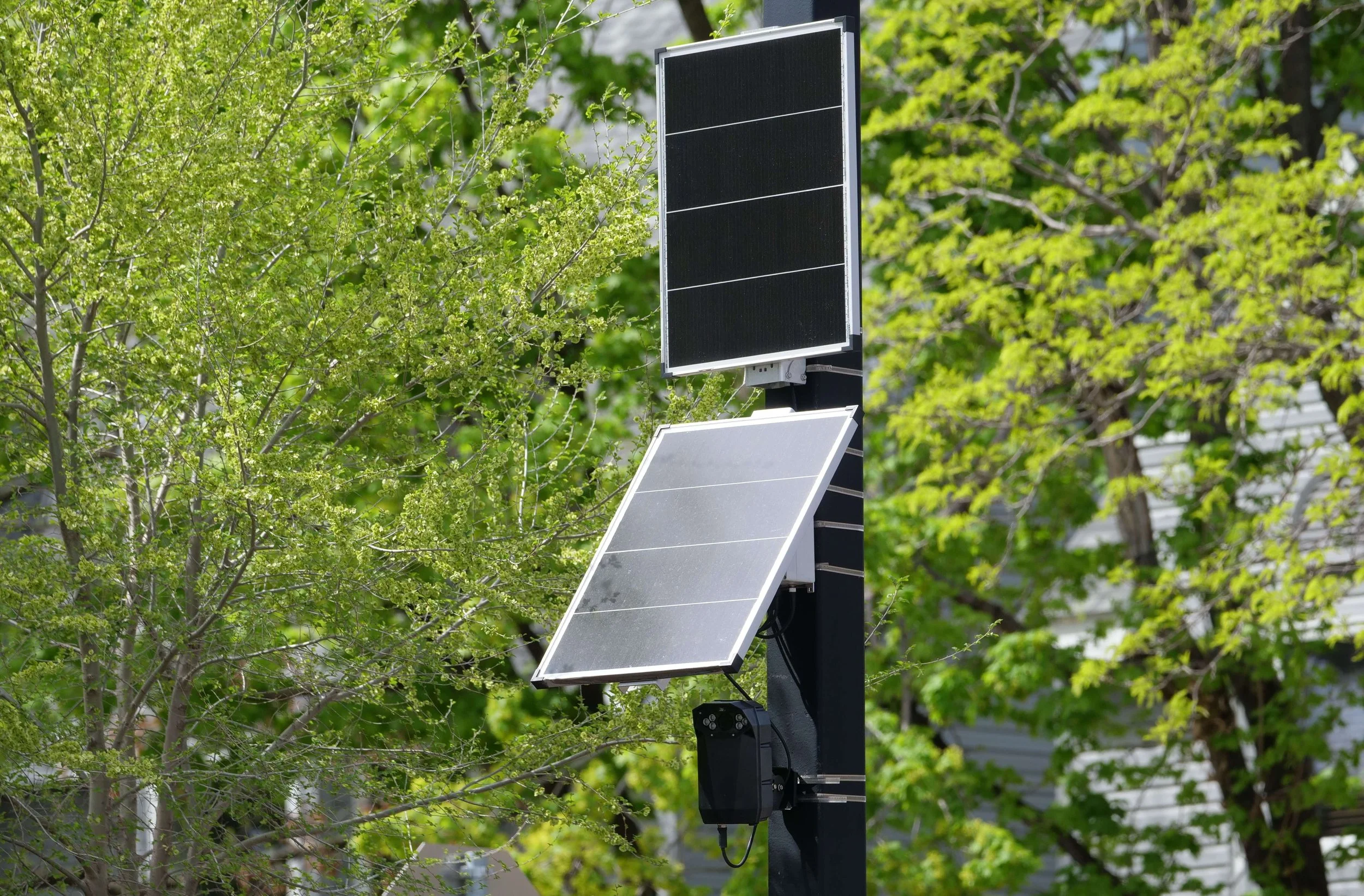
Flock Safety was founded in an Atlanta suburb in 2017 by three Georgia Tech alumni. The security tech startup began with just a couple of street facing cameras that happened to catch a home break-in on video. The footage was used to catch the crime’s perpetrator. Since then, Flock Safety has expanded its network to around 100,000 cameras in thousands of cities across the country. Flock’s most recognizable product is its solar powered Automatic License Plate Readers (ALPRs), usually fixed to stationary objects like light posts, fences, and utility poles. The ALPRs capture vehicle characteristics like license plate numbers, make, model, color, bumper stickers, roof racks, and any visible damage to the car. They also report coordinates and time stamps, and will pick up pedestrians and cyclists in addition to cars. Flock’s ALPR patent also references facial recognition software. So, not only does Flock record your license plate, your car description, and when and where you were driving, but it also snaps a picture of your face and adds it to its database.
What is most unique about Flock cameras, though, is the AI-powered search network. Flock cameras take photos and short videos, and the company’s search network allows users to search using plain language, i.e. “white landscaping van with a ladder.” Flock was the first company to centralize this technology into a single nationwide database, and Flock’s security services have been contracted by police departments, businesses, and homeowners associations with the intention to help prevent and solve crimes. A police officer in a small town whose department uses Flock Security has access to the entire nationwide database. Flock claims to have solved over 700,000 crimes in the United States since its founding.
Flock cameras are pretty much everywhere now, giving over 4,800 law enforcement offices across the country access to a massive database. Tens of millions of taxpayer dollars have been spent by police departments on Flock Security systems so far, sometimes without the consent or knowledge of constituents. Santa Cruz was one of a few California cities that learned their local data had been shared with Flock's national network without the City Council’s approval. The same thing happened earlier this year in Troy, NY, where the Democratic City Council challenged the Republican Mayor Carmella Mantello’s proposal to renew the city’s contract with Flock after cameras were installed without Council approval or community consent. Mantello later declared a public safety state of emergency to restore funding and keep the cameras running. Many states have laws forbidding cities from sharing license plate data with federal or out-of-state agencies, or assisting federal immigration enforcement, but because Flock is a private company, it exists in a legal gray area that permits the sharing of this sensitive information with outside agents via the nationwide database. Legal restrictions on law enforcement data sharing are critical to maintaining not only constituents’ privacy, but also their constitutional protections. The constant surveillance afforded by the Flock camera systems and their massive database violates local laws and is eroding our right against unlawful searches as provided by the Fourth Amendment.
Concerns over Flock’s sharing of personal identification also extend beyond its skirting of data sharing regulation. The cameras themselves have proven not to be very secure, and in fact, quite easy to hack. YouTube content creator Benn Jordan posted a video in late 2025 that shows him pressing a few buttons on a Flock camera, logging into its wifi network and gaining access to the camera’s live feed. The wealth of information provided by the Flock security system has also opened the door to a world of misuse. In November, 2025, a woman in Denver was wrongly accused of theft after a police officer thought he saw her stealing a package and used the Denver Flock database to track her license plate. Police officers in Orange City, Florida, Sedgwick, Kansas, Milwaukee, Wisconsin, and Costa Mesa California have all been caught using the Flock databases to stalk current and former romantic partners. A police officer in Johnson County, Texas used Flock to conduct a nationwide search for a woman whom he believed had left the state to self-administer an abortion. Abortion at any stage is illegal in the state of Texas, and the officer entered “had an abortion, search for female” in the “Reason” field during his search of Flock’s database. To rebut criticism, Flock suggested that the woman’s family feared she was hurt and that police were making sure she was safe. Subsequent reporting showed, however, that the officer was tracking the woman as part of a “death investigation” into the abortion. It is completely legal for a pregnant person in Texas to cross state lines, and Texan authorities were using Flock to investigate a woman they suspected of undergoing a procedure that was legal in the state she obtained it. The police were using Flock not to solve a crime, but to find evidence that one had been committed. None of the women in the above anecdotes did anything wrong; none were criminals. In 1974, Congress enacted the Privacy Act after some government agencies were found keeping dossiers on people who weren’t suspected of criminal activity, The Privacy Act banned such recordkeeping. Flock, a private company that operates within the minimally-regulated data broker industry, presents a workaround to the Privacy Act. The police utilized Flock’s extensive and invasive database to circumvent the law and track, stalk, and accuse law-abiding citizens.
In 2025 Flock Security ran a pilot program in collaboration with the Department of Homeland Security (DHS). This program was very unpopular with the public, and Flock ended it in August, 2025. Yet, DHS’s access to the Flock database remains. Amid the Trump Administration's brutal immigration raids in cities across the U.S. in 2025, local police in those cities, some in sanctuary cities, used their access to Flock’s database to search for suspected undocumented immigrants on behalf of agents from Immigration and Customs Enforcement (ICE). This is illegal. Police in sanctuary cities are prohibited from assisting in federal immigration enforcement. There were also instances in Washington where local police shared their Flock databases with DHS, adding Customs and Border Patrol agents to their Flock network’s authorized user list. This is also illegal. Washington state law prohibits local police from dedicating resources to immigration enforcement. Flock still maintains that they don’t collaborate with ICE, but logs pulled from Flock database searches made by local law enforcement in Washington list in the “Reason” field phrases like “ICE,” “HSI [Homeland Security Investigation] Assist,” “immigration,” and “criminal alien.” Flock Security, despite performing regular audits of their database searches, maintains that, after they stopped their pilot program with DHS, they no longer collaborate with ICE.
Many Americans have soured on Flock. While the company claims to make the localities that contract their security system safer, constituents aren’t willing to sacrifice their privacy and let an army of police surveillance tech invade their communities, especially not on the taxpayers’ dime. The cities of Flagstaff, Arizona, Cambridge, Massachusetts, Eugene, Oregon, and Santa Cruz, California are among a list of at least 30 municipalities that have either deactivated their Flock cameras or canceled their contracts. The Washington legislature passed Senate Bill 6002, which heavily restricts what police can use ALPR databases for. The bill also regulates how information from the ALPR databases can be stored, shared, and sold. Massachusetts House Bill 3755 prohibits police from using ALPRs to monitor individuals in political protests or religious gatherings, and it requires that ALPR data be deleted within 14 days unless tied to a specific criminal investigation. This is a good start, but to further protect people from the safety and privacy concerns presented by Flock’s misuse by police, police departments must also implement policies requiring that all Flock database searches be justified by a specific reason for the inquiry. They must stop sharing data with out-of-state and federal agencies and they should amend contracts with Flock to ensure their department has exclusive control of all data they collect. Without continued action from legislators, Flock Security’s camera system and database will continue to erode Americans’ privacy and our constitutional protections against unlawful searches.
