
Checkpoint: Chief Justice Roberts And The Illusion of Impartiality
Cemile Bingol
If you ask any good left-leaning person who they think is the worst justice on the Supreme Court, they’re likely to name Justice Clarence Thomas or Justice Samuel Alito, two of the Court’s most conservative justices who have also been caught in multiple bribery and corruption scandals. A case could also be made for Brett Kavanaugh, who faced numerous credible sexual harassment allegations which almost cost him his Senate confirmation to the Court. Two of the other two conservative justices, Neil Gorsuch and Amy Coney Barrett, both Trump appointees, would also be probable answers. The justice who rarely appears at the top of anyone’s most-hated list, however, is Chief Justice John Roberts.
We’ve been in the era of the Roberts Court since he was named Chief Justice on September 29, 2005, and since then, some of the most consequential rulings in our nation’s history have been decided by the Court. Just in the second Trump Administration, the Roberts Court’s conservative majority has sided with the President on several major cases, including those surrounding transgender athletes in sports (West Virginia v. B. P. J.), executive power over federal agencies (Trump v. Slaughter), restrictions on asylum seekers (Mullin v. Doe), criteria immigration enforcement can consider when interrogating civilians (Noem v. Vasquez Perdomo), and presidential immunity from prosecution (Trump v. United States). The Court has also dished out a few losses to the Trump Administration, including those related to birthright citizenship (Trump v. Barbara), presidential power to unilaterally impose tariffs (Learning Resources, Inc. v. Trump), and presidential power to fire governors of the Federal Reserve (Trump v. Cook).
So, it seems that, while the Court perhaps has a conservative tilt, it does not just bend to the President’s will. Three of the Court’s six conservative justices occasionally side with the three liberals on crucial cases. Justice Brett Kavanaugh, for example, often sides with the liberal justices on issues of procedural fairness, antitrust law, and due process. Justice Amy Coney Barrett, likewise, can swing left on cases related to judicial restraint and allocating more power to the states. Chief Justice Roberts is the swingiest swing voter on the Court, and when he rules with the liberal justices, it's always on issues of precedent, when the authority of the Court is in question.
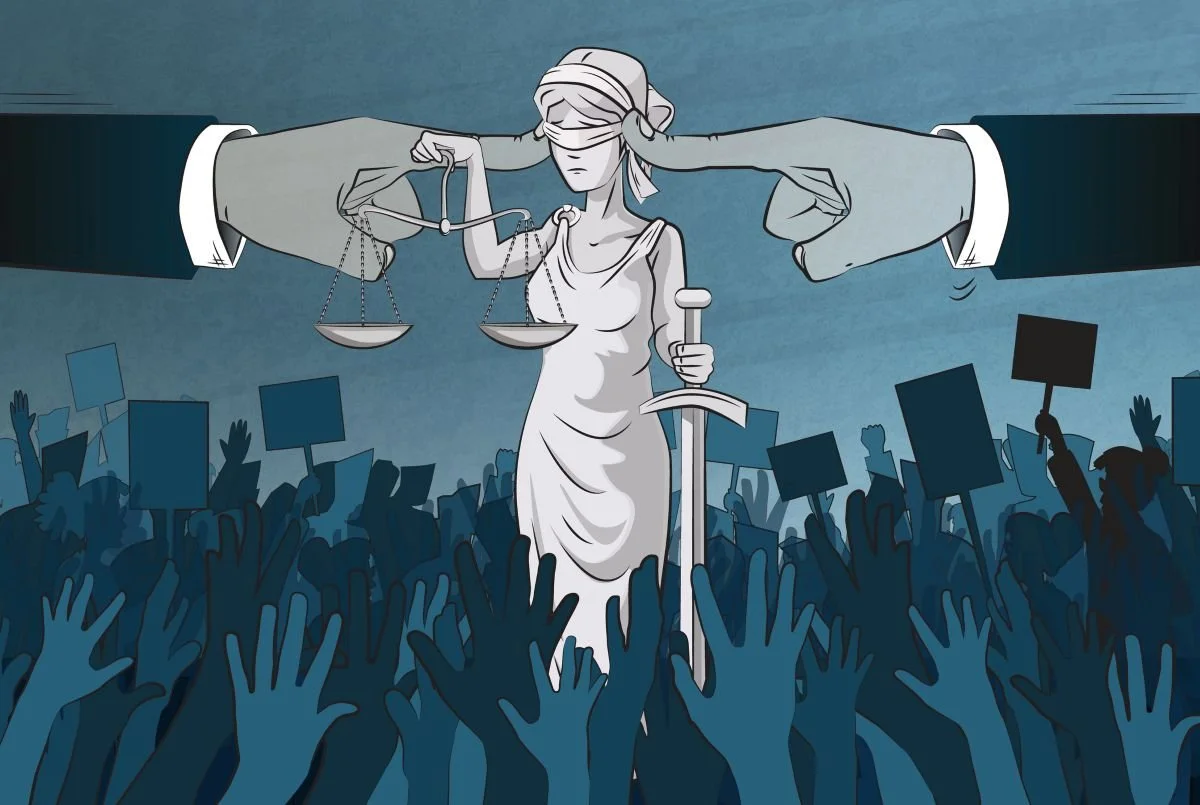
That’s what Chief Justice Roberts wants us to think, anyway. The reality is that Roberts’ occasional concessions to the left are not evidence of impartiality. Rather, they are tactical retreats employed to preserve the Court’s credibility and legitimacy by giving the appearance of fairness, so that the rulings dismantling decades of civil rights, regulatory power, and democratic protections can go unquestioned. In his 2005 Supreme Court confirmation hearing, Roberts told the Senate that he thought of his role on the Court as that of an umpire— “I will remember that it's my job to call balls and strikes and not to pitch or bat... I have no agenda.” For the entirety of his legal career, Chief Justice Roberts has fostered this appearance of impartiality to mask his true leanings. Roberts is not now and never has been a moderate or unbiased judge. He is a conservative with a conservative pedigree, who manufactured his own myth of judicial neutrality to build credibility and consolidate power under his court.
In 1980, the year after Chief Justice Roberts graduated from Harvard Law School, he clerked for then-Associate Justice William Rehnquist, a known supporter of segregation and voter suppression. Rehnquist was Roberts’ mentor, and the relationship undoubtedly shaped some of Roberts’ most conservative viewpoints. After his clerkship ended, Rehnquist recommended Roberts to the Reagan Administration's Chief of Staff William French Smith (the architect of the 1980s War on Drugs), who, in turn, brought Roberts on as an assistant to the Attorney General. While serving in the Department of Justice, Roberts wrote memos attacking affirmative action, voting-rights enforcement, and civil-rights remedies. He made early allegations that the Voting Rights Act, which his Court gutted earlier this year in Louisiana v. Callais, disenfranchised white voters. Roberts wrote memos during his time in the Reagan Administration advocating to narrow previous rulings on affirmative action, civil rights, and Title IX, and he even wrote to Ronald Reagan himself asking him to cancel a public address debunking the popular myth that HIV could be spread through casual contact.
In 1981 Roberts wrote to fellow judge Henry Friendly that "This is an exciting time to be at the Justice Department, when so much that has been taken for granted for so long is being seriously reconsidered." Roberts put to writing that he was excited to be overturning the very precedents he would later promise to uphold as Chief Justice of the Supreme Court. The writing was on the wall for Chief Justice Roberts from the beginning, and yet he somehow tricked the American people into believing that he was a moderate with Constitutional protections in mind.
What Chief Justice Roberts has brought to the Supreme Court is far more insidious than his counterparts on the bench. Justices Clarence Thomas and Samuel Alito were appointed to the Court as known conservative ideologues with track records of fighting loudly and intensely to forward conservative agendas. Roberts, on the other hand, has worked quietly to build legal precedents designed to weaken congressional authority and federal oversight. While Thomas and Alito always decide conservatively in Supreme Court rulings, Roberts may side occasionally with the liberal justices on narrow procedural grounds or on some high-profile cases to build a defense against calls for court-packing or structural reform, only so he can strike harder on subsequent, often more impactful cases. Roberts was never a moderate consensus candidate. He was a carefully groomed product of the conservative legal movement. He uses procedural delays and incrementalist rulings to achieve long-term conservative goals without provoking instant public backlash the way Alito and Thomas often do.
Now that we’re two decades into the Roberts Court, it’s safe to say that the covert, insidious agenda Roberts was appointed to perpetuate has been a success. Just a few of the Roberts Court’s most destructive rulings include PICS v. Seattle School District No. 1 (2007), which determined that considering race as a factor in lawmaking, even when doing it to mitigate effects of systemic racism, is prejudicial and unconstitutional, Rucho v. Common Cause (2019) which determined that federal courts do not have the authority to stop partisan gerrymandering, Citizens United v. FEC (2010), which classified corporations’ spending in elections as protected free speech and opened the floodgates for dark money and super PACS to meddle in elections, Loper Bright Enterprises v. Raimondo (2024), which overturned the Chevron deference and stripped federal agencies of their authority to implement regulations on health, environment, labor, and finance, and Dobbs v. Jackson Women's Health Organization (2022), which overturned Roe v. Wade and 50 years of precedent to strip Americans of bodily autonomy and the rights to abortions and reproductive care.
Roberts wants us to think he’s impartial, but he’s not. He’s a Reagan-era radical who has shrewdly maintained the Court’s credibility while enacting a monumentally destructive conservative agenda.
