
Third Way: Topical Tunes
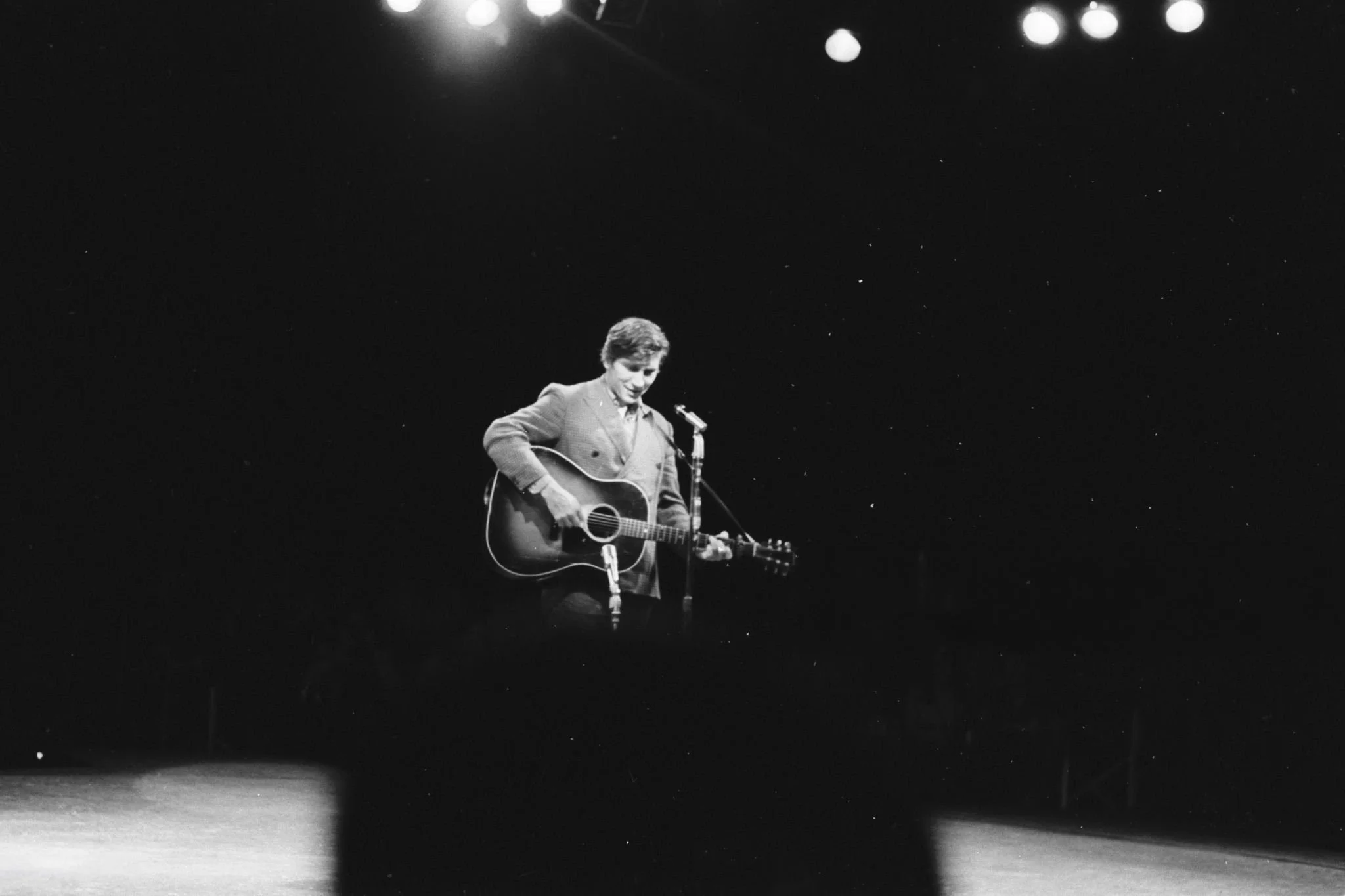
Jack Rosen
Since the dawn of civilization, human beings have had a distinctly intimate relationship with the arts. From stories etched in cave walls, to rally cry songs going platinum, to letters carried from lover to lover across warzones, artistic expression is and always has been the most tangible way in which our humanity is displayed.
In the case of music specifically, its unique appeal to the ethos of our psyches makes it particularly successful in the conveyance of impassioned messages. From Bob Dylan to Black Sabbath, musically driven advocacy transcends genre. But just how prevalent is this in modern politics?
Artists such as Phil Ochs are an excellent example of the power that music can hold in the act of advocacy and outreach. Ochs’ music featured themes of political resistance and messages of desire for peaceful reform. In his song “I’m Going to Say It Now”, Ochs sings from the perspective of a student who feels their education is oppressed by excessive government intervention and control. Amongst this discussion is the topic of censorship, particularly in regard to literature and accessibility to said literature. The below lines highlight this point beautifully:
“Oh I am just a student, sir
And only want to learn
But it's hard to read through the risin' smoke
Of the books that you like to burn”
Despite the fact that Ochs’ music was regarded as extremely controversial at the time, it resonated with many Americans who felt a disconnect between themselves and their country. Ochs was so devoted to the goal of political advocacy and protest that he was widely referred to as a “singing journalist” rather than simply a musician.
Ochs utilized his musical talent and platform to champion equal rights and peaceful resolutions, as well as to call out government corruption and hypocrisy. His messages, while being considered aggressive at times, were backed by good intentions and a desire for positive change. This cannot be said for all artists who choose to blend music and politics, however. In fact, some of them aren't even real.
Across the pond, an organization known as the Node Project has crafted their own artist out of pixels and code. AI rapper “Danny Bones” was created to support the Node Project’s mission to “Document the past, [some] confront the present and [others] imagine where the country could be heading.”
Despite claims that they don't associate with far-right UK politics, much of the music they produce perpetuates a clear message of anti-immigration themes in England. In addition to music videos, the organization has also utilized Bones as a person in campaign and propaganda videos; such as one in particular which features Bones throwing an asian man to the ground and fighting for mass deportation in the country. Where the music of Phil Ochs’ toted positive change and nonviolent resistance, the “music” of Danny Bones spreads messages of violence, prejudice, and ignorance. To utilize such a powerful and beautiful art form in a way that harms others is not only immoral, it is downright disgusting.
According to Spotify, Bones currently has roughly 18.3 thousand followers on the platform. In the grand scheme of the human population, this number accounts for roughly 0.026% of the U.K.’s population and 0.00022% of the world’s population. However, common sense tells us that the number of individuals who support the ideals toted by Bones is far greater.
Per an article published in The Guardian in June of 2026, an estimated 23% of European voters reported casting their votes for far right party candidates. This number is obviously much larger than the 0.026% observed when looking at those who follow Danny Bones on Spotify, we can see clear evidence that there are many more far-right aligned voters than Bones’ 18.3 thousand followers.
The world as we know it is one of increasing loneliness and separation. In a post pandemic world, human beings have become accustomed to seeking out connection via online methods rather than traditional in person communication. This has led to many, both young and old becoming more susceptible to online influences as they become more and more centralized in such a digital world.
In a world rife with desolation, destruction, and conflict, we simply cannot allow ourselves to let hate bleed into art. The arts have a distinct and beautiful capacity for spreading messages of hope and for making individuals feel seen and heard in the midst of whatever they may be experiencing. To hijack this beauty with the intent to harm others is simply deplorable. It is as the closing line of Mary Oliver’s poem The Summer Day goes: Tell me, what is it you plan to do with your one wild and precious life? Let us all use our one wild and precious life to foster a world wherein hope thrives and human beings create art to connect, not kill.