
Latin Analysis: Guyana’s Oil Boom And The Challenge Of Inclusive Development
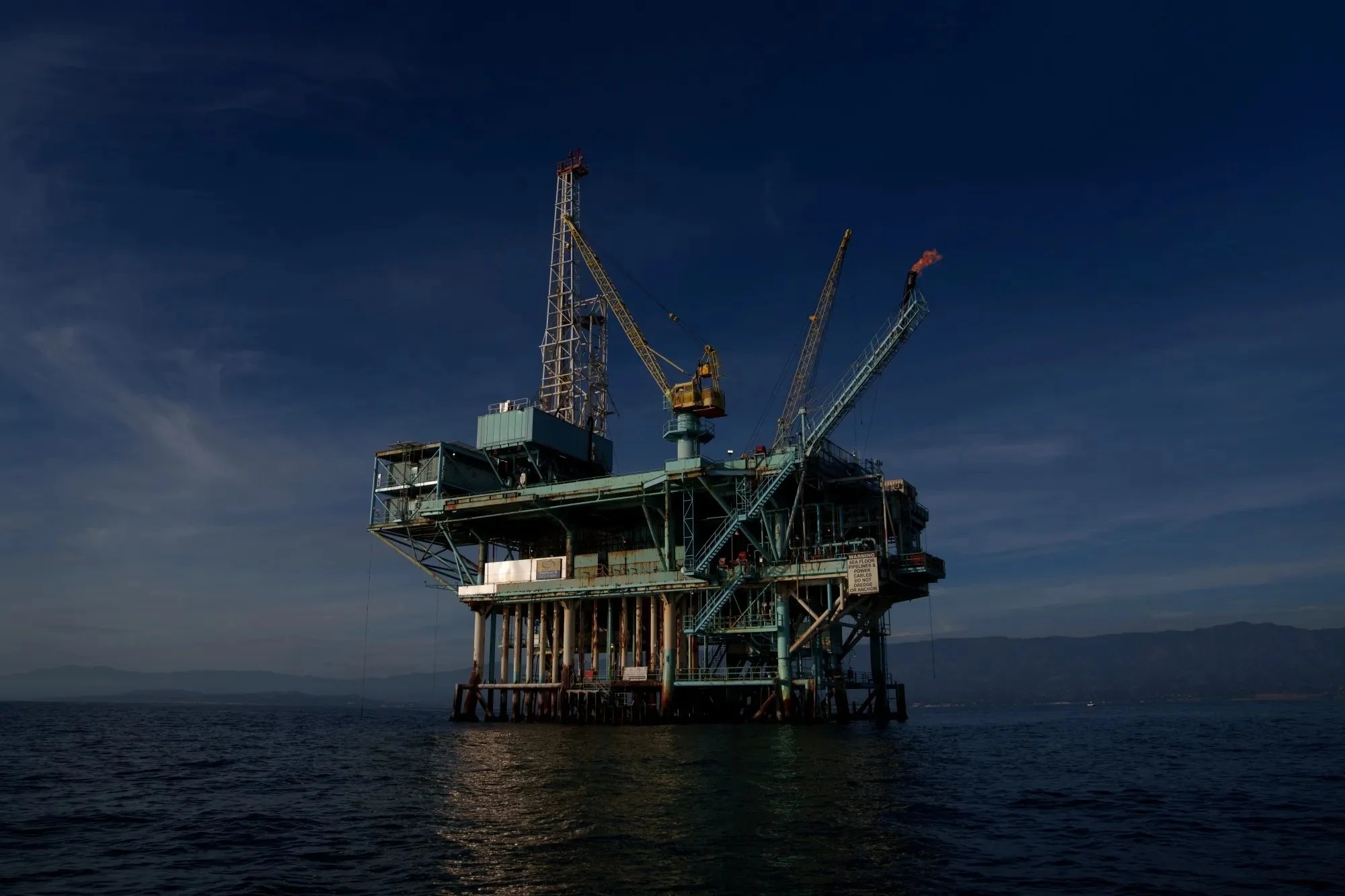
In the past decade, Guyana has transformed from one of South America’s poorest countries to one of the world’s fastest-growing economies, largely driven by major offshore oil discoveries that have entirely rewritten its economic future. Ever since ExxonMobil found the vast reserves in 2015, the resource has come to dominate both international perceptions of the country and domestic policy choices. But the striking growth figures the oil boom has produced exist alongside persistent concerns about its local effects – namely on inequality and the environment. The rapid transformation has therefore raised a question as to whether Guyana can convert this newfound economic boost into durable and inclusive development, and without falling prey to the resource curse that is known to trouble commodity-rich states.
The Economic Transformation
In 2015, ExxonMobil discovered major oil reserves in the Stabroek Block, a massive offshore oil field off the coast of Guyana. The discovery fundamentally altered Guyana’s economic trajectory, ending decades of slow growth primarily based on agriculture, mining, and forestry. Previously, sugar, rice, bauxite, and gold had formed the backbone of Guyana’s economy, which had struggled to generate sustained income growth or the fiscal space for large public investments.
But after oil production began in 2019, it quickly became Guyana’s main engine for growth – Guyana’s real GDP expanded by 57.8% in 2022, making it the fastest-growing economy in the world that year. The International Monetary Fund projected sustained double-digit growth through 2024, in a reflection of its rising oil output and consequent investment flows. The World Bank also recorded growth above 40% as new offshore fields became operational. This was an unprecedented pace of change for Guyana, a country with fewer than 800,000 people. As successive projects in the Sabroek Block reached full operation, the production of oil has rapidly increased, with output estimated at 645,000 barrels per day in 2024.
Now providing a substantial share of the national budget, oil has unlocked levels of public spending that would have seemed unimaginable just a decade ago. Part of this has been directed into the Natural Resource Fund, a sovereign wealth fund created in 2019 to steward petroleum revenues and cushion the economy against volatility. By 2024, the fund had amassed more than $2 billion. This fund has been compared to Norway’s Government Pension Fund Global, seen as the global gold standard for managing oil wealth; however, transparency advocates warn that reporting standards and public oversight fall short of those in more established models – potentially pointing to the institutional strains of a small state suddenly managing enormous financial inflows. These forewarnings capture an important element of Guyana’s new circumstances, namely, the tension between rapid wealth creation and limited administrative capacity.
Local Impacts
Oil revenues have begun to leave a visible imprint on Guyana’s physical landscape, most obviously in and around Georgetown, where construction activity has intensified. New highways, bridges, hospitals, and schools have appeared across the capital. The government has argued that its use of oil revenues goes towards tackling infrastructure shortfalls that have accumulated over decades. Flagship projects, including the long-awaited replacement of the Demerara River Bridge, are designed to relieve chronic congestion and strengthen connectivity along the densely populated coastal corridor.
The government’s energy policy has shifted alongside the oil boom, with new revenues unlocking investment in power generation and distribution. At the centre of this shift is the gas-to-energy project, which will bring associated gas from offshore fields to an onshore power plant, aiming to cut electricity costs and improve reliability in a system long marked by high tariffs and frequent outages. Officials maintain that cheaper, more stable power could strengthen competitiveness across the economy while reducing emissions by curbing offshore gas flaring.
However, the benefits of the boom have not been felt evenly, raising concerns that the oil wealth might not translate into improved daily lives for many citizens. While some coastal urban areas have seen improvements, rural and interior regions – including many Indigenous communities – report far fewer gains, reinforcing long-standing geographic divides. Even as GDP per capita rises sharply, many households struggle with a higher cost of living, particularly in Georgetown, where housing and food prices have climbed.
In recent years, more than 40% of Guyana’s population has lived on less than US$5.50 per day. Inflation has fluctuated since production began, with official statistics pointing to notable increases in housing costs in the capital. For many residents, the sight of cranes and new developments contrasts sharply with stagnant household finances, fuelling widespread scepticism about how fairly the benefits from the oil boom are being shared.
This gap between the growth in the headlines and Guyanans’ everyday realities is apparent in labour market indicators – for example, the employment-to-population ratio remains below 50%, and around 30% of working-age adults lack access to stable employment or face barriers to full-time work. Women are particularly affected, accounting for more than half of the inactive labour force and experiencing higher unemployment and lower earnings, especially in rural areas.
These social pressures are compounded by acute environmental vulnerability. Georgetown ranks among the world’s most flood-prone capitals, and severe flooding in 2005 affected nearly 290,000 people, highlighting the country’s exposure to rising sea levels and extreme weather. Environmental organizations warn that parts of the city could potentially face inundation by 2030 if global emissions continue on their current trajectory, placing Guyana’s oil-fueled development in question as a sustainable method of growth. Guyana retains one of the highest levels of forest cover globally, with roughly 85% of its territory forested. Through its Low Carbon Development Strategy, the country has positioned itself as a champion of forest conservation. However, reconciling these environmental commitments with rapidly expanding fossil fuel production has become one of the most important policy dilemmas facing Guyana today.
The Question Of Oil In The 2025 Elections
Oil became a central fault line during Guyana’s September 2025 general elections, reshaping both campaign strategies and voter priorities. The governing People’s Progressive Party/Civic (PPP/C), led by President Irfaan Ali, argued that policy stability in the oil sector was essential to sustain investment and fund long-term development. The opposition, while not positioning themselves against oil production itself, did target the terms of oil extraction – in particular, they called for the renegotiation of contracts to secure a larger share of oil revenues for the government, as well as the faster redistribution of revenues through increased social spending.
Political debates at the time focused particularly on the Production Sharing Agreement for the Stabroek Block from 2016, which critics have long described as disproportionately favorable to foreign companies, and even a symbol of elite capture. The government countered that the agreement was legally binding and protected by stability clauses, while also warning that renegotiation could expose Guyana to international arbitration and undermine investor confidence.
The PPP/C instead highlighted its economic record, pointing to rapid growth driven by the oil boom and the visible use of revenues to fund infrastructure, healthcare, housing, and education. This approach proved electorally effective. The PPP/C secured a second term, not just benefiting from strong economic performance and a disciplined campaign, but also from a fragmented opposition. The outcome signalled voter support for policy stability over more confrontational approaches that might have risked disrupting investment flows, reassuring foreign investors who have committed more than $10 billion to offshore developments through 2027 – even as public concerns over equity, governance, and revenue distribution persist.
Guyana’s oil boom has delivered extraordinary growth in an exceptionally short period, transforming a once-marginal economy into one of the world’s fastest-growing states. Yet these gains sit alongside widening inequalities, environmental vulnerability, and institutional strain, underscoring how uneven the benefits of rapid resource-led growth have been. The 2025 election made clear that oil is no longer just an economic asset but a central political question shaping Guyana’s future. Whether Guyana can translate its oil wealth into inclusive, resilient development will depend less on the scale of its reserves than on the strength of its institutions, the management of its revenues, and the government’s choices in the decade ahead.