
Latin Analysis: The “Hondurasgate” Scandal And The Alleged Plot Against Latin America’s Left
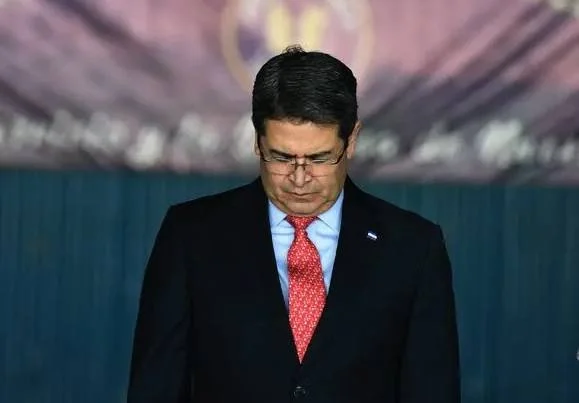
A series of leaked audio recordings has put Honduras at the center of what is being called “Hondurasgate”, an alleged coordinated plot by the United States, Israel, and Honduras to destabilize left-wing governments across Latin America. The allegations point to a transnational disinformation operation underpinned by foreign lobbying and covert financing, drawing attention to the geopolitical maneuvrings of global right-wing forces in the region.
The Audio Recordings
The investigation that brought the audio recordings to light was led by anonymous Honduran journalists and published by the outlet Diario Red and the website Hondurasgate.ch. It comprises three instalments totalling 37 leaked voice messages exchanged via WhatsApp, Signal, and Telegram between January and April 2026. Their authenticity was assessed using Phonexia Voice Inspector, a forensic voice analysis suite deployed by intelligence agencies and law enforcement in over 60 countries.
An important figure in these recordings is former Honduran president Juan Orlando Hernández, who served from 2014 to 2022 before being convicted in New York on drug trafficking charges. He was sentenced to 45 years in prison, but in December 2025 was pardoned by U.S. President Donald Trump during the Honduran presidential elections at the time. According to the leaks, this pardon was not an act of clemency, but the opening move in a broader arrangement.
In the recordings, a voice identified by the investigation as Hernández’s states that the financing behind his pardon came from “a group of rabbis and people who supported Israel,” and separately, that Israeli Prime Minister Benjamin Netanyahu had “everything to do” with his release and the negotiations surrounding it. In the wake of the recordings being publicized, Hernández denied that the voice was his on X, saying: “Clearly it’s not my voice. Don’t insult people’s intelligence. […] Listen to my voice in these videos and you’ll realize they’re fake.”
Notably, the recordings allege that Hernández sought to establish a “digital journalism unit”, operating from the United States, to target the governments of Mexico, Colombia, and Brazil. In conversations with those identified by the investigation as current Honduran President Nasry Asfura and Vice President María Antonieta Mejía, Hernández allegedly requested $150,000 to set up a media cell, based in the United States to evade detection in Honduras. Asfura’s response, as outlined in the reports, indicated the funds would be routed through a third party and sourced from the Secretariat of Infrastructure and Public Services (INSEP). An additional $350,000 is alleged to have been promised by Argentine President Javier Milei. The stated aim, according the recordings, was to “attack and eradicate the cancer of the left” across Latin America, with specific operations planned against the administrations of Mexican President Claudia Sheinbaum, Colombian President Gustavo Petro, and Brazilian President Luiz Inácio Lula da Silva.
In a press briefing soon after, Sheinbaum confirmed she had reviewed the recordings and said the campaign would have no meaningful impact on her government, framing it as part of a wider effort by the “international right” to spread disinformation.
Geopolitical Implications
Controversy surrounded President Asfura’s victory after the elections last year, largely due to Trump’s public endorsement of him and threats to cut US aid to Honduras if he did not win. Asfura’s first diplomatic trips following his election were to Washington, where he met with Secretary of State Marco Rubio, and Jerusalem, where he met with Netanyahu. The Israeli prime minister described the visit as an opportunity to rebrand ties between the two countries, expressing interest in cooperation on agriculture, technology, and economic development. Honduras had previously recalled its ambassador to Israel in November 2023 under then-President Xiomara Castro in response to Israeli military operations in Gaza, giving Asfura’s Jerusalem visit a clear symbolic weight. The Hondurasgate recordings add another layer to these diplomatic relations; as the investigation alleges that Asfura’s presidency was conceived as a stepping stone for Hernández to return to power in the next electoral cycle, with US and Israeli backing.
If the allegations are substantiated, the regional implications are significant. The recordings describe a coordinated transnational operation with foreign government backing, directed at undermining elected governments in three of Latin America’s largest democracies. The allegations also land against an already fraught political landscape – US-Mexico relations are under considerable strain, with the Trump administration having sought the indictment and extradition of Rubén Rocha Moya, the former Governor of Sinaloa, Mexico, as well as nine other officials on drug trafficking-related charges. This is compounded by Trump’s repeated suggestions of direct US intervention in Mexico against organized crime. US-Colombia relations have been similarly turbulent, with President Petro’s visa revoked and being publicly labelled a “narco” by Trump, before a partial diplomatic thaw following a Washington visit in February 2026. The suggested involvement of Milei adds another dimension as his administration has moved to deepen Argentina-Israel ties, for example, by advancing plans to relocate the Argentine embassy to Jerusalem. His alignment with Trump and the broader international right provides a coherent ideological framework within which the alleged operation sits.
Hondurasgate remains a contested investigation, as the recordings have not been independently verified beyond the analysis cited by the outlets that published them, while key figures have either denied involvement or declined to comment. Nevertheless, the allegations raise questions about the nature of the transactions surrounding Hernández’s pardon, the conditions attached to Asfura’s election, and the extent to which foreign state interests are shaping political outcomes in Latin America.