
Latin Analysis: Laura Fernández Assumes Costa Rica’s Presidency Amid Security Crisis And Democratic Backsliding Concerns
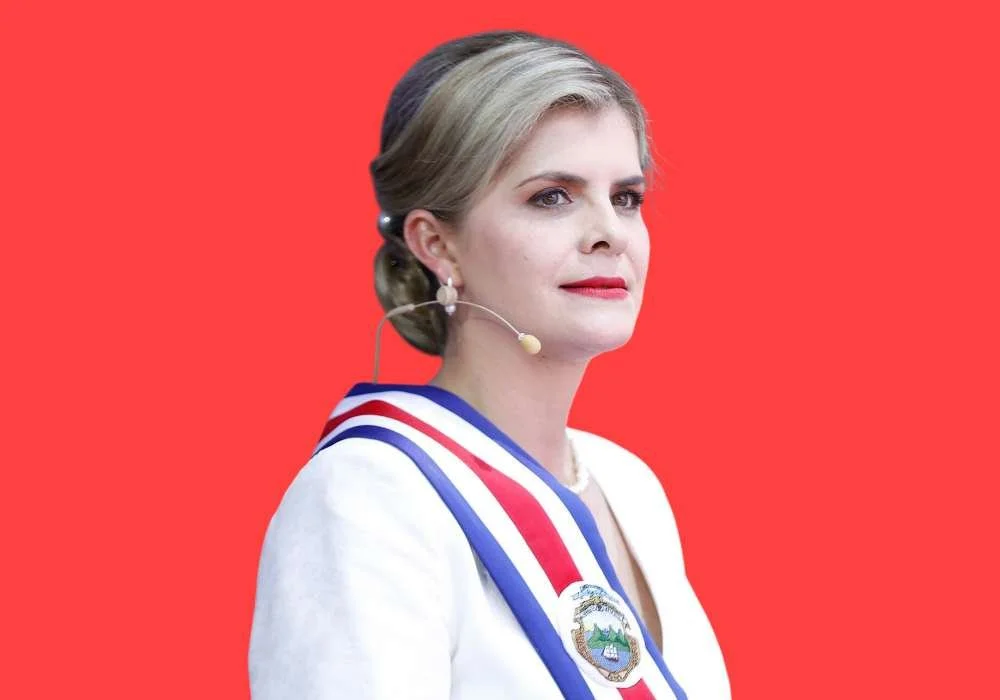
Laura Fernández has taken office as Costa Rica’s president after a decisive electoral victory that reflects a broader rightward shift in the country’s politics. Her inauguration marks the beginning of a presidency expected to prioritize tougher security measures and institutional reform, all amid rising security challenges and heightened scrutiny over the future direction of Costa Rica’s democratic institutions.
Election And Inauguration
Laura Fernández, a 39-year-old political scientist and former minister of the presidency under Rodrigo Chaves, won the February presidential election in the first round, receiving 48% of the vote in the largest winning mandate in 32 years. Her main rival, centre-right economist Álvaro Ramos, received 33.4%. Fernández’s campaign slogan, “the continuity of change”, captured her promise to follow in the footsteps of former president Chaves, whose right-wing populist project she had served under.
Fernández was sworn in on May 8 at the National Stadium in San José, which hosted a crowd of around 20,000. In doing so, she became Costa Rica’s 50th president and the second woman to hold this position. The ceremony itself reflected this symbolically as she was sworn in by Yara Jiménez, president of the Legislative Assembly, marking the first time in Costa Rican history that one woman had sworn in another as president.
Pueblo Soberano (PPSO), Fernández’s party, now holds 31 of the 57 seats in the Legislative Assembly, the largest share any party has held since the early 1980s. She is the first Costa Rican president in over three decades to enter office with a partisan majority in the legislature.
Policies And Political Agenda
In Fernández’s inaugural address, she said: “My hand will not shake in confronting organized crime.” Costa Rica has seen its murder rate climb roughly 50% over the past six years, driven by its growing role as a transit and logistics hub for Mexican and Colombian drug cartels. Her strong statement reflects her “mano dura” or “iron-fisted” security policy, making clear that she intends to respond forcefully to the country’s worsening security crisis and the growing influence of organised crime.
Her most striking concrete proposal is the construction of a high-security mega-prison, modelled explicitly on El Salvador’s CECOT facility. Nayib Bukele, the Salvadoran president whose mass incarceration strategy has drawn widespread condemnation for human rights abuses, attended the inauguration of a related facility in Costa Rica in January. Bukele is a significant influence for Fernández’s security and crime policies – though she has said her approach will respect human rights and democratic order. Fernández has also pledged tougher sentencing and the elimination of prison benefits that reduce time served. States of emergency in high-crime areas, which would allow for the temporary suspension of certain constitutional guarantees, are also on the table.
Beyond security, her platform is socially conservative and economically liberal. She has pledged to double prison sentences for women who have abortions and has cultivated close ties with evangelical leaders, offering them influence over appointments in health and education. She has also announced an anti-corruption drive and the creation of a “Third Republic” – a reformed institutional order she says will replace the framework established after Costa Rica's 1948 civil war. This would entail reforms to the judiciary and other state institutions, which Fernández argues have allowed corruption and organized crime to become entrenched into the nation’s political framework.
Her foreign policy signals closer alignment with the United States. She has confirmed the continuation of a bilateral deportation agreement with the United States, which allows up to 25 third-country deportees per week to be transferred to Costa Rica. Her inauguration was attended by U.S. Deputy Secretary of State Christopher Landau and Homeland Security Secretary Kristi Noem in a visible demonstration of the amicable diplomatic relationship. Chaves, her predecessor and political mentor, has been appointed simultaneously as minister of the presidency and finance minister, giving him an unusually concentrated grip on the new government’s political and economic levers.
Implications For Costa Rica And The Region
Fernández’s presidential victory represents one facet of a rightward trend visible across Latin America, where anger over crime and institutional dysfunction has driven voters toward candidates promising order and decisive leadership. But while she carries a substantial and historic electoral mandate, this also comes with structural limits that will shape what she can realistically deliver. The PPSO’s 31 seats fall seven short of the two-thirds majority needed to amend the constitution, appoint Supreme Court justices, or suspend individual rights. This matters because the opposition, led principally by the centrist Partido de Liberación Nacional, retains meaningful capacity to check the executive. Three defections from within her own coalition would be enough to jeopardize her legislative majority altogether.
Furthermore, Fernández’s the arrangement with Chaves carries risks. Critics argue that the concentration of power around the former president could risk creating a “shadow presidency” in which Fernández holds formal authority while Chaves retains decisive influence over strategy and governance. His continued presence at the centre of government also preserves his political influence and legal immunity while he remains under investigation in corruption-related cases. Opposition parties and analysts also warn that the arrangement might deepen political polarization and reinforce the confrontational style associated with Chaves’s governance, where he repeatedly clashed with the judiciary, opposition lawmakers, and the press. Whether Fernández ultimately governs as Chaves’s political successor or gradually seeks greater independence from his influence in the next four years remains uncertain.
Her “Third Republic” rhetoric has also raised concern, as the language echoes promises made by former Venezuelan and Mexican presidents Hugo Chávez and Andrés Manuel López Obrador before they reshaped their countries’ institutions leading to significant democratic backsliding in those countries. Analysts are careful to note, however, that Costa Rica is not Venezuela or Mexico, and Fernández is not either of those leaders. Its democratic culture, independent judiciary, and entrenched civil society provide genuine buffers against executive overreach. The press freedom ranking's fall from 8th to 38th during the Chaves years, and the US revocation of tourist visas for directors of La Nación without explanation, are nonetheless indicators of where pressure has already been applied.
Fernández enters office with strong institutional backing but heightened scrutiny over how far her government will push its security and institutional agenda. Unlike Chaves, Fernández now has the legislative and executive strength to turn a previously constrained populist agenda into implementable policy. The extent to which Costa Rica’s democratic institutions absorb or resist that pressure may define the country’s political trajectory over the next four years.