
Latin Analysis: What Colombia’s First Round Election Results Reveal About The Presidential Race
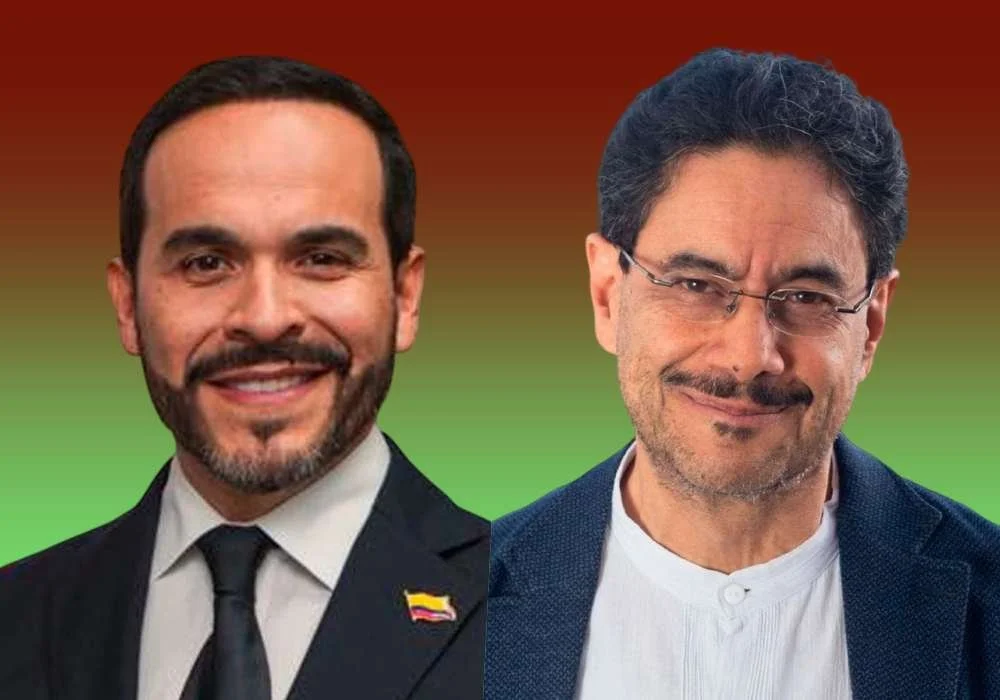
Colombia’s presidential election has entered its final phase following an unexpected outcome of the first round on May 31. Far-right outsider Abelardo de la Espriella finished first with 43.7% of the vote, ahead of left-wing senator Iván Cepeda on 40.9%, forcing a runoff on June 21. These results have transformed an already highly polarized contest into a direct competition between two vastly different visions for Colombia’s future.
The Results Of The First Round
The result - De la Espriella’s vote share surpassing Cepeda’s - surprised many observers because most polls had shown Cepeda leading in the final weeks before the vote. Instead, De la Espriella successfully attracted much of the right-wing electorate and emerged as the strongest candidate heading into the runoff.
De la Espriella framed the contest as “los nunca contra los de siempre” – meaning the “nevers” against the “usuals”. This populist, anti-establishment rallying cry divides society into those who work hard, pay taxes, and have never participated in political corruption or traditional political machines to succeed, versus the ruling elite – i.e., the “usual suspects”.
That message proved more effective than polls anticipated. Center-right senator Paloma Valencia, who had polled above 20%, collapsed to just 6.9% on election night. Centrists Sergio Fajardo and Claudia López together captured barely 1.25 million votes from 41.4 million. The centre was wiped out.
The election also exposed widespread frustration with President Gustavo Petro's administration, with rising crime and deteriorating public safety topping public concerns. Armed groups have expanded activity across several regions in Colombia, while kidnappings, homicides, forced displacement, and guerrilla attacks have all increased. Many voters blamed Petro’s “total peace” policy, which some perceive as negotiating with armed groups rather than legitimately confronting them, for the deteriorating situation. Political violence has also been an issue, as Colombia’s Electoral Observation Mission recorded at least 61 political leaders killed during the electoral cycle.
Economic anxiety also shaped the campaign. Colombia’s next president will inherit strained public finances, persistent inflation concerns, and pressure to reduce the fiscal deficit. Questions about unemployment, living costs, and the role of the state featured prominently in the debate between candidates.
These concerns formed the backdrop to an election with a stark contrast between the two frontrunners. Cepeda campaigned largely as a continuation of Petro’s agenda, defending negotiations with armed groups and advocating a more interventionist role for the state. Contrastingly, De la Espriella campaigned on a promise of mano dura – an iron-fist approach to crime modelled on El Salvador’s Nayib Bukele – alongside calls for austerity and a 40% reduction in the size of the state.
Takeaways From The Results So Far
The strongest takeaway from the first round was the strength of anti-establishment politics in Colombia at the present moment. Although De la Espriella is aligned with the political right, his success can be attributed in large part to his “outsider” image. A lawyer with no previous governmental experience, he presented himself as a candidate capable of breaking away from Colombia’s traditional political class. His campaign focused heavily on public frustration with crime, corruption, and ineffective governance.
De la Espriella’s performance also suggests that Colombian conservatism is evolving. For two decades, the right was largely organized around former president Álvaro Uribe and the political movement known as uribismo. The poor result of senator Paloma Valencia, the candidate for the right-wing Centro Democrático party, demonstrated the declining ability of traditional conservative figures to mobilize voters. By contrast, De la Espriella built strong support through social media, anti-establishment messaging, and a highly personalized campaign.
The left is still strong, but hit a ceiling. Cepeda’s 9.7 million votes – which was more than Petro received in the 2022 first round – confirm the Colombian left as a genuine electoral force. The governing coalition retains a substantial and loyal base, particularly in Bogotá, coastal regions, and areas heavily affected by conflict. However, Cepeda lost Medellín and most of the Andean interior. His methodical, academic style perhaps struggled to generate the mass mobilization like that of De la Espriella.
The first-round results thus demonstrate the increasing polarization of Colombian politics. Analysts have increasingly argued that electoral competition is no longer defined primarily by traditional left-right divisions, but by a broader contest between establishment and outsider candidates. The first round reinforced that trend, as candidates offering moderation or technocratic governance struggled to gain traction.
Questions surrounding electoral legitimacy also emerged after Petro and Cepeda raised concerns about irregularities in the preliminary count. However, domestic and international observers broadly described the voting process as orderly and transparent. While these claims are unlikely to alter the result, they illustrate the heightened tensions surrounding what is expected to be an extremely competitive runoff.
What To Watch In The Runoff
The June 21 runoff will likely be decided by voters who supported defeated candidates in the first round, as well as those who did not participate at all. Valencia has already endorsed De la Espriella, giving him momentum heading into the final weeks of campaigning. However, it remains unclear whether her supporters will follow her lead. Some analysts argue that moderate conservatives and centrist voters may be reluctant to back De la Espriella’s confrontational style and could instead move towards Cepeda or abstain altogether.
This gives Cepeda a potential path to victory despite finishing second. The combined vote share of centrist candidates exceeds the margin separating the two finalists. In addition, turnout reached a record 58%, but more than four in ten eligible voters still stayed home. Therefore, mobilising these voters could prove decisive.
The international dimension could also become more prominent. Relations with the United States have become increasingly salient during the campaign, particularly following Donald Trump’s return to the White House. De la Espriella’s ideological affinity with Trump and other right-wing leaders across the region has drawn attention, while a Cepeda victory would likely preserve greater continuity with Petro’s foreign policy approach.
Whoever wins will face significant hurdles in government. Congressional elections held earlier this year produced a fragmented legislature, meaning neither candidate will enjoy a clear governing majority. The next president will therefore face the challenge of building coalitions while confronting security pressures, fiscal constraints, and a deeply divided electorate.