
In America: AOC for President?
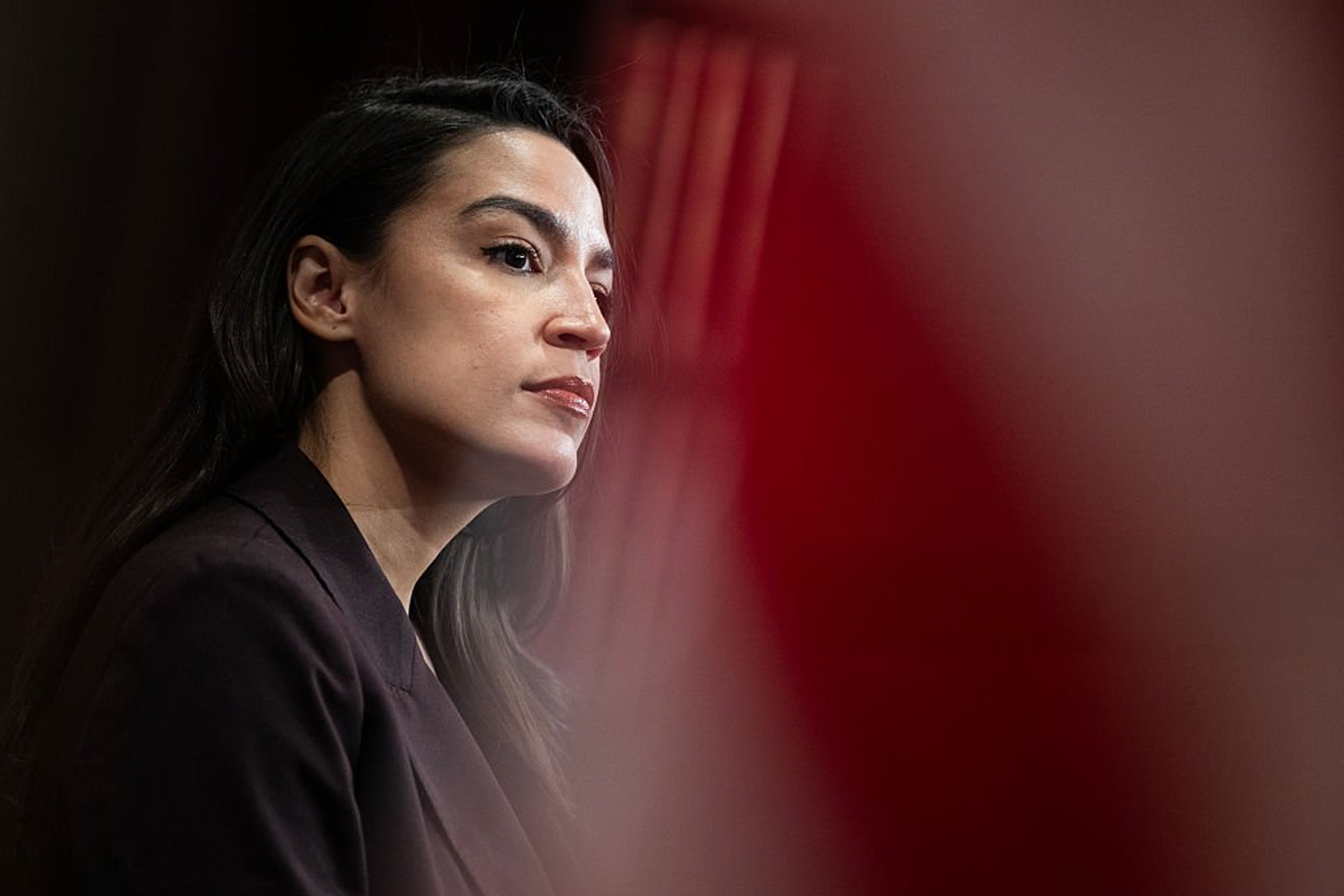
Representative Alexandria Ocasio-Cortez (AOC) has not announced a bid for the 2028 presidential election… yet. Amid this year’s midterm news cycle, Rep. AOC made waves when asked about her future presidential or senatorial aspirations.
Her current efforts remain focused on the midterms, yet questions about AOC’s aspirations for higher office seem to keep popping up. Last year’s “Fighting Oligarchy” tours, which she co-hosted with Sen. Bernie Sanders, sparked similar discussions about AOC's plan for higher office. The momentum around Rep. AOC seems to be pushing her towards this role more than she may want it for herself.
This past May, Democratic strategist David Axelrod asked AOC whether she planned to run for president or challenge fellow New Yorker Chuck Schumer's seat in 2028.
“What’s funny is they assume my ambition is a title or a seat. My ambition is to change this country. Presidents come and go. Senate, House seats, elected officials come and go. But single-payer healthcare is forever… a living wage is forever…” – Representative Alexandria Ocasio-Cortez
Among other factors, the wave of Democratic Socialist primary wins this year has also contributed to AOC’s media presence, since she is a dues-paying member of Democratic Socialists of America (DSA). Her support for candidates like David Orkin during his primary election campaign and Mayor Zohran Mamdani during his mayoral campaign deepens the influence and relationships that AOC has inside and outside of the Hill. Time will tell whether these primary wins translate into real gains after the midterms.
Regardless of the attention that Rep. AOC is generating, a larger question remains: What makes AOC so popular? One answer comes from Corbin Trent, AOC’s first communications director in Congress, and he was also there for her first electoral victory against Joe Crowley in 2018. Notably, Crowley was a 10-term incumbent and a member of Democratic leadership. Trent recalls the night AOC ousted Crowley and the path that the political industrial complex began to chart for her.
“Primary night, she beats Joe Crowley. I get phone calls from elected officials and other people and their question is, what’s next? What’s the pathway here? What’s she going to run for? What higher office would she seek?”
Even Trent could not resist a longer-term strategy for planning out AOC’s career because of the immense momentum her campaign generated after Crowley’s defeat. Trent commented on AOC’s resistance to any political careerism in these early stages.
“To my chagrin and frustration, that never was a way in which she could plan or operate. She did not have an idea in her head of this ultimate prize of president or governor or senator.” – Corbin Trent on AOC’s early political career.
Indeed, this authenticity is precisely what makes AOC such a likable and relatable candidate for many people. Chris Scott, a political strategist who served as the coalition director of Kamala Harris’s 2024 campaign, commented on AOC.
“When you talk about AOC’s humble beginnings being a bartender that’s a lived experience story that resonates, especially with millennials, with their upbringing. What you are starting to see – whether it’s conservative or progressive - is people are leaning more and more towards candidates with lived experience that they feel they relate to as politics gets more polarising.”
If AOC decides to run for higher office in 2028, several roadblocks remain that can severely impede or outright obstruct her from future electoral success. One of the most prominent questions is who will be the Democratic candidate for president. Congressman Ro Khanna, former Vice President Kamala Harris, Pete Buttigieg, and California Governor Gavin Newsom are among the most frequently cited names alongside AOC, all vying for the same spot.
A critique shared by centrist democrats and republicans is that AOC’s alignment with DSA and Bernie Sanders positions her as a radical extremist. An aspect more unique to the GOP will be the onslaught of right-wing media attention scrutinizing actions and comments like “Woke One was crazy.”
Somewhat similarly, concerns about AOC’s policies being perceived as more radical may affect her ability to attract African American voters. Nina Turner, a national co-chair of Sanders’ 2020 campaign, commented:
“There are some rumblings in some segments of the Black community that DSA and progressives in general are not doing what it takes to court Black voters and in some ways are leaving us behind for other people who are of colour but not Black. That’s real and so DSA as well as progressives are going to have to do something to say, no, we understand the Black plight and we understand that the survival of working-class people comes through Black liberation. They have not done a good job of doing that. I’m hoping that they will.”
Turner’s critique mirrors a long-standing concern from centrist Democrats that the ascendant DSA will succeed with white, college-educated voters but struggle to attract black voters.
Another concern centers on whether Democrats should even run another female candidate. Former First Lady Michelle Obama voiced these concerns last fall following Harris’s defeat in 2024. Alongside Hillary Clinton’s loss in 2016, Obama echoes concerns that stereotypes surrounding women still prevail and contribute to some of the campaign difficulties for past female candidates for president.
For AOC’s political trajectory, these critics argue she would have a higher chance of success if she ran for the Senate and then tried for the presidency. At the same time, this could discount the political momentum and attention that AOC currently has. Rather, this momentum could potentially be leveraged toward a presidential victory by 2028.
Kurt Bardella, a political commentator, noted that:
“When you look at the current trajectory of the Democratic party, she is the natural successor to the Bernie Sanders-Elizabeth Warren coalition. She is one of the most gifted communicators in all of politics. She is someone who engenders a tremendous amount of passion, either for or against. She does possess the unique quality of: people give a shit. She’s got a lot more going for her than most people. She never has to worry about standing out. The attention vacuum that we live in, and the way that content works, she is in a league of her own.”
Ultimately, AOC will decide whether to run for higher office in 2028. While the building blocks for a successful presidential bid are in place, AOC still has a lot to do in the next two years.