
Brandon Bell
Public pressure on GOP leadership to push data center legislation to a floor vote continues to grow as the November Midterms approach. Republicans worry that the public's growing sensitivity to data centers will hurt them at the polls. The stakes are further elevated by the limited time Congress will have to convene before the Midterms. After the August recess, Congress will convene for only 15 days before breaking again until after the November Midterms.
In July, the House Energy and Commerce Committee voted 52-0 to approve the Ratepayer Protection Act for advancement to a floor vote. This bill would require states to regulate data center energy consumption according to federal standards. In essence, companies building data centers must also pay for electrical grid and power generation upgrades rather than shifting those costs to the communities where these data centers are located. Some Republicans are pushing to pass this bill in the short window Congress convenes in September. Representatives Gabe Evans and Kathy Castor, two of the bill's original sponsors, released a press statement about its political momentum.
“I’m encouraged by the momentum behind the Ratepayer Protection Act, and I’m hopeful we’ll see it come to the floor when Congress returns in September. This legislation earned unanimous bipartisan support in committee, and we continue to see more members sign on every week.” – Rep. Gabe Evans (R-Colo.) and Rep. Kathy Castor (D-Fla.) in a press statement.
House Majority Leader Scalise is ultimately the final arbiter of whether this bill will see a floor vote soon. A spokesperson for Scalise said “no decisions have been made” in late August, perhaps reflecting a disconnect between the legislative priorities of rank-and-file GOP members and GOP leadership. Another disconnect could be a divergence in perceived costs and benefits of having data centers in your community or state.
Scalise’s view is that data centers bring immense economic benefits to their communities that offset some of the perceived costs. Indeed, Scalise highlights a data center built in Richland Parish, LA, that paid every schoolteacher in that parish a $50,000 bonus, and another data center built in Loudoun County, VA, that gave every resident a 30% property tax cut.
“There are tremendous benefits for communities who embrace data centers … They’re good customers, they’re good neighbors, and studies prove that they don’t add to the cost of the grid. They’re paying their own way.” – House Majority Leader Steve Scalise on data centers.
While some data centers may bring these economic benefits to their communities, it is unclear whether that truly offsets the full suite of costs of constructing and operating these buildings. Representative Alexandria Ocasio-Cortez (AOC) lambasted an Environmental Protection Agency official earlier this year for the damage that a data center built in North Georgia was causing to the community’s drinking water.
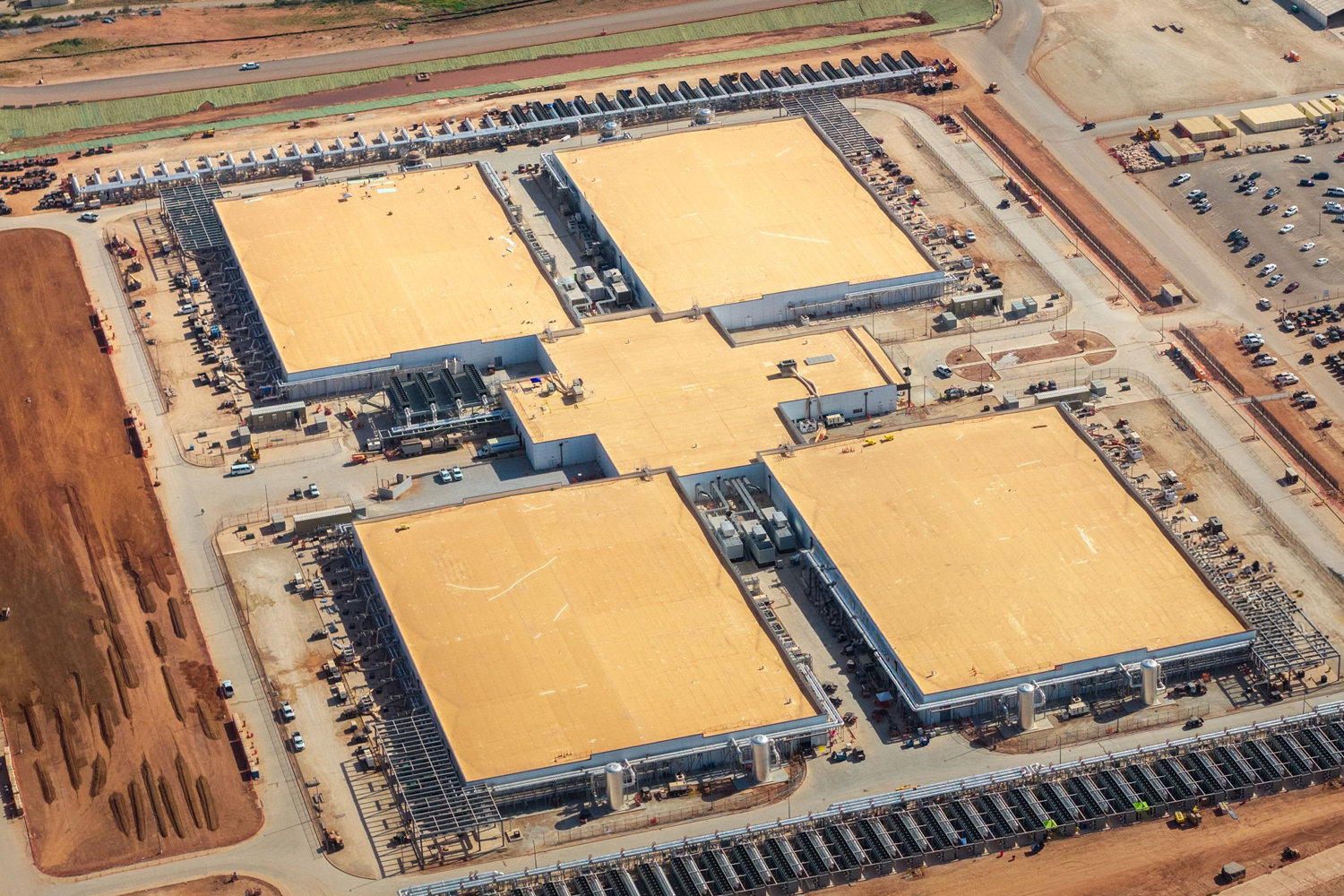
Some opponents of data center construction, like Rep. AOC, underscore the environmental costs data centers impose on the communities where they're built. Beyond straining the electrical grid, data centers also consume tremendous amounts of water, usually sourced from the public water grid. The water they use is treated with chemicals and often returns to local water sources at a higher temperature than the natural environment. These contaminants strain local wastewater treatment centers and harm the local environment.
Ultimately, data centers are a divisive and complex bag of worms to unpack, especially in US politics. Key swing states have become some of the frontlines for testing what works and what doesn’t in passing data center legislation and running political campaigns.
Michigan, which recently saw Democratic Socialist Abdul El-Sayed win the primary, is one such state where data center legislation has become a major issue heading into the midterms. Mike Rogers, who is slated to face off against El-Sayed in November, recently announced his support for a one-year moratorium on data center legislation in Michigan.
In Ohio, Sen. Jon Husted (R-Ohio), who is in a heated race with former Democratic Sen. Sherrod Brown, pledged his support to ensure the Senate passes the version of the Ratepayer Protection Act that he sponsored in his chamber.
Rifts between rank-and-file GOP and the GOP leadership will likely forestall any federal action on data center legislation before the midterms. Until Congress takes definitive action to regulate data center construction, state governments will have to fill the legislative gap and decide whether to lean into the proposed economic benefits data centers offer or more stringently regulate how data centers use and pay for their utilities.
At the same time, passing a bill like the Ratepayer Protection Act before the midterms would be a major sign of goodwill toward the public.
“Throughout August, members have heard directly from constituents that data center development and affordability are among their top concerns. This bill tackles both by ensuring hardworking families and small businesses aren’t forced to foot the bill for the massive energy demands of data centers.” – Rep. Evans and Rep. Castor on the Ratepayer Protection Act.
Francesca Hsie, deputy director for electricity at center-left think tank Third Way, noted that regardless of the Ratepayer Protection Act’s passage into law or not, the bill signals to states that they need to regulate data centers.
“I think the public is really wanting politicians to show some sort of engagement or regulation of how buildout is happening” – Francesca Hsie commenting on data center legislation.
Overall, the strong bipartisan support the Ratepayer Protection Act generated at the committee level was a gesture of goodwill toward federal regulations on data centers. Even if this bill fails to pass before the midterms, political momentum to act upon this issue is likely to carry into the next legislative session. In the meantime, state-level regulations on data center construction (or lack of) can also offer blueprints for what appears to work and what doesn’t on this topic.