
Inside Africa: Northern Africa's Youth Climate Entrepreneurs Turn Environmental Risk Into Economic Opportunity
Oleksandr Sushko
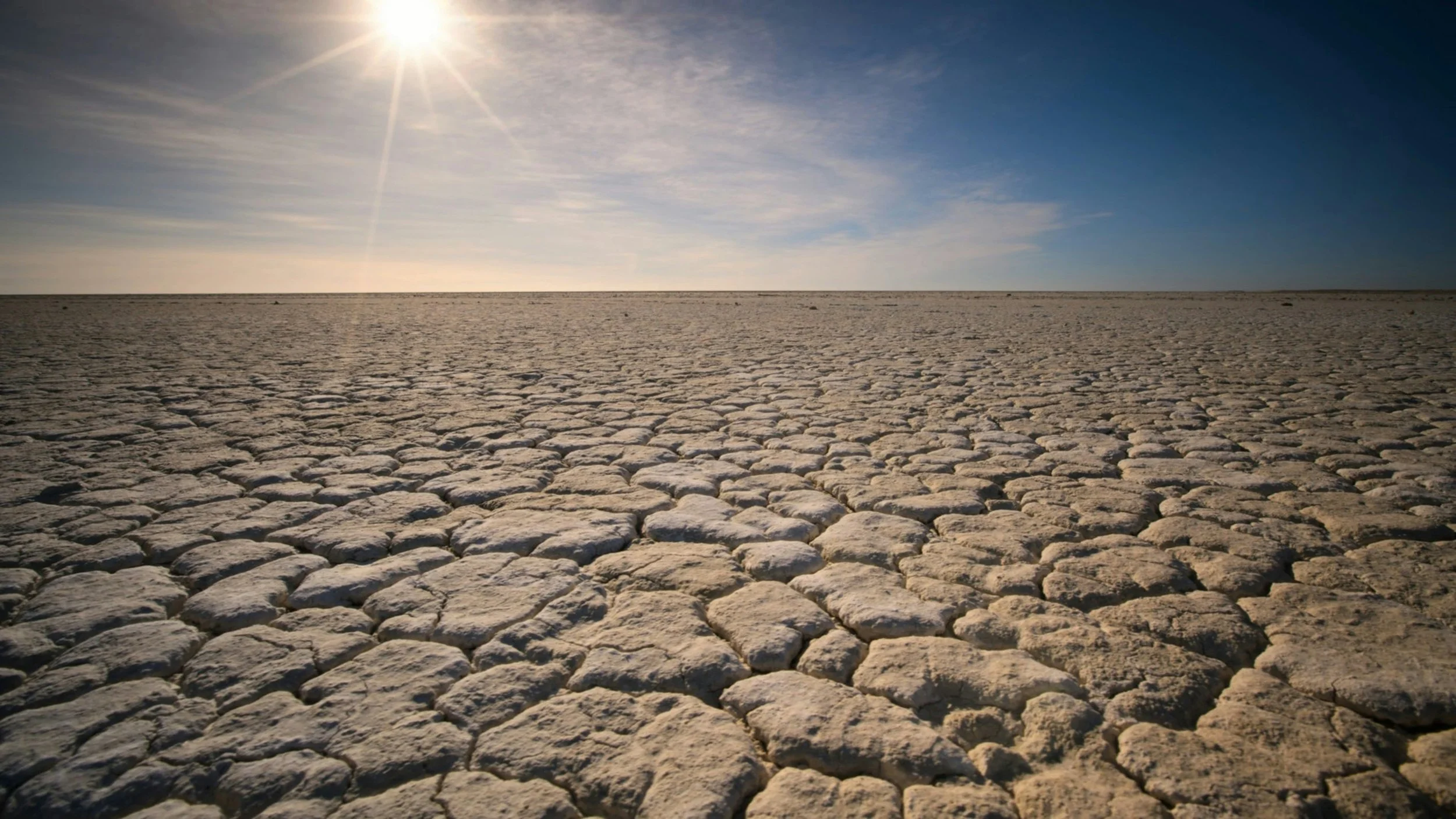
When drought claimed five consecutive harvests across Morocco’s farming regions, farmers in areas like the Atlas faced collapse. Water scarcity, soil erosion, and debt mounted for many. Yet instead of abandoning the land, a growing number joined Morocco’s emerging agri-tech movement, adopting digital irrigation platforms and solar-powered water systems that cut water use by 30% while increasing yields.
This shift reveals a critical reorientation in how African communities frame environmental challenges. Rather than waiting for international climate finance or government intervention, a new generation of entrepreneurs in Morocco and Tunisia is developing homegrown solutions grounded in local realities, solar-powered desalination, smart irrigation platforms, regenerative agriculture, and digital advisory services. The initiatives suggest movement away from crisis narratives toward pragmatic, locally driven adaptation that creates employment, builds climate resilience, and attracts significant international investment.
Sand to Green, founded in 2021 by a team of Moroccan and international entrepreneurs, exemplifies this model. The startup uses satellite mapping, solar-powered desalination, and regenerative agroforestry to convert arid, degraded land into productive farms in Morocco’s most inhospitable regions. By treating brackish groundwater with solar energy, the company unlocks new water sources without fossil fuel costs. The regenerated land serves triple purposes- producing food, sequestering carbon, and restoring biodiversity.
The company has secured $1 million in seed funding from impact investors including Katapult and Catalyst Fund, and in May 2025 won a $50,000 grant at Morocco’s DeepTech Summit, validating its business model for scaling across Africa, the Middle East, and Southern Europe. Critically, Sand to Green has invested in community co-development, partnering with local cooperatives and the High Atlas Foundation to build trust in technologies that initially met skepticism from desert communities accustomed to traditional farming. This social dimension distinguishes Sand to Green from purely technological interventions: local farmers have observed bees, birds, insects, and rabbits returning to rehabilitated land, tangible evidence that regeneration works.
SOWIT, another Moroccan agritech leader founded in 2018, operates through a different model but with similar impact. The platform provides digital tools, financing, and technical assistance to smallholder farmers, addressing a structural gap: rural farmers lack access to credit without land collateral. SOWIT’s “Takamoul Al Falah” platform has deployed services across 3,000 hectares and aims to reach 40,000 by 2026, aligned with Morocco’s “Green Generation 2020–2030” strategy, which targets creating 400,000 jobs through agricultural digitization and sustainable intensification.
SOWIT’s approach is distinct due to its emphasis on youth and women employment. The company has overcome significant socio-cultural barriers, rural communities initially resisted women-focused training, by opening programmes to both genders and collaborating with local cooperatives. By late 2025, SOWIT expects to multiply its business activity fivefold, expanding operations across 110,000 hectares and employing approximately 40 staff members. Equally significant, 87 farmers received innovative financing without land guarantees, the first instance in Morocco of credit-as-collateral rather than property-based lending, fundamentally shifting power dynamics in rural finance.
Tunisia’s approach emphasises systemic thinking. The ACCISI-GEM project, operating in the Ghar El Melh wetland area since late 2023, applies a Water-Energy-Food-Ecosystems (WEFE) Nexus framework that treats agriculture, water, and energy as interconnected systems rather than separate sectors. Implementers installed smart irrigation technology on farms alongside photovoltaic stations, creating integrated systems where farmers receive real-time weather alerts and irrigation instructions.
The results have exceeded expectations. On four pilot farms, agricultural water productivity rose by 31%, crops such as squash, pepper, tomatoes, and potatoes yielded more with substantially less water. Notably, the project documented farmer testimonies, with beneficiaries observing tangible benefits for their plots and confidence in scaling the model. This documentation provides the evidence base for Tunisia’s government to formulate national policy, the ACCISI-GEM workshop in March 2025 culminated in recommendations for a formal national Water-Energy-Food-Ecosystems (WEFE) policy, a dedicated climate-resilient agriculture fund, and financial incentives for smart irrigation adoption.
Tunisia’s agritech startups reflect this same systemic logic, using a mix of weather data, satellite imagery, and low-cost sensors to deliver hyper-local irrigation advice and smarter water management for smallholders. By merging biotechnology and digital tools with on‑farm realities, these ventures aim to reduce water use, boost yields, and create new rural jobs for young people.
What distinguishes Tunisia’s response, compared with other Middle East and North Africa countries, is its integration of youth voices into formal climate governance. The Tunisian Young Climate Change Negotiators (TYCN), established in 2021, represents the first programme in the Middle East and North Africa to officially embed youth within a country’s UNFCCC delegation. TYCN members, averaging under 30 years old, shaped Tunisia’s Nationally Determined Contributions (NDCs), ensured climate finance recommendations reflected generational needs, and at COP28 participated in high-level panels recognised by the UNFCCC as among the most inclusive youth delegations globally.
This institutional embedding translates to local action. TYCN advocates municipal-level climate planning, decentralising adaptation efforts and empowering cities to align national commitments with local realities. Complementing formal channels, grassroots movements like Djerba Insolite and Youth for Climate Tunisia mobilise communities through ecotourism initiatives, the Janub Festival, and policy training workshops, transforming climate action into cultural practice. The Djerba model particularly illustrates the replication potential: by blending environmental stewardship with cultural heritage preservation and job creation, the organization offers a template adaptable to other regions facing tourism pressure and water stress.
The convergence of youth-led innovation and supportive policy frameworks is attracting unprecedented capital. Morocco’s renewable energy sector has attracted over $38 billion in investment between 2003 and 2024, generating more than 12,000 jobs and establishing the country as the Arab world’s second-most attractive renewable energy destination. The GreenUp Morocco incubation programme, launched by the Ministry of Energy Transition and RES4Africa Foundation in partnership with Mohammed VI Polytechnic University, has opened applications for 18–39-year-old entrepreneurs developing renewable energy and circular economy solutions, offering expert mentoring, prototyping facilities, and investment-readiness bootcamps. The Global Center on Adaptation’s YouthADAPT Challenge identified and funded 100 youth-led climate enterprises across East and West Africa, with each receiving $30,000 and mentorship support, signalling institutional recognition that youth climate entrepreneurship is bankable and scalable.
Tunisian startups are gaining international visibility. AquaDeep, Smart For Green, and SPIRAW are showcasing Tunisian agricultural technology at CES 2025, positioning North African innovation alongside Silicon Valley and Asian manufacturers, a symbolic but meaningful shift in how Northern African entrepreneurs are perceived globally.
Yet scaling these initiatives faces structural constraints. Funding remains scarce relative to need; most startups operate in precarious growth phases, vulnerable to capital withdrawal or policy shifts. Morocco’s renewable energy sector, despite $38 billion invested, still relies heavily on development finance institutions and climate funds rather than commercial capital markets, a dependency that limits risk-taking and forces entrepreneurs into predetermined sectors. Tunisia’s youth NGOs face legal restrictions limiting their operational flexibility, despite institutional gains through TYCN. Rural adoption of technology, while accelerating, remains unevenly distributed; remote regions lack the digital infrastructure or extension services to support scaling.
Critically, individual startups, however innovative, cannot address desertification, water scarcity, and soil degradation outpacing technological solutions. Climate change is intensifying faster than innovation can respond. Sand to Green is converting hundreds of hectares; desertification claims millions. SOWIT is reaching 110,000 hectares by 2026; Morocco’s agricultural land spans over nine million hectares. These ventures are proof of concept and economic engines, but not structural solutions to climate change.
The trajectory matters more than current scale. Moroccan and Tunisian youth are shifting climate action from dependency to agency, from awaiting international aid to building markets. The combination of youth-led innovation, government policy support (Green Generation 2030, WEFE Nexus, TYCN institutionalisation), and international investment creates feedback loops, as startups prove viability, policy frameworks strengthen; as frameworks clarify market signals, investment accelerates; as investment flows, entrepreneurship diversifies.
Whether Northern Africa’s climate entrepreneurs can maintain this momentum depends on three factors. First, sustained policy commitment, governments must follow through on renewable energy targets, agricultural digitalization incentives, and youth employment mandates. Second, equitable access to finance, if capital remains concentrated among elite entrepreneurs with networks and credentials, Northern Africa’s climate transition will reproduce existing inequalities rather than democratise opportunity. Third, systemic integration, isolated innovations matter less than coordinated action addressing water, energy, and food systems simultaneously, as Tunisia’s WEFE Nexus approach suggests.
Northern Africa’s climate entrepreneurs offer neither apocalyptic nor utopian narratives. They are pragmatists, building businesses, creating jobs, and demonstrating that adaptation is economically viable at local scale. Whether that pragmatism can scale to meet continental climate ambitions remains the urgent, unanswered question.
