
Mzansi Now: Cape Town to Host Naval Exercise with BRICS-Plus Members
Viktor mindt
From January 9 to 16, the shores of Cape Town hosted the third biennial naval exercise amongst BRICS Plus nations. The “Will for Peace” exercise (formerly known as Mosi III), led by China, will follow the theme of “Joint Actions to Ensure the Safety of Shipping and Maritime Economic Activities”, according to a statement by the South African government. The event aims to safeguard maritime trade routes, practice operational procedures, and “deepen cooperation in support of peaceful maritime security initiatives”, per the government statement.
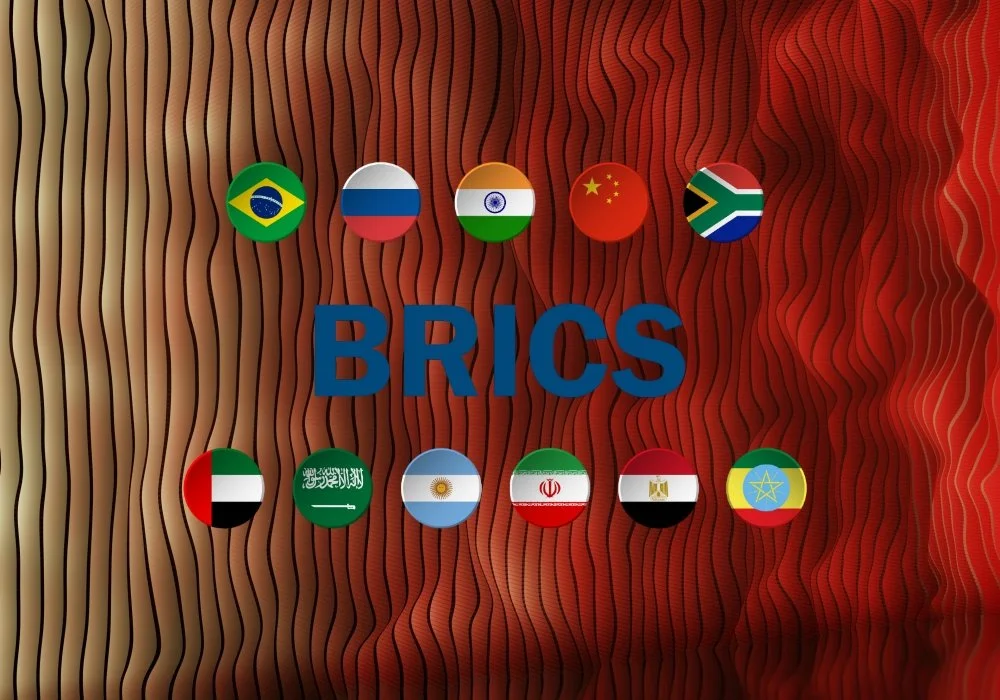
BRICS, originally comprising Brazil, Russia, India, China and South Africa, has expanded to include Egypt, Iran, Ethiopia, Saudi Arabia, Indonesia and the United Arab Emirates. Of these members, Russia, China, Iran, Ethiopia, Indonesia and the UAE were in attendance. The drills, which largely focused on antipiracy strategies and casualty evacuations, were initially scheduled for November but postponed amidst the G20 summit in Johannesburg.
Domestic Commentary And Criticism
The exercise stirred mixed responses from South Africans. The Democratic Alliance (DA) announced its opposition in a statement on January 1, arguing that the participation of China, Iran, and Russia is neither neutral nor apolitical. The party claims that China is using the exercise to rehearse a possible invasion of Taiwan, and that hosting the event further damages already strained relations with the United States. The statement also claimed that Parliament had not been properly briefed on the cost, legal status, or command structure of the exercise.
Prior to the event, military expert Hemoed Heitman said the naval exercise was expected to involve drills like anti-piracy and rescue missions, not combat practices. Stellenbosch University Professor of Military Science, Francois Vreÿ, corroborated these expectations in an interview with Newzroom Afrika, stating that “this exercise remains one focused on maritime security, the softer side of security, and the role that navies play.”
Vreÿ also stated that although BRICS has no official military component, this event may imply a future wherein BRICS formalizes a military-based arrangement. Director at African Defence Review Darren Oliver reiterated these comments, telling the Daily Maverick that “South Africa may be attempting to make the exercise appear to be more legitimate by casting it as a BRICS exercise, but this has not been organised by BRICS.” Oliver furthermore speculated whether South Africa would endanger relations with India and Brazil by holding the naval event in the name of BRICS.
The ports off of Cape Town are centuries-old trade routes crucial for international commerce. Today, the route carries petroleum, refined fuels, and materials required to produce cars, electronics, and defense systems, all of which are imported to the United States. The tensions leading up to the event were not due to the gathering of militaries, but because South Africa invited U.S. adversaries into waters which are necessary in acquiring these supplies.
“Control of—or even comfort operating in—these waters signals influence over supply chains that Washington has spent decades keeping open.” — Daniel O’Connor, Rare Earth Exchanges
Because the theme of the event is “Joint Actions to Ensure the Safety of Shipping and Maritime Economic Activities”, the intentions of participating countries are clear: This meeting is to secure a reliable trade route in the region.
Controversy
The exercise received further criticism from the Ukrainian Association of South Africa (UAZA) due to Russia’s involvement. Members of the group stood on a dock in front of the arriving naval ships holding signs that read “Russia kills” and “South Africa: No military cooperation with Russia”. The organization pointed to the 17 South Africans who had been recruited by the Russian government in November to fight against Ukraine and remain trapped, despite their calls to return home. The UAZA argued that the name of the exercise, “Will for Peace”, acts paradoxically to Russia’s actions in Ukraine, and stated that their “demonstration was an expression of that shared principle – a united refusal to normalise aggression under the guise of neutrality.”
The last BRICS naval exercise in 2023 drew criticism from the United States and the European Union, as the event coincided with the one-year anniversary of Russia’s invasion of Ukraine. Though Russia’s participation this year faced domestic protest, the international focus was on Iran. Mosi II involved only the Russian Navy, China’s People’s Liberation Army Navy (PLAN) and the South African National Defence Forces. As Iran’s 103rd flotilla joined the occasion, spectators said that the nation’s participation threatens South Africa’s stated non-aligned foreign policy stance.
In August, South African Army Chief General Rudzani Maphwanya faced domestic and international backlash after meeting with his Iranian counterpart. He reportedly celebrated the “common goals” between South Africa and Iran, and condemned the United States and Israel’s military and economic actions against Iran as “violations of international laws and norms”. South African President Cyril Ramaphosa subsequently attempted to walk-back these statements and announced that the meeting was unsanctioned, as it took place during negotiations with the United States to lower the 30% tariffs imposed in April. Iran’s invitation to the “Will for Peace” exercise further demonstrated cooperation between the two nations.
But the building tensions were quickly dispelled when, after sending three warships to False Bay, Iran reportedly pulled out of the exercise before it could begin. The decision was allegedly made under pressure from the South African government to avoid antagonizing the United States, as the House of Representatives voted on whether to renew the African Growth and Opportunity Act (AGOA). The legislation has provided duty-free access to over 1,800 African products on the U.S. market since the year 2000, but lapsed in September 2025. On January 12, the day of Iran’s withdrawal, the House approved AGOA’s extension for three years.
On the same day, U.S. President Donald Trump announced a 25% tariff on any nation conducting business with Iran, which would add onto the existing 30% tariff currently imposed on South Africa. With both the AGOA and a potential tariff hike on the line, Pretoria’s alleged urging of Iran to drop out of the exercise was likely an effort to ensure economic security with the United States.
The “Will for Peace” exercise is set to complete today with little clarity on the terms of Iran’s withdrawal, as the nation’s vessels remained in South African waters though the duration of the exercise. The DA followed their previous criticisms with a statement on January 14, imploring the Minister of Defence to meet with Parliament and clear the confusion. The South African government has yet to address the public on the exercise since its announcement, but all eyes are on Ramaphosa to respond.
Update: On January 14, the United States embassy in Pretoria called South Africa “unconscionable” for their decision to invite Iran into False Bay amidst protests across Iran against the clerical regime. The embassy furthermore stated that South Africa’s decision to host the Iranian naval ships went against their stated position of non-alignment, and that South Africa was “choosing to stand with a regime that brutally represses its people and engages with terrorism”.
Despite rumors that Iran withdrew from the “Will for Peace” exercise, News24, the Daily Maverick, and other media outlets have now confirmed Iran’s active participation throughout the week. Iran’s involvement in the drills is still creating backlash due to allegations that the South African National Defence Force (SANDF) defied President Ramaphosa’s orders to withdraw Iran from the exercise. In response to these allegations, Minister of Defense Angie Motshekga established a Board of Inquiry on January 16 to discover whether Ramaphosa’s instructions had been misunderstood or ignored outright. The Board of Inquiry has made no further announcements at the time of writing, January 23, 2026.