
Inside Africa: Madagascar's Constitutional Crisis And The Limits Of Popular Uprising
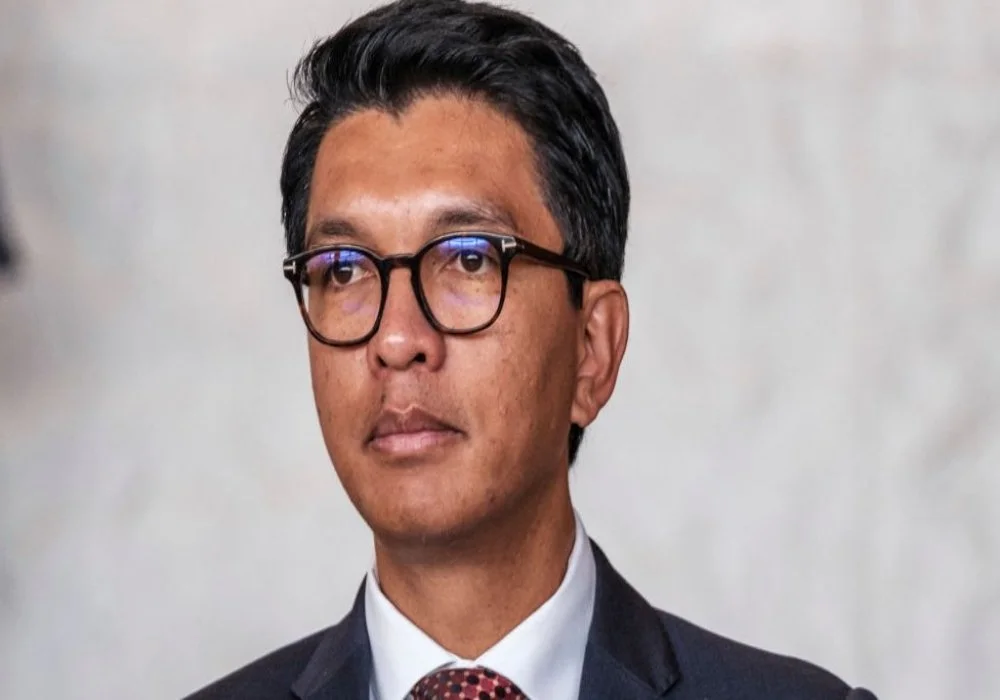
afp
When Madagascar's Gen Z Mada movement erupted in late September 2025, demanding President Andry Rajoelina’s ouster over electricity and water failures, many predicted that the uprising would trigger a constitutional implosion. Yet by mid‑October, with Rajoelina evacuated by French military aircraft and an elite military unit appointed to interim leadership, Madagascar faced a question that extends far beyond its shores: can a government still claim democratic legitimacy when a popular uprising and an unconstitutional power grab unfold at the same time?
On September 25, protests erupted after authorities arrested opposition figures planning demonstrations against Jirama, Madagascar’s state electricity utility. The arrests became a flashpoint for broader rage, with about 70% of the population living below the poverty line and chronic blackouts and water shortages endemic. Malagasy youth, mobilised via platforms like TikTok and Facebook, demanded systemic accountability. What started as service‑delivery anger became a demand for Rajoelina’s resignation.
Within weeks, security forces had killed more than 20 protesters and injured many more, as police fired rubber bullets and tear gas at crowds in Antananarivo’s central square. By October 11, the Madagascar Armed Forces Personnel Administration Technical and Services Corps (CAPSAT), the elite unit that had facilitated Rajoelina’s own rise to power in 2009, refused further orders to suppress demonstrators. One CAPSAT soldier posted a viral video declaring, “We will not be paid to shoot our friends, our brothers, and our sisters.”
On October 13, with protesters surrounding the capital and military units in open defection, Rajoelina fled aboard a French military aircraft, in an evacuation confirmed by French and Malagasy officials. Within 48 hours, Parliament, itself a civilian institution, voted 130 to impeach him for abandoning office. On October 17, Colonel Michael Randrianirina was sworn in as interim president by Madagascar’s High Constitutional Court (HCC), which simultaneously suspended the Constitution and promised elections within 18 to 24 months.
This sequence reveals a critical paradox in contemporary African political transitions. The Gen Z protests were undeniably organic and rooted in legitimate grievances. Youth unemployment exceeds 30% in urban areas, Madagascar’s per capita income remains well below its 1960s level, and only about 36% of the population has access to electricity. Rajoelina’s government had manifestly failed to deliver basic services. From this perspective, the uprising represented genuine popular sovereignty.
Yet the military’s comprehensive seizure of state power, dissolving or sidelining institutions, suspending the Constitution, and pushing elections into an extended transition, violated fundamental constitutional norms. The African Union and the Southern African Development Community (SADC) immediately condemned the events as an unconstitutional change of government, suspending Madagascar from continental bodies and demanding a civilian‑led transition. Here lay the tension, popular will and constitutional order had separated.
The HCC’s role crystallises this dysfunction. Madagascar’s courts have repeatedly enabled rather than constrained executive power. In 2023, opposition groups challenged Rajoelina’s candidacy based on his 2014 acquisition of French citizenship, which, under Article 42 of Madagascar’s nationality law, should have automatically stripped his Malagasy citizenship. The HCC refused to substantively rule, however, claiming it lacked competence to adjudicate nationality. That abdication allowed Rajoelina to run despite unresolved legal ambiguity.
Two years later, the same HCC “invited” Randrianirina to assume power while the Constitution was effectively set aside, an action that legalised rather than reviewed the transition. This pattern, evident in Madagascar’s coups of 1972, 1975, 2009, and now 2025, suggests courts function as instruments of power‑holders rather than neutral constitutional arbiters.
10 days after Randrianirina’s inauguration, the new government stripped Rajoelina of Malagasy citizenship, again citing Article 42. Technically, the law is clear: voluntary acquisition of foreign nationality terminates Malagasy citizenship. Yet the decree’s timing, issued after Rajoelina’s forced departure and without judicial process, exemplifies what legal scholars describe as “post‑coup legality”, the use of technical legal authority to achieve political aims absent substantive constitutional review.
This manoeuvre serves multiple purposes. It permanently disqualifies Rajoelina from future candidacy, symbolising a definitive break with his regime. It also normalises the military’s governance by wrapping power consolidation in legal language. For civil society observers, however, it demonstrates how law becomes a tool of the powerful. Rajoelina knowingly acquired French citizenship while considering presidential bids, but only after military removal did the consequences materialise.
Madagascar’s crisis illuminates a pattern spreading across Africa, popular uprisings coinciding with military intervention, creating ambiguity about legitimate authority. If military units can justify takeovers by citing popular protests, the boundary between constitutional change and unconstitutional coups dissolves. The African Union’s (AU) “zero tolerance” policy on unconstitutional changes of government, while sometimes inconsistently enforced, reflects an attempt to maintain institutional guardrails against this scenario.
Yet the AU faces credibility challenges. It suspended Madagascar while tolerating longer military transitions in countries such as Niger and Mali, raising questions about consistency. Moreover, the international community’s leverage is constrained by geopolitical competition; if Western partners impose stringent democratic conditionality, other actors, such as China or Gulf states, may offer alternative financing, allowing transitional governments to avoid accountability.
What neither Gen Z mobilisation nor a military transition addresses is Madagascar’s structural poverty and institutional weakness. Per capita income has fallen sharply since independence; around 70% of the population lives below the poverty line; and agricultural productivity stagnates. Rajoelina ruled in various capacities for roughly 16 years (2009–2025), yet these metrics barely improved. The military’s 18–24‑month timeline appears insufficient for meaningful structural reform, a lesson from Madagascar’s 2009–2013 transition, which consumed four years with limited improvement.
This reality suggests that neither civil nor military rule will stabilize Madagascar absent sustained economic transformation. Manufacturing diversification, agricultural modernisation, anti‑corruption enforcement, and fiscal capacity‑building require multi‑year commitment and external support. The AU suspension complicates this by limiting access to some forms of multilateral financing and deepening investor uncertainty.
Randrianirina has promised a constitutional referendum and elections within two years. Gen Z leaders have warned they will remobilise on May 13, 2026, if core demands remain unmet, including electricity access, job creation, and prosecutions for security force killings. The window for delivering tangible progress is narrow. Meanwhile, Malagasy civil society organisations and regional actors are pushing for inclusive dialogue and independent oversight of the transition.
Madagascar’s crisis belongs to a continental pattern of institutional weakness, judicial capture, and elite‑driven governance persisting beneath successive regime changes. Resolving it requires not merely new leadership but reformed institutions, independent courts, transparent state enterprises, and credible electoral processes that transcend any single transition. Whether Colonel Randrianirina’s interim government can catalyse such reform, or whether Madagascar will cycle toward another crisis in two or three years, remains an open question for the region.
