
Inside Africa: Will Namibia’s N$25 Million Youth for Green Hydrogen Scholarships Really Reach the Southern Youth They Promise to Serve?
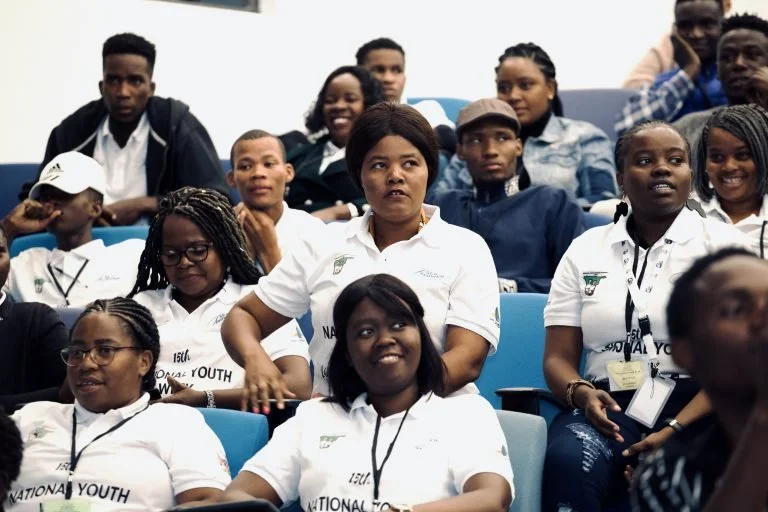
Namibia’s latest N$25 million round of Youth for Green Hydrogen (Y4H2) scholarships is being sold as a corrective: a way to ensure that the country’s flagship energy transition doesn’t leave the young people of Hardap and Kharas watching from the roadside as the hydrogen trucks roll past. The real test is whether this targeted Technical and Vocational Education and Training (TVET) scheme can overcome structural gaps in schooling, geography, and information that have historically kept rural youth at the margins of high‑profile development programs.
Namibia’s Y4H2 scholarship programs sit inside a broader cooperation with Germany, codified in a Joint Communiqué of Intent on Energy and Green Hydrogen and designed to build a domestic workforce for an industry that does not yet fully exist. In its first two calls, Y4H2 funded both master’s students and TVET learners, with scholarships covering tuition, registration, monthly stipends, and personal protective equipment in fields such as renewable‑energy engineering, solar installation, welding, and related trades. Over 150 Namibian youth had benefited by 2024, according to national planning documents, with Southern African Science Service Centre for Climate Change and Adaptive Land Management (SASSCAL) acting as implementing partner and the German Education Ministry as a key financier.
These earlier rounds were geographically open to Namibia in its entirety, though in practice they tended to channel beneficiaries toward institutions in and around Windhoek and Namibia’s larger urban centres, where most universities and better‑resourced TVET colleges are located. At the same time, the headline green‑hydrogen project, the Hyphen concession in the Southern Corridor Development Initiative (SCDI), anchors its physical footprint in the south, spanning parts of Kharas and Hardap in a planned 4,000 km² “hydrogen valley” between Lüderitz and Aus. That mismatch – training and opportunity clustering near the capital, project footprint in the south – set the stage for the third Y4H2 call to become a kind of equity test case.
On July 2 and 3, 2025, Vice President Lucia Witbooi used a launch event in Gibeon, Hardap, to announce that “around N$25 million” had been secured for the third Y4H2 call, dedicated exclusively to youth from Hardap and Kharas and limited to TVET programmes. Funding for the round comes from the Namibia Green Hydrogen Programme (NGH2P), backed by German financial support, and is explicitly framed as a response to lessons from the first two Y4H2 calls, which had not fully resolved regional imbalances.
“As we reflected on the outcomes of those first two rounds, it became clear that we still had work to do to ensure equitable access, particularly for the youth of the Hardap and Kharas regions,” Witbooi told the launch audience, positioning the new round as a targeted skills‑development mechanism rather than a generic scholarship fund.
The formal call, published by SASSCAL and partners, spells out tight parameters. Eligibility is limited to Namibian citizens aged 18–35 who are permanent residents of Hardap or Kharas. The scholarships cover TVET certificate training, typically at Levels 1–4, with support for registration, tuition, a monthly stipend, and personal protective equipment and toolboxes tied to specific trades. The list of eligible fields is anchored in the hydrogen value chain: solar installation and maintenance, wind‑turbine service, welding and fabrication, boiler making, pipefitting and industrial electrics. The application window ran for just under two weeks, from July 7 to July 18, 2025, backed by a social‑media and local‑press outreach push across the two regions.
Diplomatic and ministerial messaging at Gibeon underscored both the international and domestic stakes. Germany’s deputy ambassador, Florian Seitz, described the call as “another chapter in the successful cooperation” between the two countries and explicitly linked the scholarships to Germany’s interest in Namibia's world‑class wind and solar potential. Education minister Sanet Steenkamp called the scholarships “a national response to both a global call for cleaner energy and a local demand for skills, equity and economic participation.” For Kharas council chairperson Joseph Isaacks, the promise was more concrete: that this funding would ensure that “our children will be absorbed in economic opportunities that will be derived from the upcoming green hydrogen production.”
On paper, the third Y4H2 notably aligns with energy-transition advocates’ demands. It ringfences money and places for historically peripheral regions, uses eligibility rules to exclude applicants from more advantaged areas, and focuses on vocational qualifications that do not require prior university degrees. It also recognises the material costs of training for low‑income youth by bundling tuition with stipends and equipment. At the same time, the fine print reveals structural constraints.
The scholarships are portable only to “relevant vocational training centres,” many of which are based in larger towns or existing TVET hubs rather than in remote settlements, making access easier for youth already near Keetmanshoop or Mariental and harder for those in sparsely populated rural areas with limited transport and boarding options. Entry into many Level 2–4 certificates still depends on minimum school‑leaving qualifications and sometimes prior technical exposure, which can disadvantage youth from under‑resourced rural schools. A 12‑day application window also rewards those who already follow SASSCAL, Y4H2 or regional media; youth in information‑poor environments face higher odds of missing the deadline, even as SASSCAL and local outlets push the call on social media.
SASSCAL and the Namibia Green Hydrogen Programme have amplified the call through a dedicated scholarship page and targeted posts by outlets such as Observer Namibia and New Era, while Witbooi and regional councillors used the Gibeon event to urge Hardap and Kharas youth to apply. A separate outreach campaign promised on‑the‑ground support sessions in towns and villages during the application window, signalling awareness that forms and eligibility documents are not straightforward for first‑time applicants. Yet until the list of beneficiaries is published with at least basic anonymized data on their home localities, prior schooling and gender, it will remain unclear whether the N$25 million has flowed primarily to the rural, TVET‑track youth the rhetoric emphasizes, or to better‑connected applicants within the target regions.
Beyond selection, a central question is whether these scholarships will translate into actual hydrogen‑linked jobs in Hardap and Kharas, or whether they will ultimately feed labour markets elsewhere. Hyphen’s planned project, conceived as a vertically integrated complex producing green hydrogen and ammonia for export, is expected to create thousands of construction and several hundred permanent jobs in the SCDI, spanning trades from welding and electrical work to operations and maintenance. Project documents and public communications emphasise local procurement and employment, but the details of hiring criteria, training pipelines and residency preferences remain under negotiation. Namibia’s Sixth National Development Plan (NDP6) cites the roughly 180 Y4H2 scholarship recipients to date as evidence that a green‑hydrogen skills base is forming, but also flags the need for much larger‑scale training if the country is to meet its hydrogen ambitions.
Here, the geographic pull of Windhoek looms large. Even if trainees from Hardap and Kharas use Y4H2 funding to obtain TVET certificates, the most stable opportunities in energy, construction or related sectors may still materialise in the capital or abroad, especially while Hyphen’s timelines and southern infrastructure are still taking shape. The extent to which the scholarships actually rebalance opportunity toward the south will depend not only on education policy but also on procurement rules, wage levels and local‑content obligations in hydrogen project agreements, where public details remain sparse.
For now, most of what is known about the N$25 million round comes from official scholarship calls, government speeches and press coverage. Those sources paint a picture of a programme that is aware of past inequities and is trying to pre‑empt a familiar pattern in mega‑project development. The next layer of scrutiny will hinge on data that has not yet been publicly released in detail. NDP6’s reference to 180 scholarship recipients by 2024 suggests that the state is tracking outcomes, but it does not break those numbers down by region, socio‑economic background or subsequent employment. If Y4H2 is to be more than a symbolic gesture, policymakers and partners will need to publish anonymised profiles of who received the 2025 TVET awards, what courses they pursued, and where they end up working.
Taken together, the Y4H2 scheme and its N$25 million TVET round mark a clear break from earlier resource‑sector skills programmes that focused narrowly on university engineers, instead directing substantial funding toward vocational paths, rural regions and the southern energy corridor. Whether they truly “reach the right students” will depend less on scholarship forms than on the quality of rural schooling feeding TVET centres, the spread of training institutions, the openness of hydrogen employers to hiring locally trained artisans, and the willingness of government and partners to disclose who benefits and who is left out. For youth in Hardap and Kharas, the N$25 million offer is a rare chance to gain skills in an emerging industry before construction cranes arrive in the SCDI; for Namibia’s hydrogen politics, it is an early test of whether promises of shared benefit will be grounded in measurable, local realities rather than in the glow of national branding.
